

Winemaker Notes
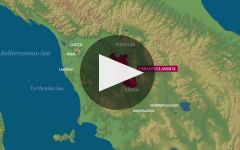


Established in 1435, the Mazzei family is one of Tuscany’s oldest wine dynasties and they have been cultivating vineyards and crafting fine wine for over 600 years in Fonterutoli in the heart of Chianti Classico. Leading the portfolio today are the Marchesi Mazzei, brothers Francesco and Filippo, as well as Filippo’s son Giovanni, the 25th generation. Notable ancestors include Ser Lapo Mazzei, author of the first known document (1398) using Chianti to reference the wine and region and Philip, an Italian turned American patriot whose friendship and correspondence with Thomas Jefferson inspired the idea that “all men are by nature equally free and independent,” which influenced the Declaration of Independence.
While the family has always honored their legacy, producing acclaimed wines of extraordinary aromatic richness, balance and complexity, they are also leaders in viticulture and vinification. The winery’s vineyards cover 110 hectares across 7 sub-zones of Chianti Classico featuring different soils, altitudes (720-1870 feet) and micro-climates. All their vineyards are farmed with customized organic practices that focus on soil health, preservation of biodiversity, reduction of copper use, and absorbing 5x more CO2 than is expressed out; a true commitment to reducing environmental impact and fostering sustainability. From their state-of-the-art low-impact, gravity fed cellar to their massal selections and clonal research, the current generation pursues innovation that elevates their wines and protects their ecosystem. This balance of preservation and evolution is also found in the family’s estates in Maremma (Belguardo) and Sicily (Zisola).

A fantastic, aromatic white grape that grows with great success in Sardinia, Tuscany and in lesser proportions on the island of Corsica. Somm Secret—Vermentino is thought to be genetically identical to Liguria’s Pigato grape and Peidmont’s Favorita. It comprises a large proportion of the whites in southern France where it is called Rolle.

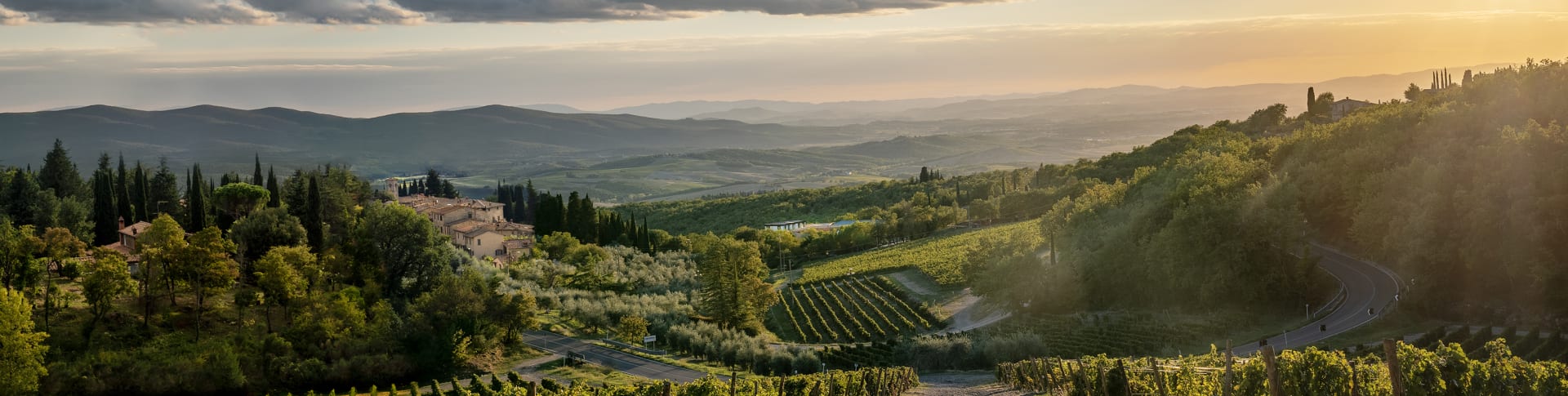
One of the most iconic Italian regions for wine, scenery and history, Tuscany is the world’s most important outpost for the Sangiovese grape. Tuscan wine ranges in style from fruity and simple to complex and age-worthy, Sangiovese makes up a significant percentage of plantings here, with the white Trebbiano Toscano coming in second.
Within Tuscany, many esteemed wines have their own respective sub-zones, including Chianti, Brunello di Montalcino and Vino Nobile di Montepulciano. The climate is Mediterranean and the topography consists mostly of picturesque rolling hills, scattered with vineyards.
Sangiovese at its simplest produces straightforward pizza-friendly Tuscan wines with bright and juicy red fruit, but at its best it shows remarkable complexity and ageability. Top-quality Sangiovese-based wines can be expressive of a range of characteristics such as sour cherry, balsamic, dried herbs, leather, fresh earth, dried flowers, anise and tobacco. Brunello, an exceptionally bold Tuscan wine, expresses well the particularities of vintage variations and is thus popular among collectors. Chianti is associated with tangy and food-friendly dry wines at various price points. A more recent phenomenon as of the 1970s is the “Super Tuscan”—a red wine made from international grape varieties like Cabernet Sauvignon, Merlot, Cabernet Franc and Syrah, with or without Sangiovese. These are common in Tuscany’s coastal regions like Bolgheri, Val di Cornia, Carmignano and the island of Elba.