


Winemaker Notes
Professional Ratings
-
Decanter
The Van Zeller family, owners of Barão de Vilar, can trace its origins in the Netherlands to the 13th century. It was in the 17th century, however, when the majority of the family settled in Portugal, starting a long and impressive dynasty. Fourteen generations down the line, they are ingrained in the wine business, having been owners of Quinta do Noval. This is one of many Ports to honour Walter Maynard, an ancestor of the Van Zellers and one of the first to export Port to England. Richard Mayson: Lovely creamy, savoury notes on both the nose and palate, tapering to a spicy finish. Great character and finesse here. Rod Smith MW: A fruit-forward nose embellished by a nutty and dried fruit complexity, reinforced on the palate with notes of molasses and caramel. Rich and long with a syrupy but balanced sweetness. Demetri Walters MW: Subdued aromas slowly showing nascent complexity, then a building intensity of fig and date notes on the palate.
-
Wilfred Wong of Wine.com
COMMENTARY: Maynard's 10-year-old Aged Tawny Porto shows excellent fruitiness to accompany its age. TASTING NOTES: This wine shows fine aromas and flavors of red fruits and crushed walnuts, Serve it with ripe berries and Mascarpone Cheese. (Tasted: May 10, 2024, San Francisco, CA)


Maynard’s is the flagship brand of Fernando and Alvaro Van Zeller’s Vinihold’s company. Named after the first established English Port wine shipper in Oporto, the Maynard’s brand honors the story of the late Walter Maynard, born in 1652, an illustrious ancestor of the van Zeller family through his marriage to Dorothea Augusta Kopke, recorded as one of the first traders to ever export Port wine to England. The brand has a premium positioning evident in every detail, from the selection of wines to the final presentation of the product itself, particularities that make all the difference, the paradigm of a unique product with centuries of tradition.
Walter Maynard is the name of one of the oldest wine merchants to have shipped Port back in 1652. He was appointed Consul in Oporto by his brother Thomas, who was English Council in Lisbon, by order of King Charles II in 1659. The 1st family link with the van Zellers come through marriage of Dorothea Ignacia Wittingham with Johan Moring, which her mother-in-law was Marianna van Zeller, married with Jacome Moring. Later, her great-granddaughter Dorothea Augusta Kopke who was Walter Maynard's 5th generation of descendants, married with Roberto van Zeller. 3 centuries later, representing the 15th generation is our manager for the US market, Mariana van Zeller. Nowadays, Maynard's stands for a complete line of premium ports, honoring the late memory of their illustrious ancestor.

Port is a sweet, fortified wine with numerous styles: Ruby, Tawny, Vintage, Late Bottled Vintage (LBV), White, Colheita, and a few unusual others. It is blended from from the most important red grapes of the Douro Valley, based primarily on Touriga Nacional with over 80 other varieties approved for use. Most Ports are best served slightly chilled at around 55-65°F. To learn more, see our full Port Wine Guide

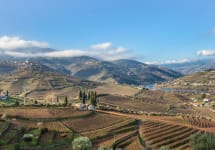
The home of Port—perhaps the most internationally acclaimed beverage—the Douro region of Portugal is one of the world’s oldest delimited wine regions, established in 1756. The vineyards of the Douro, set on the slopes surrounding the Douro River (known as the Duero in Spain), are incredibly steep, necessitating the use of terracing and thus, manual vineyard management as well as harvesting. The Douro's best sites, rare outcroppings of Cambrian schist, are reserved for vineyards that yield high quality Port.
While more than 100 indigenous varieties are approved for wine production in the Douro, there are five primary grapes that make up most Port and the region's excellent, though less known, red table wines. Touriga Nacional is the finest of these, prized for its deep color, tannins and floral aromatics. Tinta Roriz (Spain's Tempranillo) adds bright acidity and red fruit flavors. Touriga Franca shows great persistence of fruit and Tinta Barroca helps round out the blend with its supple texture. Tinta Cão, a fine but low-yielding variety, is now rarely planted but still highly valued for its ability to produce excellent, complex wines.
White wines, generally crisp, mineral-driven blends of Arinto, Viosinho, Gouveio, Malvasia Fina and an assortment of other rare but local varieties, are produced in small quantities but worth noting.
With hot summers and cool, wet winters, the Duoro has a maritime climate.