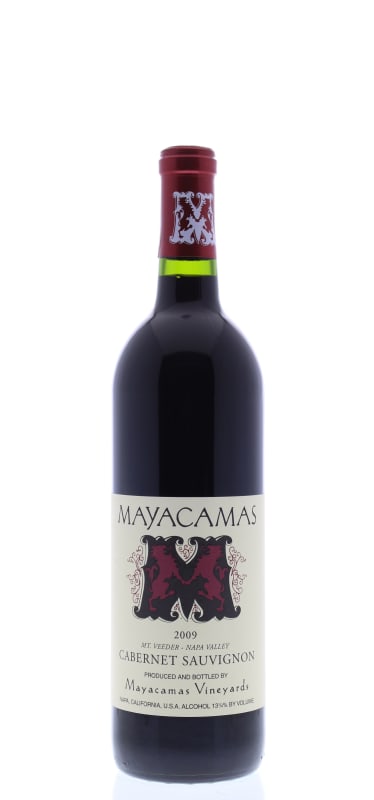


Winemaker Notes
Professional Ratings
-
James Suckling
An evolved nose with tertiary aromas of truffle, undergrowth, leather, bark and cigar box. Medium-bodied with polished, melty tannins. Velvety and layered with a dense and elegant core at the center. Refined and settled with a harmonious finish.
-
Robert Parker's Wine Advocate
This year's library release is the 2009 Cabernet Sauvignon, which still retains a vibrant dark garnet hue in the glass. On the nose, it offers up notes of dusty earth, slightly attenuated cassis and pie cherries, plus some attractive herbal nuances. It's medium-bodied and streamlined in shape on the palate, weighing in at just 13.25% alcohol, with a tart, lingering finish and just a dusting of fine tannins. It's an old-school style, very distinct from the ripe, plush wines that have largely taken over Napa Valley today, but it should still have plenty of fans.
-
Jeb Dunnuck
Coming from a cooler year, the 2009 Cabernet Sauvignon has a Bordeaux-like vibe in its red and darker, almost blue fruits as well as floral and herbal, cedary undertones. Clearly mature, yet with plenty of life ahead of it, this medium-bodied, charming, elegant Cabernet Sauvignon shines for its complexity, balance, and nuance. Enjoy bottles over the coming 10-12+ years.


One of the most prestigious wines of the world capable of great power and grace, Napa Valley Cabernet is a leading force in the world of fine, famous, collectible red wine. Today the Napa Valley and Cabernet Sauvignon are so intrinsically linked that it is difficult to discuss one without the other. But it wasn’t until the 1970s that this marriage came to light; sudden international recognition rained upon Napa with the victory of the Stag’s Leap Wine Cellars 1973 Cabernet Sauvignon in the 1976 Judgement of Paris.
Cabernet Sauvignon undoubtedly dominates Napa Valley today, covering half of the land under vine, commanding the highest prices per ton and earning the most critical acclaim. Cabernet Sauvignon’s structure, acidity, capacity to thrive in multiple environs and ability to express nuances of vintage make it perfect for Napa Valley where incredible soil and geographical diversity are found and the climate is perfect for grape growing. Within the Napa Valley lie many smaller sub-AVAs that express specific characteristics based on situation, slope and soil—as a perfect example, Rutherford’s famous dust or Stags Leap District's tart cherry flavors.