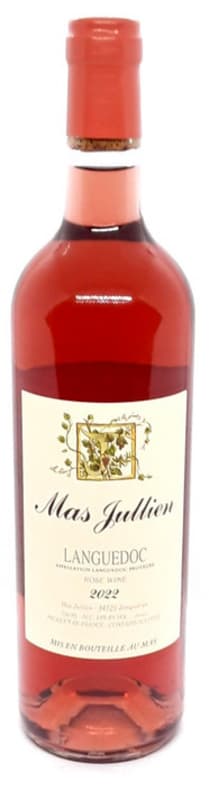


Winemaker Notes
The ever-searching Olivier Jullien continues to discover new truths of his terroir even 35 years into his project, coercing heartrending expressiveness from his high-altitude holdings in the Languedoc’s buzzing Terrasses du Larzac appellation. Olivier’s 2022 Rosé comprises 60% Cinsault, 20% Carignan, and 20% Mourvèdre; 85% of the blend was harvested specifically for rosé (i.e., earlier than for reds) and macerated for 12 hours, and the remaining 15% was the saignée of bunches harvested for reds. Fermented and aged entirely in steel this harvest—in contrast to the previous few vintages which incorporated some terracotta jar—the 2022 skillfully straddles the line between vinosity and ease-of-use, showcasing both the mineral precision of this exciting appellation and Olivier’s peerless touch.
Professional Ratings
-
Wine Spectator
Deep fuchsia in color, with a crystalline stream of red currant, watermelon and cherry. A robust, boldly styled version, with generous concentration and charm. Tasty.

Whether it’s playful and fun or savory and serious, most rosé today is not your grandmother’s White Zinfandel, though that category remains strong. Pink wine has recently become quite trendy, and this time around it’s commonly quite dry. Since the pigment in red wines comes from keeping fermenting juice in contact with the grape skins for an extended period, it follows that a pink wine can be made using just a brief period of skin contact—usually just a couple of days. The resulting color depends on grape variety and winemaking style, ranging from pale salmon to deep magenta.

An extensive appellation producing a diverse selection of good quality and great values, Languedoc spans the Mediterranean coast from the Pyrenees mountains of Roussillon all the way to the Rhône Valley. Languedoc’s terrain is generally flat coastal plains, with a warm Mediterranean climate and frequent risk of drought.
Virtually every style of wine is made in this expansive region. Most dry wines are blends with varietal choice strongly influenced by the neighboring Rhône Valley. For reds and rosés, the primary grapes include Grenache, Syrah, Carignan, Cinsault and Mourvèdre. White varieties include Grenache Blanc, Muscat, Ugni Blanc, Vermentino, Macabéo, Clairette, Piquepoul and Bourbelenc.
International varieties are also planted in large numbers here, in particular Chardonnay, Sauvignon Blanc and Cabernet Sauvignon.
The key region for sparkling wines here is Limoux, where Blanquette de Limoux is believed to have been the first sparkling wine made in France, even before Champagne. Crémant de Limoux is produced in a more modern style.