


Winemaker Notes
The Syrah grapes for this rosé derive from the 59-acre estate of Mas Janeil in Maury. Mas Janeil is committed to sustainable agriculture and does not use any pesticides or chemicals. Grapes from both the winery’s neighbors and from vineyards closer to the coast are added to complement the estate fruit. The vines average 30 years of age and are planted in soils of eroded sandstone, schist, and stony plateau that experience a Mediterranean climate—mild winters and hot, dry summers.

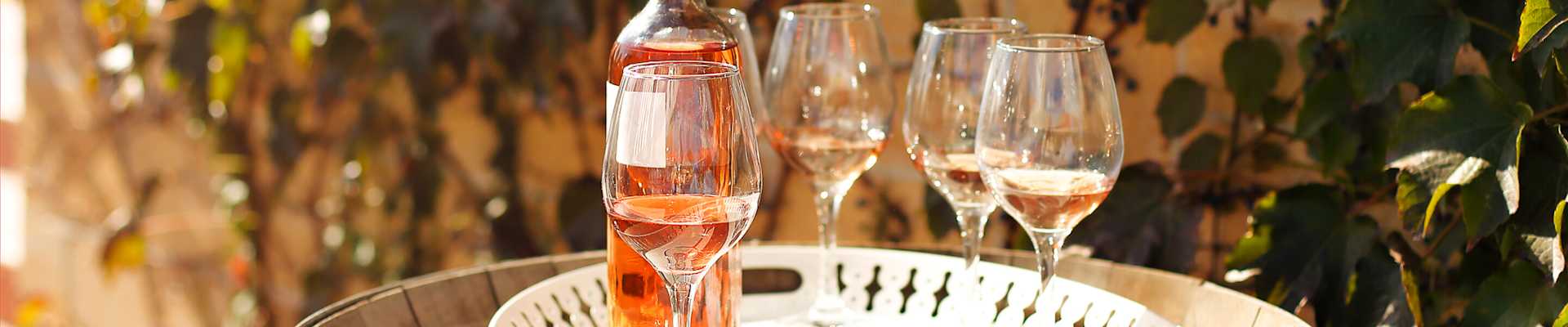
Whether it’s playful and fun or savory and serious, most rosé today is not your grandmother’s White Zinfandel, though that category remains strong. Pink wine has recently become quite trendy, and this time around it’s commonly quite dry. Since the pigment in red wines comes from keeping fermenting juice in contact with the grape skins for an extended period, it follows that a pink wine can be made using just a brief period of skin contact—usually just a couple of days. The resulting color depends on grape variety and winemaking style, ranging from pale salmon to deep magenta.

Defined by the rugged eastern edge of the Pyrenees Mountains and near-constant sunshine, Roussillon is a region rich in Spanish history and influence. In fact, the Roussillon people mainly identify with being Catalan rather than French or Occitan.
Roussillon has been a culture of viticulture since the 7th century BC and not surprisingly, highly influenced by Spain in their winemaking techniques and wine styles. Furthermore, the arid, exposed, steep and uneven valleys of this so-called Pyrénées-Orientales zone, guarantee that grape yields are low and berries are small and concentrated. The region was quick to adopt a specific fortification process (locally called mutage), introduced by a Catalan physician in the 13th century. Seen as beneficial to the region’s whites, soon Roussillon also applied the process to the vinification of Grenache. Mutage involves fortifying the grape must (or must and skins together depending on desired effect) with a neutral grape spirit to arrest fermentation, resulting in a slightly sweet, high alcohol (15-18%), but still varietally expressive and aromatically complex wine called, vin doux naturel. Two clones of Muscat and Grenache of various colors are mainly responsible for the excellent vins doux naturels in the notable sub-appellations of Rivesaltes, Banyuls and Maury.
More recently modern winemaking techniques, coupled with a near perfect climate and optimal soils, altitudes and exposures have allowed Roussillon to quickly escalate the quality and popularity of its dry red wines as well, namely those of Maury, Cotes du Roussillon-Villages and Collioure.