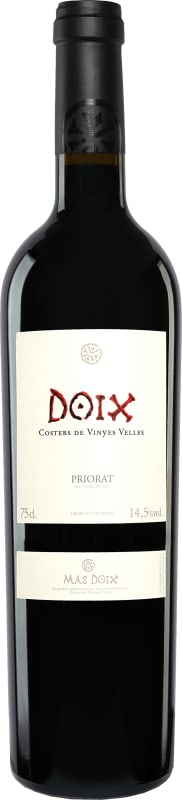


Winemaker Notes
Doix estate vineyards are situated at a height of 350/500 meters above sea level on hillsides of pronounced slopes, with the characteristic slate soil called "licorella". The grapes come from vines between 80 and 105 years old, with a small but exceptional average production of 400 gr per vine.
2014 was a good vintage, without lack of rain, mild temperatures and the typical dry summer. A warm and rainy September made the harvest complex and required a large selection of grapes, which came with a good tannic structure, concentration of flavors and very refreshing acidity.
Blend: 55% Carignan, 45% Grenache
Professional Ratings
-
Jeb Dunnuck
The 2014 Doix Costers del Vinyes Velles checks in as 55% Carinyena and 45% Garnacha that spent 16 months in new French. Its deep ruby/purple color is followed by a beautiful perfume of blueberries, violets, graphite, lead pencil and iris flower. Just insanely pure, perfumed and complex, with full-bodied richness, this beauty glides across the palate with no weight, incredible tannin quality, no hard edges, and beautiful purity. While this cuvée used to be richer and slightly more concentrated, it’s more elegant, pure, and seamless today, without sacrificing intensity.
-
Robert Parker's Wine Advocate
I had two vintages of the old-vine cuvée to taste side by side, starting with the 2014 Doix Costers de Vinyes Velles. Made of 55% Cariñena and 45% Garnacha from old vines on slopes on slate llicorella soils, the fermentation and aging are the same as for the centenary Carignan: fermentation in stainless steel with neutral yeasts and an élevage of 16 months in new French barriques. It has moderate alcohol and high acidity. It has already started developing some tertiary notes and shows some graphite and wet slate notes. The palate shows great balance, with concentration and freshness—what you're aiming for in a wine like this where pure power might be too much
-
Vinous
The 2014 Doix is a blend of 55% Carignan and 45% Grenache from Poboleda in Priorat. It was aged for 14 months in a mix of new and used French oak barrels. Garnet in hue, the 2014 offers prominent oak notes alongside aromas of ash, fig, ripe black fruit and balsamic. On the palate, the wine is ample and plush, with a compact local character that provides a taut and juicy mouthfeel.
-
Wine & Spirits
The name references the terraces at the Doix vineyard, where the cariñena vines date to 1902, the garnacha to 1927. The blend is 55-45 cariñena-garnacha. Intensely ripe, this offers toasty notes of wood over deep black fruit flavors—vibrant in acidity, dense in body, firm in tannins. It needs about three years in the bottle to mature.


With bold fruit flavors and accents of sweet spice, Grenache, Syrah and Mourvèdre form the base of the classic Rhône Red Blend, while Carignan, Cinsault and Counoise often come in to play. Though they originated from France’s southern Rhône Valley, with some creative interpretation, Rhône blends have also become popular in other countries. Somm Secret—Putting their own local spin on the Rhône Red Blend, those from Priorat often include Merlot and Cabernet Sauvignon. In California, it is not uncommon to see Petite Sirah make an appearance.

Tiny and entirely composed of craggy, jagged and deeply terraced vineyards, Priorat is a Catalan wine-producing region that was virtually abandoned until the early 1990s. This Spanish wine's renaissance came with the arrival of one man, René Barbier, who recognized the region’s forgotten potential. He banded with five friends to create five “Clos” in the village of Gratallops. Their aim was to revive some of Priorat’s ancient Carignan vines, as well as plant new—mainly French—varieties. These winemakers were technically skilled, well-trained and locally inspired; not surprisingly their results were a far cry from the few rustic and overly fermented wines already produced.
This movement escalated Priorat’s popularity for a few reasons. Its new wines were modern and made with well-recognized varieties, namely old Carignan and Grenache blended with Syrah, Cabernet Sauvignon and Merlot. When the demand arrived, scarcity commanded higher prices and as the region discovered its new acclaim, investors came running from near and far. Within ten years, the area under vine practically doubled.
Priorat’s steep slopes of licorella (brown and black slate) and quartzite soils, protection from the cold winds of the Siera de Monstant and a lack of water, leading to incredibly low vine yields, all work together to make the region’s wines unique. While similar blends could and are produced elsewhere, the mineral essence and unprecedented concentration of a Priorat wine is unmistakable.