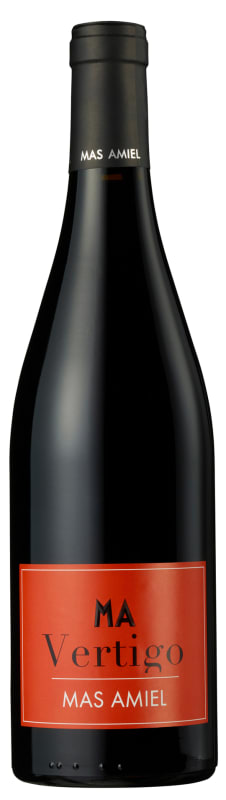


Winemaker Notes
Highly energetic, this wine’s radiance and impulsive red berry and rose petal aromas are instantly appealing. Ample and fresh on the palate, its flavors are also
tasty and fruity, underscored by vibrant minerality, brought about by the schistladen soils – the preferred terroir of great Grenache wines.
Professional Ratings
-
James Suckling
Rather savory on the nose with meaty aromas, beef jus, currants and wild herbs. Seductive and well-balanced with a medium body and finely grained tannins. Juicy, fruity and consensual with an equally satisfying finish, Grenache, syrah and carignan. From biodynamically grown grapes.


With bold fruit flavors and accents of sweet spice, Grenache, Syrah and Mourvèdre form the base of the classic Rhône Red Blend, while Carignan, Cinsault and Counoise often come in to play. Though they originated from France’s southern Rhône Valley, with some creative interpretation, Rhône blends have also become popular in other countries. Somm Secret—Putting their own local spin on the Rhône Red Blend, those from Priorat often include Merlot and Cabernet Sauvignon. In California, it is not uncommon to see Petite Sirah make an appearance.

Defined by the rugged eastern edge of the Pyrenees Mountains and near-constant sunshine, Roussillon is a region rich in Spanish history and influence. In fact, the Roussillon people mainly identify with being Catalan rather than French or Occitan.
Roussillon has been a culture of viticulture since the 7th century BC and not surprisingly, highly influenced by Spain in their winemaking techniques and wine styles. Furthermore, the arid, exposed, steep and uneven valleys of this so-called Pyrénées-Orientales zone, guarantee that grape yields are low and berries are small and concentrated. The region was quick to adopt a specific fortification process (locally called mutage), introduced by a Catalan physician in the 13th century. Seen as beneficial to the region’s whites, soon Roussillon also applied the process to the vinification of Grenache. Mutage involves fortifying the grape must (or must and skins together depending on desired effect) with a neutral grape spirit to arrest fermentation, resulting in a slightly sweet, high alcohol (15-18%), but still varietally expressive and aromatically complex wine called, vin doux naturel. Two clones of Muscat and Grenache of various colors are mainly responsible for the excellent vins doux naturels in the notable sub-appellations of Rivesaltes, Banyuls and Maury.
More recently modern winemaking techniques, coupled with a near perfect climate and optimal soils, altitudes and exposures have allowed Roussillon to quickly escalate the quality and popularity of its dry red wines as well, namely those of Maury, Cotes du Roussillon-Villages and Collioure.