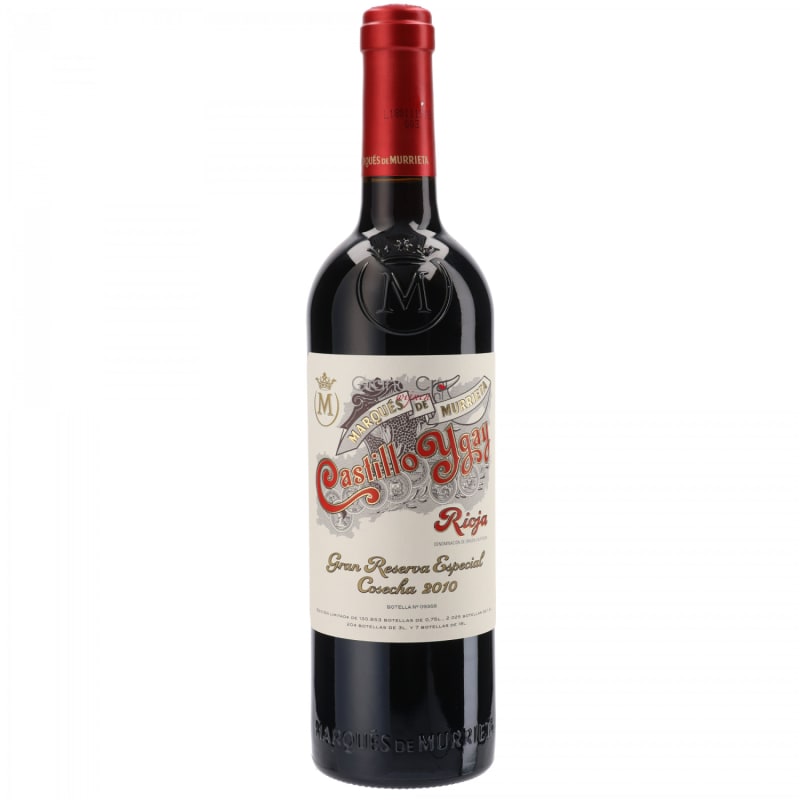


Winemaker Notes
#1 Wine Spectator Top 100 of 2020
span style="color: rgb(55, 51, 61);">Only the finest vintages from the 741-acre Ygay Estate are used to make Castillo Ygay. This Gran Reserva Especial is made from tempranillo and mazuelo from vineyards located at 500 meters above sea level. Limited in production and sought after all over the world, it is the worthy choice for the winery's emblematic Castillo Ygay label.
Pairs beautifully with baked beef sirloin, cameroon black pepper and wild mushrooms, as well as roasted suckling pig with baked acid apple. Decanting the wine for 20 minutes is recommended. Best enjoyed between 64º- 66ºF.
Blend: 81% Tempranillo, 19% Mazuelo
Professional Ratings
-
James Suckling
This is at a beautiful stage of evolution, showing aromas of dried flowers, bark, red berries and hints of tar and tea. It has an exceptionally elegant profile with a modern touch. The fruit is ethereal, the tannins finely etched and precise. The wine is crystalline, with purity and elegance that define its style. It is a blend of 84% tempranillo and 16% mazuelo. Aged for 26 months in French and American oak and a further 13 months in concrete. Approachable now, but will continue to evolve favorably.
-
Robert Parker's Wine Advocate
I had very high expectations for the 2010 Castillo Ygay Gran Reserva Especial, and the wine delivered as expected. 2010 was one of the finest vintages in Rioja in recent years, and this blend of Tempranillo with 15% Mazuelo (Cariñena) has to be one of the finest modern day Castillo de Ygays. The grapes come from a plot planted in 1966 at 485 meters in altitude, the highest in the estate, and the vines yielded 3,500 kilos per hectare. The two varieties fermented separately in stainless steel for 11 days, and the wine spent 26 months in a mixture of American and French oak barrels. I tasted the 2009 next to this 2010, and I had also had a bottle two nights before. So, I was able to compare this with the 2009, which was a very different year, as 2010 was a cooler year and a priori a more adequate year for long-aging wines like this Gran Reserva. The difference was the vegetative cycle, as the vinification and élevage was the same. This is sleeker and sharper, less developed and livelier than the 2009, which already shows some signs of "old wine" with aromas that remind me of the old classical Rioja reds. It has greatness and finesse and is a very attractive wine with all the stuffing and balance that is needed for a long (and positive) aging in bottle. This is one of the finest modern day vintages of Castillo Ygay. This is going to develop in the direction of the classical bottlings from yesteryear.
-
Wine & Spirits
The city of Logroño is surrounded by several high mesas, pieces of the original plateau that still stand above the cliffs and the Ebro River valley below. The Pago La Plana is one of them, a flat mesa at an elevation of 1,590 feet, with close to 100 acres of vines at the top of Finca Ygay. On the north side of the plateau, the soil is limestone that hits solid rock five feet below, limiting the penetration of water; the soil shifts to round river stones to the southwest, where the tempranillo and mazuelo vines, planted in 1950, have been the exclusive source for Castillo Ygay since 2001 (prior to that, the wine included other parcels on the 740-acre estate). Great vintages of this wine can thrive for more than 50 years, and this vintage appears to be pretty great. It’s grand and dynamic, a youthful ten-year-old. Initially austere, gripped by bitter plum-skin tannins and mouthwatering strawberry acidity, the wine opens with exposure to air and the fruit begins to blossom with an energy that defines what is great about Rioja.
-
Wine Spectator
Maturing well, this round red is a lovely example of the traditional style. Orange peel, dried cherry, forest floor, vanilla and black tea flavors mingle harmoniously over round tannins and citrusy acidity. Generous but gentle, lively, balanced and harmonious. Tempranillo and Mazuelo.
-
Wine Enthusiast
Earthy cherry, plum and cassis aromas are dry and complex, while this feels integrated and balanced. Cherry, red plum and cocoa flavors remain young and vibrant on the palate, while this pedigreed gran reserva offers its usual depth and length on the finish. Ten years in and this still has more in waiting.


Hailed as the star red variety in Spain’s most celebrated wine region, Tempranillo from Rioja, or simply labeled, “Rioja,” produces elegant wines with complex notes of red and black fruit, crushed rock, leather, toast and tobacco, whose best examples are fully capable of decades of improvement in the cellar.
Rioja wines are typically a blend of fruit from its three sub-regions: Rioja Alta, Rioja Alavesa and Rioja Oriental, although specific sub-region (zonas), village (municipios) and vineyard (viñedo singular) wines can now be labeled. Rioja Alta and Alavesa, at the highest elevations, are considered to be the source of the brightest, most elegant fruit, while grapes from the warmer and drier, Rioja Oriental, produce wines with deep color, great body and richness.