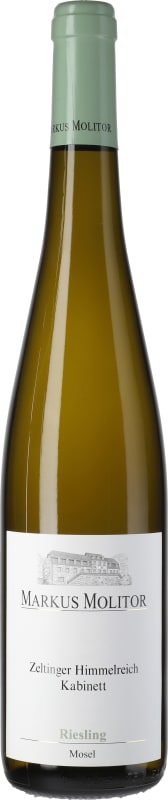


Winemaker Notes
The Molitor holdings are situated in steep parts of this vineyard. Finely splintered blue Devon slate helps to make elegant and juicy Rieslings with vibrant acidity. The grapes were softly crushed and macerated for several hours on the skins. After maceration the juice was fermented in stainless steel using only natural yeasts. The wine rests on the lees following fermentation producing a balanced and aromatic wine.
Professional Ratings
-
Wine Enthusiast
Graceful, floral and expressive, this is filled with elderflower, papaya and fennel notes. It is very harmonious, showing complexity and precision. It picks up durian and sea salt details on the long conclusion.
-
Wine Spectator
There's a green herbal edge to the fruit in this white, with pithy bitterness offsetting its core of ripe, fleshy plum and melon. Shows real mineral depth, too, offering the structure to go the distance in the cellar. A zesty element emerges, with smoke, white tea and cardamom notes, plus a pretty white meadow blossom detail. Long and well-built, with softened acidity gliding through the finish. Drink now through 2035. 1,500 cases made, 50 cases imported.
-
Robert Parker's Wine Advocate
The 2022 Riesling Zeltinger Himmelreich Kabinett (Green Capsule) opens with a very clear, bright, fresh and coolish yet intense bouquet of ripe and lush stone fruits, wet stones and beautiful floral and vegetal notes. This Zeltinger is dense, round and intense, savory and well-structured, still very youthful and quite mouthfilling for the Kabinett predicate. The finish is savory and rather dry, even though the 2022 cannot hide its residual sugar. However, the finish makes it a rather dryish-tasting Riesling Kabinett with an alive-and-kicking character. 9% stated alcohol. Natural cork.


Riesling possesses a remarkable ability to reflect the character of wherever it is grown while still maintaining its identity. A regal variety of incredible purity and precision, this versatile grape can be just as enjoyable dry or sweet, young or old, still or sparkling and can age longer than nearly any other white variety. Somm Secret—Given how difficult it is to discern the level of sweetness in a Riesling from the label, here are some clues to find the dry ones. First, look for the world “trocken.” (“Halbtrocken” or “feinherb” mean off-dry.) Also a higher abv usually indicates a drier Riesling.

Following the Mosel River as it slithers and weaves dramatically through the Eifel Mountains in Germany’s far west, the Mosel wine region is considered by many as the source of the world’s finest and longest-lived Rieslings.
Mosel’s unique and unsurpassed combination of geography, geology and climate all combine together to make this true. Many of the Mosel’s best vineyard sites are on the steep south or southwest facing slopes, where vines receive up to ten times more sunlight, a very desirable condition in this cold climate region. Given how many twists and turns the Mosel River makes, it is not had to find a vineyard with this exposure. In fact, the Mosel’s breathtakingly steep slopes of rocky, slate-based soils straddle the riverbanks along its entire length. These rocky slate soils, as well as the river, retain and reflect heat back to the vineyards, a phenomenon that aids in the complete ripening of its grapes.
Riesling is by far the most important and prestigious grape of the Mosel, grown on approximately 60% of the region’s vineyard land—typically on the desirable sites that provide the best combination of sunlight, soil type and altitude. The best Mosel Rieslings—dry or sweet—express marked acidity, low alcohol, great purity and intensity with aromas and flavors of wet slate, citrus and stone fruit. With age, the wine’s color will become more golden and pleasing aromas of honey, dried apricot and sometimes petrol develop.
Other varieties planted in the Mosel include Müller-Thurgau, Spätburgunder (Pinot Noir) and Weissburgunder (Pinot Blanc), all performing quite well here.