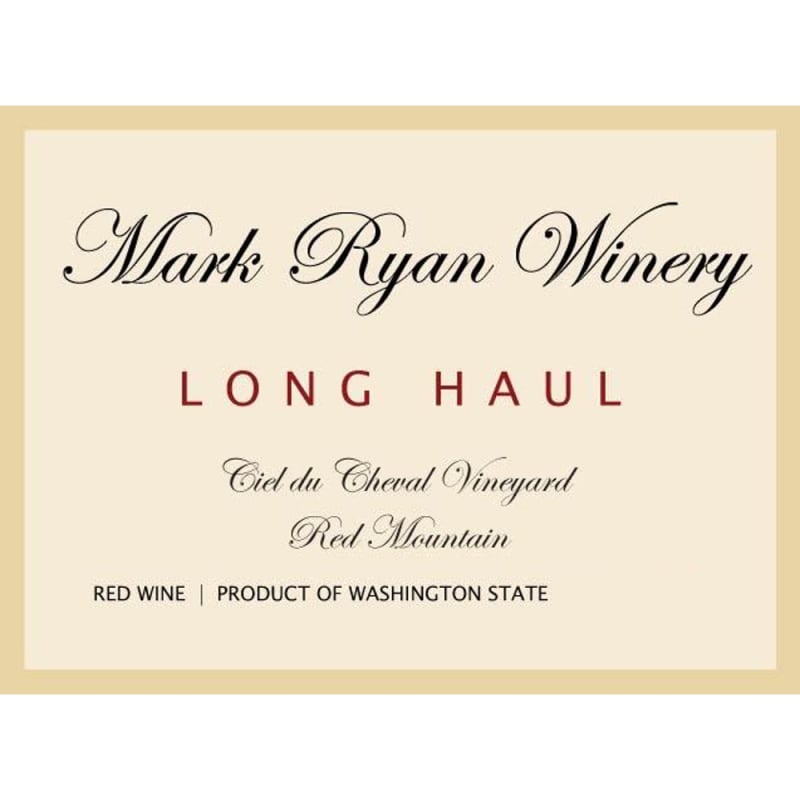

Winemaker Notes
Professional Ratings
-
Robert Parker's Wine Advocate
The 2012 Long Haul Ciel du Cheval Vineyard is another terrific Bordeaux blend from this team. Made from 49% Merlot, 44% Cabernet Franc, and the rest Cabernet Sauvignon, it was vinified in stainless steel and aged in once used French oak barrels. It exhibits subtle hints of coffee bean in its red and black fruits, roasted meats, spice and licorice-styled bouquet, and picks up more and more floral nuances with time. Full-bodied, tight, focused and a little backward, it opens up nicely in the glass, has integrated acidity and a clean finish. Give it 2-4 years and drink it through 2032.
-
Wine & Spirits
Mark McNeilly routinely teases complexity out of the blunt power of fruit from Red Mountain, and this blend focused on merlot and franc does not disappoint, with its scents of pepper and pine as well as its graphite-sleek tannins. The flavors are dark and spicy, hidden behind the structure at the moment. Cellar it, then serve with a black-and-blue steak.


Over a decade later, Mark Ryan Winery has grown in size, earned acclaim from wine-lovers and critics alike, and garnered respect from the state's elite producers. The goal, however, remains the same. Make delicious wines that represent the vineyard from which they come, making every vintage better than the last.

One of the world’s most classic and popular styles of red wine, Bordeaux-inspired blends have spread from their homeland in France to nearly every corner of the New World. Typically based on either Cabernet Sauvignon or Merlot and supported by Cabernet Franc, Malbec and Petit Verdot, the best of these are densely hued, fragrant, full of fruit and boast a structure that begs for cellar time. Somm Secret—Blends from Bordeaux are generally earthier compared to those from the New World, which tend to be fruit-dominant.

An important winegrowing state increasingly recognized for its high-quality reds and whites, Washington ranks second in production in the U.S. after California. Washington wines continue to gain well-deserved popularity as they garner higher and higher praise from critics and consumers alike.
Washington winemakers draw inspiration mainly from Napa Valley, Bordeaux and the Rhône as well as increasingly from other regions like Spain and Italy. Most viticulture takes place on the eastern side of the state—an arid desert in the rain shadow of the Cascade mountains. Irrigation is made possible by the Columbia River. Temperatures are extreme, with hot and dry summers and cold winters, during which frost can be a risk.
Washington’s wine industry was initially built on Merlot, which remains an important variety to this day, despite having been overtaken in acreage planted by Cabernet Sauvignon and Syrah. Bordeaux blends and Rhône blends are common as well as single varietal bottlings. Washington reds tend to express a real purity of concentrated fruit. The best examples have a bold richness, seamless texture, plush or powdery tannins and flavors such as licorice, herb, forest floor, espresso and dark chocolate.
In terms of white wine from Washington state, Riesling is the state’s major success story, producing crisp, aromatic examples with plenty of stone fruit that range from bone dry to lusciously sweet. Chardonnay and Sauvignon Blanc perform nicely here as well, and Viognier is beginning to pick up steam.