


Winemaker Notes
Golden yellow color with copper hints. It has an intense aroma with pronounced hints of acacia flower, broom and apple. It has an elegant, fruity, full-bodied and structured taste. It has a long finish.
Professional Ratings
-
Vinous
The 2024 Pinot Grigio Mongris lifts from the glass with airy, minty freshness as nuances of split pine and spearmint combine with freshly sliced nectarines. It pleases the senses with a contrasting mix of salty minerals and ripe pit fruits over a core of brisk acidity. The finish is clean and crisp, leaving a lemony concentration and cheek-pinching tension.
-
Robert Parker's Wine Advocate
The Marco Felluga 2024 Collio Pinot Grigio Mongris is sharp and lifted, offering a strong sense of vertical intensity with aromas of sweet lemon, Golden Delicious apple and baked pear with a hint of pie crust. It’s encouraging to see Pinot Grigio interpreted in such a fine and sophisticated manner, with finesse and a glossy texture that elevate its easygoing charm. It is ideal for salads and outdoor lunches while still delivering excellent value. Made in stainless steel and aged on the lees for five months, the wine comes from Collio’s ancient flysch soils formed around 50 million years ago, which help shape its freshness and mineral precision.
-
James Suckling
Spiced apples, dried lemons and savory herbs on the nose. The medium-bodied palate is sleek and crisp, with vivid acidity coming through. Easy and refreshing.
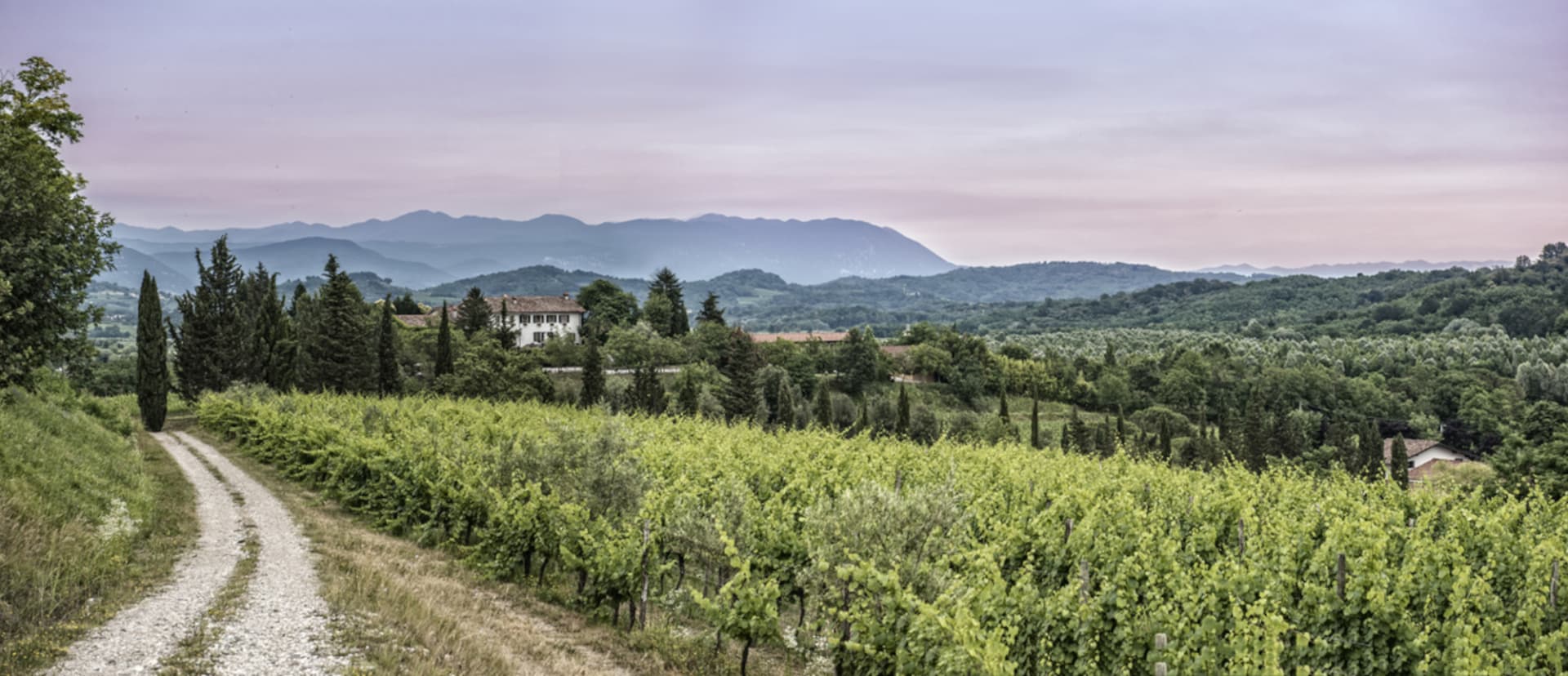




The Marco Felluga family traces its wine-industry lineage to the late 1800s, when Ilaria Felluga's great-great-great-grandfather, Michele, started a business buying and selling wine in Istria (then part of the Austro-Hungarian Empire). Michele's son Marco added winemaking to the business, growing grapes and making some wine on the family farm just south of Trieste in what is now southwestern Slovenia. After World War I, Marco's son Giovanni continued the family wine trade, selling Istrian wine in Trieste and in Grado in southern Friuli. He also opened a cellar in Gradisca d'Isonzo in Collio in 1938, but World War II soon broke out, disrupting life for a decade. After the war, Istria became part of Soviet-dominated Yugoslavia; the family lost their farm there, and Collio became their home.
Two of Giovanni's seven children ultimately established wineries nearby. After graduating from the enology school in Conegliano, Marco Felluga worked for his older brother, Livio, before Livio started his own winery in Rosazzo. Marco stayed in Gradisca d'Isonzo and founded his winery in 1956. In 1967, he acquired the Russiz Superiore estate in Capriva del Friuli, which continues to operate as a separate winery. The Marco Felluga estate has vineyards in four parts of the Collio—Farra d'Isonzo, San Floriano del Collio, Oslavia, and Cormòns—allowing strategic grape selection. About 75% of production is white wine from international and local varieties. Russiz Superiore has 50 ha of vines, mainly from single vineyard lots, with some white wines vinified in oak.
In the 1990s, Marco's son Roberto began managing both estates, officially taking over in 2000, improving quality through sustainable viticulture. In 2017, his daughter Ilaria joined after studying viticulture and enology. Roberto died unexpectedly in 2021, and Marco in 2024, leaving Ilaria to manage the estates. The Tommasi Family partnered with her, aiming to preserve and enhance Collio's wine heritage. Today, Ilaria leads both estates, focusing on sustainability and high-quality wines, gaining recognition for her personality and deep knowledge of Friuli and her family's legacy.

Showing a unique rosy, purplish hue upon full ripeness, this “white” variety is actually born out of a mutation of Pinot Noir. The grape boasts two versions of its name, as well as two generally distinct styles. In Italy, Pinot Grigio achieves most success in the mountainous regions of Trentino and Alto Adige as well as in the neighboring Friuli—all in Italy’s northeast. France's Alsace and Oregon's Willamette Valley produce some of the world's most well-regarded Pinot Gris wine. California produces both styles with success.
Where Does Pinot Gris / Pinot Grigio Come From?
Pinot Gris is originally from France, and it is technically not a variety but a clone of Pinot Noir. In Italy it’s called Pinot Grigio (Italian for gray), and it is widely planted in northern and NE Italy. Pinot Gris is also grown around the globe, most notably in Oregon, California, and New Zealand. No matter where it’s made or what it’s called, Pinot Gris/Pinot Grigio produces many exciting styles.
Tasting Notes for Pinot Grigio
Pinot Grigio is a dry, white wine naturally low in acidity. Pinot Grigio wines showcase signature flavors and aromas of stone fruit, citrus, honeysuckle, pear and almond. Alsatian styles are refreshing, expressive, aromatic (think rose and honey), smooth, full-bodied and richly textured and sometimes relatively higher in alcohol compared to their Italian counterpart. As Pinot Grigio in Italy, the style is often light and charming. The focus here is usually to produce a crisp, refreshing, lighter style of wine. While there are regional differences of Pinot Grigio, the typical profile includes lemon, lime and subtle minerality.
Pinot Grigio Food Pairings
The viscosity of a typical Alsatian Pinot Gris allows it to fit in harmoniously with the region's rich foods like pork, charcuterie and foie gras. Pinot Grigio, on the other hand, with its citrusy freshness, works well as an aperitif wine or with seafood and subtle chicken dishes.
Sommelier Secrets
Given the pinkish color of its berries and aromatic potential if cared for to fully ripen, the Pinot Grigio variety is actually one that is commonly used to make "orange wines." An orange wine is a white wine made in the red wine method, i.e. with fermentation on its skins. This process leads to a wine with more ephemeral aromas, complexity on the palate and a pleasant, light orange hue.
To learn more, see our Essential Pinot Grigio Guide.

Collio is a crescent-shaped sub region of Friuli-Venezia Giulia that hugs right up against the Slovenian border. It is perfectly situated for growing wine grapes, especially of the white variety.
The Julian Alps to Collio’s north allow the influx of cool, nighttime breezes, while the Adriatic Sea to its south regulates the region’s temperatures. The area contains flysch soils,locally known as, ponca, a layered, sedimentary rock that formed millions of years ago as continents collided under the sea. Today the flysch soils that dominate the hills of Collio provide an interesting substrate for vine roots, with measurable mineral variations within small areas. The fractured layers of flysch soils also facilitate drainage and deepening of vine roots.
The region boasts a unique set of indigenous white varieties including Friulano, Ribolla Gialla, Malvasia and the rare, Picolit. International whites—Pinot Grigio, Pinot Bianco, Sauvignon (Blanc) and Chardonnay—have also been in the area for well over 100 years. Today Collio is often associated with crisp, clean, floral and fruity whites. But in recent years, there has been a resurgence in popularity of the ancient Slovenian style of fermenting white grapes on their skins. This process retains additonal colors and phenols, producing a complex finished wine with an orange hue, warranting the term, "orange wines."
Reds are far less common but the indigenous Pignolo makes an age-worthy red, and the international varieties Merlot and Cabernet grow here as well.