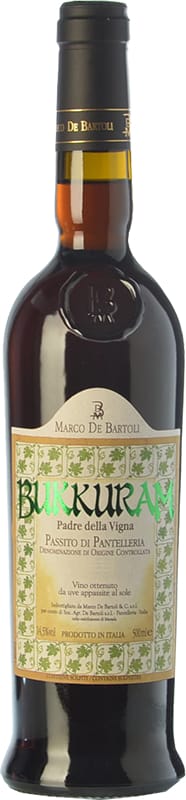


Winemaker Notes
A perfect balance between structure, acidity and sweetness due to the ancient art of sun-drying. It is best enjoyed at the end of the meal as a dessert wine. Meditation wine with dark chocolate.
Professional Ratings
-
James Suckling
This is a fabulous sweet wine with light toffee, caramel, burnt orange and salt undertones. It's full-bodied, very sweet yet bright and vivid on the palate. Still one of Italy's great sweet wines.
-
Robert Parker's Wine Advocate
The 2008 Passito di Pantelleria Bukkuram Padre della Vigna is a complex and rather complicated wine. It throws so many aromas at you at once it’s hard to initially make heads or tails of the bouquet. You first get slightly oxidative aromas of bruised apple soon followed by white raisin, anise seed, dried dill, caper and green olive. At first sniff, I wasn’t a big fan, but grew to really appreciate the ever-shifting aromas and overall complexity. There is a sour point in the mouth that may not appeal to everyone. Half the grapes are sun-dried for up to three month and the second half are left to mature on the vine until September. Drink 2016-2026.
-
Wine Spectator
Zesty and just off-dry, with tangy acidity structuring the Meyer lemon zest, grated ginger, white peach puree, salted almond and singed orange peel. Mouthwatering finish. Drink now through 2028.


Apart from the classics, we find many regional gems of different styles.
Late harvest wines are probably the easiest to understand. Grapes are picked so late that the sugars build up and residual sugar remains after the fermentation process. Ice wine, a style founded in Germany and there referred to as eiswein, is an extreme late harvest wine, produced from grapes frozen on the vine, and pressed while still frozen, resulting in a higher concentration of sugar. It is becoming a specialty of Canada as well, where it takes on the English name of ice wine.
Vin Santo, literally “holy wine,” is a Tuscan sweet wine made from drying the local white grapes Trebbiano Toscano and Malvasia in the winery and not pressing until somewhere between November and March.
Rutherglen is an historic wine region in northeast Victoria, Australia, famous for its fortified Topaque and Muscat with complex tawny characteristics.

A large, geographically and climatically diverse island, just off the toe of Italy, Sicily has long been recognized for its fortified Marsala wines. But it is also a wonderful source of diverse, high quality red and white wines. Steadily increasing in popularity over the past few decades, Italy’s fourth largest wine-producing region is finally receiving the accolades it deserves and shining in today's global market.
Though most think of the climate here as simply hot and dry, variations on this sun-drenched island range from cool Mediterranean along the coastlines to more extreme in its inland zones. Of particular note are the various microclimates of Europe's largest volcano, Mount Etna, where vineyards grow on drastically steep hillsides and varying aspects to the Ionian Sea. The more noteworthy red and white Sicilian wines that come from the volcanic soils of Mount Etna include Nerello Mascalese and Nerello Cappuccio (reds) and Carricante (whites). All share a racy streak of minerality and, at their best, bear resemblance to their respective red and white Burgundies.
Nero d’Avola is the most widely planted red variety, and is great either as single varietal bottling or in blends with other indigenous varieties or even with international ones. For example, Nero d'Avola is blended with the lighter and floral, Frappato grape, to create the elegant, Cerasuolo di Vittoria, one of the more traditional and respected Sicilian wines of the island.
Grillo and Inzolia, the grapes of Marsala, are also used to produce aromatic, crisp dry Sicilian white. Pantelleria, a subtropical island belonging to the province of Sicily, specializes in Moscato di Pantelleria, made from the variety locally known as Zibibbo.