

Winemaker Notes
Professional Ratings
-
Jeb Dunnuck
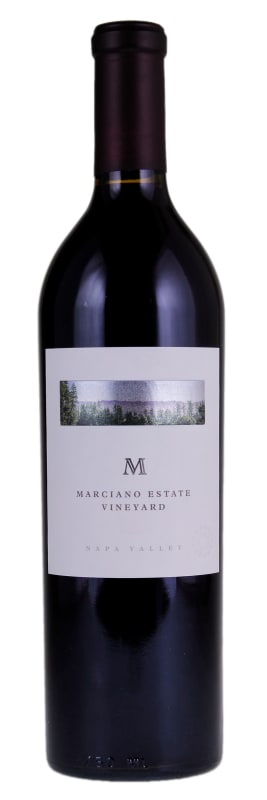
I loved the 2018 M Proprietary Red Wine, another gorgeous wine from this tiny estate. Lots of crème de cassis, blueberries, iron, and a kiss of crushed stone-like minerality give way to a deep, full-bodied, concentrated wine with plenty of baby fat mostly concealing sound underlying structure. A blend of equal parts Cabernet Sauvignon and Cabernet Franc, it's going to take 7-8 years to shed some fruit but should be long lived.
-
Robert Parker's Wine Advocate
With 35% Cabernet Franc planted on the 10-acre vineyard at Marciano Estate, this M label showcases the extra proportion of this grape. The 2018 M by Marciano is a blend of 50% Cabernet Sauvignon and 50% Cabernet Franc. Displaying a deep purple-black color, it rockets out of the glass with vibrant notions of blackcurrant pastilles, re currant jelly, kirsch and pencil shavings with hints of dusty soil, bouquet garni and wet pebbles. Full-bodied, rich and seductively fruity in the mouth, it has finely pixelated tannins and a lively backbone, finishing with fantastic length and lots of mineral sparks. Give it another couple of years in bottle to really strut its stuff, and drink it over the next 25 years+.


Undoubtedly proving its merit over and over, Napa Valley is a now a leading force in the world of prestigious red wine regions. Though Cabernet Sauvignon dominates Napa Valley, other red varieties certainly thrive here. Important but often overlooked include Merlot and other Bordeaux varieties well-regarded on their own as well as for their blending capacities. Very old vine Zinfandel represents an important historical stronghold for the region and Pinot noir is produced in the cooler southern parts, close to the San Pablo Bay.
Perfectly situated running north to south, the valley acts as a corridor, pulling cool, moist air up from the San Pablo Bay in the evenings during the hot days of the growing season, which leads to even and slow grape ripening. Furthermore the valley claims over 100 soil variations including layers of volcanic, gravel, sand and silt—a combination excellent for world-class red wine production.