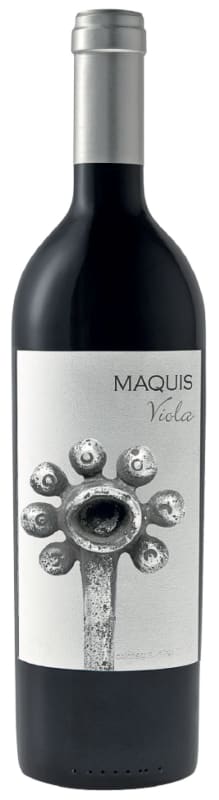


Winemaker Notes
Viola is produced from the fruit of the very best vineyards on the Maquis estate. The tiniest grapes from these vineyards are concentrated and yield silky tannins with the greatest depth and complexity.
The skills of Maquis' viticulturist, Xavier Choné, and their blenders, Jacques and Eric Boissenot, are clearly apparent in this balanced and elegant blend.The spices, black fruit, and smooth texture of the Carménère, the principal component of the blend, are complemented by the extraordinary finesse and length on the palate by the Cabernet Franc.
Blend: 87% Carménère, 11% Cabernet Franc, 2% Cabernet Sauvignon
Professional Ratings
-
Robert Parker's Wine Advocate
The 2013 Viola is a little lighter, with more open color, reflecting a year with abundant rain, and the grapes were larger. Despite the 14% alcohol, the wine feels fresh and lively, with a medium-bodied palate. It was produced with 87% Carménère, 11% Cabernet Franc and 2% Cabernet Sauvignon. It's fine-boned and has polished and elegant tannins and an overall elegant profile, a little lighter and easy to drink. Best after 2018.
-
Wine & Spirits
This blend is not shy about showing its gripping tannins. They work hand in hand with the acidity to unite the wine’s strident herbal notes, liqueur-like fruit and wood tones. Together they create a wild red that asks for game. The herb-and-tobacco-scented finish shows the influence of cabernet franc (11 percent of the blend), which grows together with carmenère (87 percent) at a vineyard on the banks of the Chimbarongo River, where the cool breezes retard ripening and sustain freshness in the grapes.
-
James Suckling
A beautiful mature wine that’s both rich and elegant with pine forest character and a long, dry finish.
-
Wine Spectator
Intensely spicy, with loads of Asian spice notes rolled around the roasted plum and dark cherry flavors. Dried mint and dark chocolate details show on the finish. Carmenère and Cabernet Franc. Drink now through 2021.


One of the world’s most classic and popular styles of red wine, Bordeaux-inspired blends have spread from their homeland in France to nearly every corner of the New World. Typically based on either Cabernet Sauvignon or Merlot and supported by Cabernet Franc, Malbec and Petit Verdot, the best of these are densely hued, fragrant, full of fruit and boast a structure that begs for cellar time. Somm Secret—Blends from Bordeaux are generally earthier compared to those from the New World, which tend to be fruit-dominant.

Well-regarded for intense and exceptionally high quality red wines, the Colchagua Valley is situated in the southern part of Chile’s Rapel Valley, with many of the best vineyards lying in the foothills of the Coastal Range.
Heavy French investment and cutting-edge technology in both the vineyard and the winery has been a boon to the local viticultural industry, which already laid claim to ancient vines and a textbook Mediterranean climate.
The warm, dry growing season in the Colchagua Valley favors robust reds made from Cabernet Sauvignon, Carmenère, Malbec and Syrah—in fact, some of Chile’s very best are made here. A small amount of good white wine is produced from Chardonnay and Sauvignon Blanc.