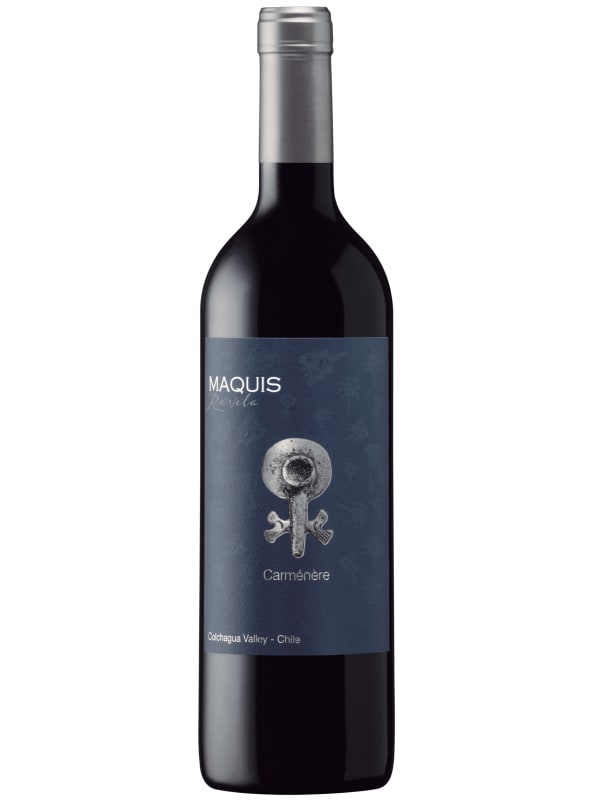


Winemaker Notes
Undoubtedly a rather special vintage, which has given rise to very aromatic, elegant and complex wines, with excellent color and aging potential. Cabernet Sauvignon grapes were harvested on the fourth week of march, followed by Carménère and Petit Verdot, harvested on April’s first and third week, respectively.
Professional Ratings
-
Robert Parker's Wine Advocate
The 2022 Revela Carménère is floral and expressive on the nose, exuding a palpable refinement and even-keeled nature from front to back. The palate is pure, fluid and seamless, finishing on a spice-driven, savory note that slowly swells with aeration. Includes 8% Cabernet Sauvignon and 2% Petit Verdot.
-
Wine Spectator
Elegant and restrained, with a subtle cast of loam and herbs to the raspberry and cherry core, while fine mineral details fill out the midpalate. There's just enough acidity to lift everything onto the finish. Drink now through 2030. 4,000 cases imported.


Dark, full-bodied and herbaceous with a spicy kick, Carménère found great success with its move to Chile in the mid-19th century. However, the variety went a bit undercover until 1994 when many plantings previously thought to be Merlot, were profiled as Carménère. Somm Secret— Carménère is both a progeny and a great-grandchild of the similarly flavored Cabernet Franc.

Well-regarded for intense and exceptionally high quality red wines, the Colchagua Valley is situated in the southern part of Chile’s Rapel Valley, with many of the best vineyards lying in the foothills of the Coastal Range.
Heavy French investment and cutting-edge technology in both the vineyard and the winery has been a boon to the local viticultural industry, which already laid claim to ancient vines and a textbook Mediterranean climate.
The warm, dry growing season in the Colchagua Valley favors robust reds made from Cabernet Sauvignon, Carmenère, Malbec and Syrah—in fact, some of Chile’s very best are made here. A small amount of good white wine is produced from Chardonnay and Sauvignon Blanc.