


Winemaker Notes
Opaque violet. On the nose, an intriguing aromatic combination of red and black fruit, with purple flowers and schist minerality laid over the abundant fruit. On the palate, mouthwateringly bright acidity that is tempered and framed by the wood – there's almost no overt indication that the wine has been aged in new oak. Juicy, mouth filling, and lifted, with punchy black and red berry fruit laid over with peppery spicy notes. Finishes long, with a quality that quickly demands another taste.
The bright acidity, low alcohol and low tannin profile of this wine belie its deep opacity. The acidity in this wine is well suited for richer meat dishes like roast pork, braised chicken or stewed beef.
Professional Ratings
-
James Suckling
Dark fruit, blackberries, stones and a touch of dried herbs. The palate is juicy with succulent fruit and good freshness. Dark fruit emerges in the finish.
-
Robert Parker's Wine Advocate
The dark and opaque red (almost black) 2022 É Sousão ou será Vinhão? was produced with the teinturier Sousão grape variety (called Vinhão in Vinho Verde), a grape with a lot of color and acidity that can be rustic; in Douro, the grape tends to be more polished, especially in warmer vineyards, raw and hard, but not undrinkable like some examples in Vinho Verde. I found a lot of oak aromas—cinnamon, vanilla, toast and smoke—here, which is not common in Maçanita's wines. No wonder, because instead of using seasoned barrels, this matured in brand-new French oak barrels for 18 months. I guess he was trying to domesticate the tannins. It has a moderate 12.5% alcohol, with a pH of 3.44 and 6.1 grams of acidity, which gives it some acid-berry flavors.


What are the odds of having two talented oenologists in the family?
In Douro, Portugal, brilliant brother and sister team Joana & Antonio Maçanita have managed to pool their considerable winemaking talent to showcase the breadth of terroir in the oldest classified European appellation. Sourcing from sites spread across the 3 subzones of the Douro, the Maçanitas use classic Douro grape varieties with modern winemaking techniques to produce wines of balance, elegance and true Douro character.
These siblings aren’t afraid of pushing the boundaries and forcing us to leave our comfort zone, meet the Maçanita’s and get to know their wines!
António is today a well-known name, for his commitment in the Alentejo region and more recently for the Azores project, wines that represent some of the greatest discoveries in the last years. Stunning Arinto dos Açores, Terrantez do Pico and Verdelho. Joana is also committed to awaken Algarve, once a very well-known region. She is consulting six wineries in the southernmost of Portugal. This brother and sister team has captured the spirit of the Douro as only they are able.

Beyond the usual suspects, there are hundreds of red grape varieties grown throughout the world. Some are indigenous specialties capable of producing excellent single varietal wines, while others are better suited for use as blending grapes. Each has its own distinct viticultural characteristics, as well as aroma and flavor profiles, offering much to be discovered by the curious wine lover. In particular, Portugal and Italy are known for having a multitude of unique varieties but they can really be found in any region.

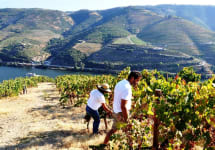
The home of Port—perhaps the most internationally acclaimed beverage—the Douro region of Portugal is one of the world’s oldest delimited wine regions, established in 1756. The vineyards of the Douro, set on the slopes surrounding the Douro River (known as the Duero in Spain), are incredibly steep, necessitating the use of terracing and thus, manual vineyard management as well as harvesting. The Douro's best sites, rare outcroppings of Cambrian schist, are reserved for vineyards that yield high quality Port.
While more than 100 indigenous varieties are approved for wine production in the Douro, there are five primary grapes that make up most Port and the region's excellent, though less known, red table wines. Touriga Nacional is the finest of these, prized for its deep color, tannins and floral aromatics. Tinta Roriz (Spain's Tempranillo) adds bright acidity and red fruit flavors. Touriga Franca shows great persistence of fruit and Tinta Barroca helps round out the blend with its supple texture. Tinta Cão, a fine but low-yielding variety, is now rarely planted but still highly valued for its ability to produce excellent, complex wines.
White wines, generally crisp, mineral-driven blends of Arinto, Viosinho, Gouveio, Malvasia Fina and an assortment of other rare but local varieties, are produced in small quantities but worth noting.
With hot summers and cool, wet winters, the Duoro has a maritime climate.