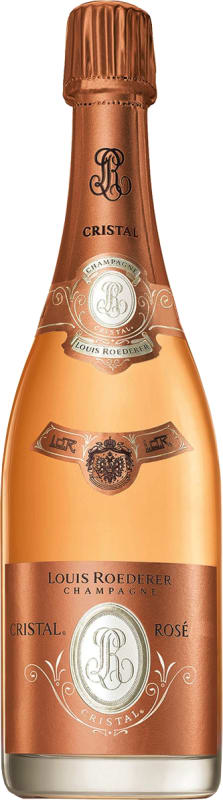


Winemaker Notes
Pink hue with slightly coppery tints. Dynamic bubbles forming a lingering bead. Pure, precise and dazzling bouquet. The intense Pinot Noir aromas take us back to the harvest time with its pure, ripe and concentrated fruit: zesty red berries (red currants, wild raspberries, blackcurrants) and raspberry liqueur. Then come sweet spice and smoky notes with a hint of reduction (smoky, spicy) from the Pinot noir with its notes of undergrowth. Concentrated and broad on the palate, where the red fruit (strawberries, raspberries) is concentrated into a firm, dense texture that reveals itself in two stages that reflect the year's extremes: Initially the texture is silky and broad on entry (the final ripeness) and then followed by a firm and intense freshness (the cool summer). We have a sensation of concentration, of a whirlwind of flavors that burst delicately and gradually like salt bubbles on the palate. The saline, iodine impression combines with the smoky notes and acidity to create umami and an infinitely flavorsome finish.
Professional Ratings
-
James Suckling
Extremely subtle and delicate, this has an enveloping nose of tiny red berries and dried flowers. This sparkling rosé masterpiece is just beginning to really open up. Fabulous velvety texture on the mouth-filling palate, the very fine mousse already spot on. Tons of structure behind all this, so this should age really well. From organically grown grapes.
-
Vinous
The 2014 Cristal Rosé is fascinating to taste next to the 2015 and a few older vintages, as it is decidedly linear and taut, signatures that are typical of the year. Cranberry, chalk, mint, white pepper and blood orange are all finely sculpted. This is an especially fine showing. I imagine the 2014 will flesh out beautifully with time in bottle. It's not an immediate Cristal Rosé, but more of a long distance runner. Readers should be in no rush here.
-
Wine & Spirits
Jean-Baptiste Lécaillon describes the spring of 2014 as sunny and dry, leading up to a heat wave in June. Then a cool, wet summer ended with the return of the dry, sunny heat in September. When our panel tasted the Cristal 2014 last year, I found it confusing, but the Cristal 2014 Rosé is a different beast. With its pale pink color and tight saignée essence of fruit, it's both saturated and lithe; the wine's freshness feels like the sky opening from a summer rain into the sun. Its flavor depths of golden raspberry, barely-pink grapefruit, roasted autumn apple and toasty pumpkin seed hide a dark rosé within the complex flavors of a pale yet intricately detailed white wine. As a young vintage, it yields to the touch, like a tightening muscle, needing a decade or more of cellar time to begin to give itself more completely.
-
Robert Parker's Wine Advocate
Roederer's 2014 Cristal Rosé has turned out beautifully, unwinding in the glass with aromas of sweet cherries, almonds, citrus fruit and red berries mingled with notions of white flowers and wet chalk. Full-bodied, fleshy and enveloping, with a layered core of fruit and a pillowy mousse, it's deep, racy and electric, concluding with a long, mineral finish. Comparatively open out of the gates, it's no slight to the 2014's seriousness to say that it will drink well while its 2013 counterpart sleeps in the cellar. Deriving from just a handful of the over 39 blocks that inform the regular Cristal 2014, I suspect that its origins have even more to do with the extra dimension it possesses above and beyond its white counterpart than the subtle infusion of Pinot Noir phenolics that give it its delicate pink hue.
-
Wine Enthusiast
The epitome of great rosé Champagne, this is beautifully intense. The fruit and balanced mineral edge are united with mature redcurrant flavors in a wine that is perfectly aged. It is an impressive wine that is ready to drink.
-
Wine Spectator
This rosé features rich, focused flavors of peach tart, poached apricot and mandarin orange fruit, plus accents of toasted brioche, pastry cream, pickled ginger and pink grapefruit sorbet. Exudes an overall vibrant impression, with a fine interplay of elegance and complexity, showing deft integration of the vivid acidity and the satiny mousse. Pinot Noir and Chardonnay.





Uncompromising Quality
Champagne Louis Roederer was founded in 1776 in Reims, France and is one of the rare family owned companies, which is still managed by the Roederer family. In 1833, Louis Roederer inherited the company from his uncle and renamed the company under his namesake. Under his leadership, the company rapidly grew while remaining true to their philosophy of uncompromising quality. Today, the company is under the helm of Jean-Claude Rouzaud and his son Frédéric who continue to place quality before quantity.
First-Rate Vineyards
Champagne Louis Roederer is one of the only French champagne producers to own nearly 75 percent of the grapes in the most desirable vineyards in the Champagne. The property is located on 450 acres in the finest villages of Montagne de Reims, Côtes des Blancs, and Valleé de la Marne. Each region is selected to produce Chardonnay and Pinot Noir with the elegance needed for perfectly balanced champagne. The Louis Roederer vineyards rate an average 98 percent based on France’s statutory 100-point classification scale.
The reserve wine is then tasted and graded by a team of Roederer specialists. They choose as many as 40 different wines from several lots for the blend. For the final touch, the wine is then added in order to enhance the cuvee and guarantee consistency while retaining the champagne's characteristics.

What are the different types of sparkling rosé wine?
Rosé sparkling wines like Champagne, Prosecco, Cava, and others make a fun and festive alternative to regular bubbles—but don’t snub these as not as important as their clear counterparts. Rosé Champagnes (i.e., those coming from the Champagne region of France) are made in the same basic way as regular Champagne, from the same grapes and the same region. Most other regions where sparkling wine is produced, and where red grape varieties also grow, also make a rosé version.
How is sparkling rosé wine made?
There are two main methods to make rosé sparkling wine. Typically, either white wine is blended with red wine to make a rosé base wine, or only red grapes are used but spend a short period of time on their skins (maceration) to make rosé colored juice before pressing and fermentation. In either case the base wine goes through a second fermentation (the one that makes the bubbles) through any of the various sparkling wine making methods.
What gives rosé Champagne and sparkling wine their color and bubbles?
The bubbles in sparkling wine are formed when the base wine undergoes a secondary fermentation, which traps carbon dioxide inside the bottle or fermentation vessel. During this stage, the yeast cells can absorb some of the wine’s color but for the most part, the pink hue remains.
How do you serve rosé sparkling wine?
Treat rosé sparkling wine as you would treat any Champagne, Prosecco, Cava, and other sparkling wine of comparable quality. For storing in any long-term sense, these should be kept at cellar temperature, about 55F. For serving, cool to about 40F to 50F. As for drinking, the best glasses have a stem and a flute or tulip shape to allow the bead (bubbles) and beautiful rosé hue to show.
How long do rosé Champagne and sparkling wine last?
Most rosé versions of Prosecco, Champagne, Cava or others around the “$20 and under” price point are intended for early consumption. Those made using the traditional method with extended cellar time before release (e.g., Champagne or Crémant) can typically improve with age. If you are unsure, definitely consult our Customer Care team for guidance.

Associated with luxury, celebration, and romance, the region, Champagne, is home to the world’s most prized sparkling wine. In order to bear the label, ‘Champagne’, a sparkling wine must originate from this northeastern region of France—called Champagne—and adhere to strict quality standards. Made up of the three towns Reims, Épernay, and Aÿ, it was here that the traditional method of sparkling wine production was both invented and perfected, birthing a winemaking technique as well as a flavor profile that is now emulated worldwide.
Well-drained, limestone and chalky soil defines much of the region, which lend a mineral component to its wines. Champagne’s cold, continental climate promotes ample acidity in its grapes but weather differences from year to year can create significant variation between vintages. While vintage Champagnes are produced in exceptional years, non-vintage cuvées are produced annually from a blend of several years in order to produce Champagnes that maintain a consistent house style.
With nearly negligible exceptions, . These can be blended together or bottled as individual varietal Champagnes, depending on the final style of wine desired. Chardonnay, the only white variety, contributes freshness, elegance, lively acidity and notes of citrus, orchard fruit and white flowers. Pinot Noir and its relative Pinot Meunier, provide the backbone to many blends, adding structure, body and supple red fruit flavors. Wines with a large proportion of Pinot Meunier will be ready to drink earlier, while Pinot Noir contributes to longevity. Whether it is white or rosé, most Champagne is made from a blend of red and white grapes—and uniquely, rosé is often produce by blending together red and white wine. A Champagne made exclusively from Chardonnay will be labeled as ‘blanc de blancs,’ while ones comprised of only red grapes are called ‘blanc de noirs.’