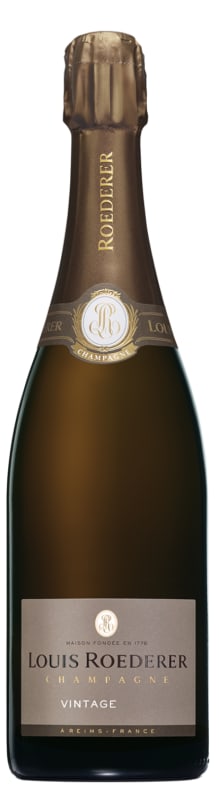


Winemaker Notes
Golden yellow with soft amber tints. Very bright and gentle sparkle visible throughout the wine. The subtle bouquet, on the first nose, opens out gradually to reveal spring-like notes of fresh citrus fruit (lemon tree rather than lemon fruit) combined with warm, almost smoky, mineral aromas, followed by notes of lightly toasted almonds, one of the signs of the ageing in oak foudres.The wine is wide, energetic and with talc-like chalkiness initially, gently coating the palate. It is both soft and rich with a full-bodied, silky mouthfeel. The finish is long and persistent.The cuvée Vintage 2012 was bottle-aged for 4 years before being left to rest for a further 6 months after disgorging in order to attain perfect maturity. The dosage is 9 g/l.Blend: 70% Pinot Noir, 30% Chardonnay
Professional Ratings
-
Wine Enthusiast
This beautiful wine, with its poise, elegance and balance, has both a steely mineral core and an outer ripe-fruit character. It has citrus, tight acidity and rich apple and green-plum flavors. The wine is still a little young and will be better from 2019.
-
Wine Spectator
This mouthwatering version is fine and satiny in texture, featuring citrus peel acidity that frames a well-meshed range of crushed currant, Earl Grey tea and lemon curd flavors, with a rich hint of toasted brioche. The minerally underpinning echoes on the finish. Drink now through 2030.


Representing the topmost expression of a Champagne house, a vintage Champagne is one made from the produce of a single, superior harvest year. Vintage Champagnes account for a mere 5% of total Champagne production and are produced about three times in a decade. Champagne is typically made as a blend of multiple years in order to preserve the house style; these will have non-vintage, or simply, NV on the label. The term, "vintage," as it applies to all wine, simply means a single harvest year.

Associated with luxury, celebration, and romance, the region, Champagne, is home to the world’s most prized sparkling wine. In order to bear the label, ‘Champagne’, a sparkling wine must originate from this northeastern region of France—called Champagne—and adhere to strict quality standards. Made up of the three towns Reims, Épernay, and Aÿ, it was here that the traditional method of sparkling wine production was both invented and perfected, birthing a winemaking technique as well as a flavor profile that is now emulated worldwide.
Well-drained, limestone and chalky soil defines much of the region, which lend a mineral component to its wines. Champagne’s cold, continental climate promotes ample acidity in its grapes but weather differences from year to year can create significant variation between vintages. While vintage Champagnes are produced in exceptional years, non-vintage cuvées are produced annually from a blend of several years in order to produce Champagnes that maintain a consistent house style.
With nearly negligible exceptions, . These can be blended together or bottled as individual varietal Champagnes, depending on the final style of wine desired. Chardonnay, the only white variety, contributes freshness, elegance, lively acidity and notes of citrus, orchard fruit and white flowers. Pinot Noir and its relative Pinot Meunier, provide the backbone to many blends, adding structure, body and supple red fruit flavors. Wines with a large proportion of Pinot Meunier will be ready to drink earlier, while Pinot Noir contributes to longevity. Whether it is white or rosé, most Champagne is made from a blend of red and white grapes—and uniquely, rosé is often produce by blending together red and white wine. A Champagne made exclusively from Chardonnay will be labeled as ‘blanc de blancs,’ while ones comprised of only red grapes are called ‘blanc de noirs.’