
Winemaker Notes
Professional Ratings
-
Wine Enthusiast
This is the winery's most ambitious Cabernet. It’s a low production, 100% Cab, aged for more than two years in the barrel. Fantastically rich in blackberries, cherries, chocolate, anise, sandalwood and dusty spices, wrapped into smooth, fine tannins. The toasty oak stands out, and the fruit is primary. Best to give this dramatic young wine some time in the cellar. 2010–2014, although it could go for the long haul.
-
Robert Parker's Wine Advocate
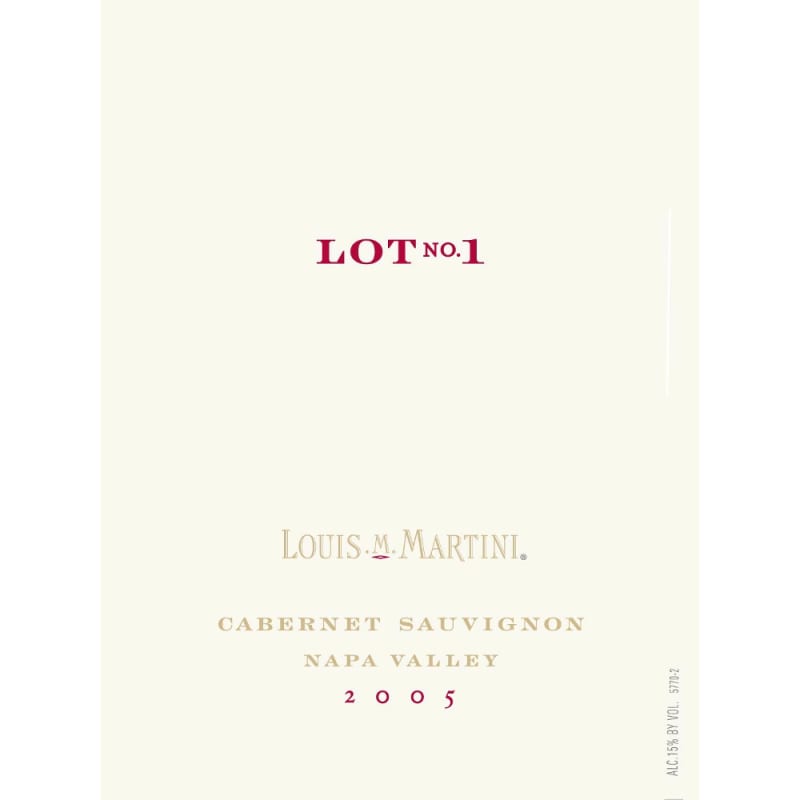
The star of this portfolio is the limited production 2005 Cabernet Sauvignon Lot 1. A deep ruby/purple color is followed by a stunning bouquet of camphor, blue and blackberries, cedarwood, fruitcake, and a hint of new saddle leather. The wine boasts fabulous fruit, a full-bodied mouthfeel, layers of glycerin and richness, and a tremendously long finish. This superb wine can be drunk now, but it should evolve for 25-30+ years.
-
Wine & Spirits
Michael Martini selects the fruit for this wine from a collection of mountain sites around Napa Valley, including Constant, Stagecoach and Steinhauer vineyards. It has the tarry intensity of mountain-grown fruit, presented in a rich, luxurious style. Easy to enjoy now with an aged sirloin, this should develop more complexity with bottle age.


One of the most prestigious wines of the world capable of great power and grace, Napa Valley Cabernet is a leading force in the world of fine, famous, collectible red wine. Today the Napa Valley and Cabernet Sauvignon are so intrinsically linked that it is difficult to discuss one without the other. But it wasn’t until the 1970s that this marriage came to light; sudden international recognition rained upon Napa with the victory of the Stag’s Leap Wine Cellars 1973 Cabernet Sauvignon in the 1976 Judgement of Paris.
Cabernet Sauvignon undoubtedly dominates Napa Valley today, covering half of the land under vine, commanding the highest prices per ton and earning the most critical acclaim. Cabernet Sauvignon’s structure, acidity, capacity to thrive in multiple environs and ability to express nuances of vintage make it perfect for Napa Valley where incredible soil and geographical diversity are found and the climate is perfect for grape growing. Within the Napa Valley lie many smaller sub-AVAs that express specific characteristics based on situation, slope and soil—as a perfect example, Rutherford’s famous dust or Stags Leap District's tart cherry flavors.