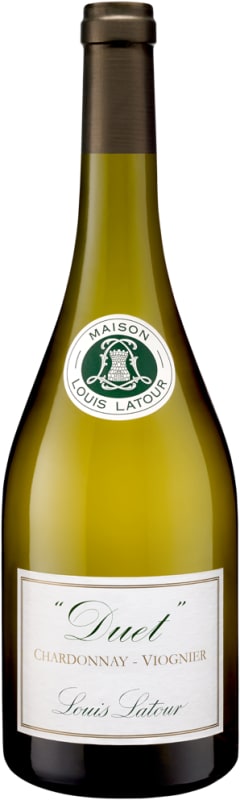


Winemaker Notes





Maison Louis Latour is one of the most highly-respected négociant-éléveurs in Burgundy. Maison Louis Latour is the producer of some of the finest Burgundian wines but has also pioneered the production of fine wines from outside Burgundy's confines. These wines from the Ardèche and the Côteaux de Verdon are slowly gaining esteem for their unmatchable quality outside Burgundy.
All the grapes from the vineyards owned by the Latour family are vinified and aged in the attractive cuverie of Chateau Corton Grancey in Aloxe-Corton. The winery was the first purpose-built cuverie in France and remains the oldest still functioning. A unique railway system with elevators allows the entire wine-making process to be achieved by the use of gravity. This eliminates the threat of oxidation from unnecessary pumping of the must. Since 1985, Louis Latour has been selling the wines of its own vineyards under the name Domaine Louis Latour.
Louis Latour has been a leader in environmentally responsible winemaking for over 15 years. Louis Latour has had ISO 14001 accreditation for Environmental Management Systems since 2003 and has been part of the European association FARRE since 1998- a group of like-minded companies who seek to develop and promote sustainable methods of agriculture.
With hundreds of white grape varieties to choose from, winemakers have the freedom to create a virtually endless assortment of blended white wines. In many European regions, strict laws are in place determining the set of varieties that may be used in white wine blends, but in the New World, experimentation is permitted and encouraged. Blending can be utilized to enhance balance or create complexity, lending different layers of flavors and aromas. For example, a variety that creates a soft and full-bodied white wine blend, like Chardonnay, would do well combined with one that is more fragrant and naturally high in acidity. Sometimes small amounts of a particular variety are added to boost color or aromatics. Blending can take place before or after fermentation, with the latter, more popular option giving more control to the winemaker over the final qualities of the wine.

A long and narrow valley producing flavorful red, white, and rosé wines, the Rhône is bisected by the river of the same name and split into two distinct sub-regions—north and south. While a handful of grape varieties span the entire length of the Rhône valley, there are significant differences between the two zones in climate and geography as well as the style and quantity of Rhône wines produced. The Northern Rhône, with its continental climate and steep hillside vineyards, is responsible for a mere 5% or less of the greater region’s total output. The Southern Rhône has a much more Mediterranean climate, the aggressive, chilly Mistral wind and plentiful fragrant wild herbs known collectively as ‘garrigue.’
In the Northern Rhône, the only permitted red variety is Syrah, which in the appellations of St.-Joseph, Crozes-Hermitage, Hermitage, Cornas and Côte-Rôtie, it produces velvety black-fruit driven, savory, peppery red wines often with telltale notes of olive, game and smoke. Full-bodied, perfumed whites are made from Viognier in Condrieu and Château-Grillet, while elsewhere only Marsanne and Roussanne are used, with the former providing body and texture and the latter lending nervy acidity. The wines of the Southern Rhône are typically blends, with the reds often based on Grenache and balanced by Syrah, Mourvèdre, and an assortment of other varieties. All three northern white varieties are used here, as well as Grenache Blanc, Clairette, Bourbelenc and more. The best known sub-regions of the Southern Rhône are the reliable, wallet-friendly Côtes du Rhône and the esteemed Châteauneuf-du-Pape. Others include Gigondas, Vacqueyras and the rosé-only appellation Tavel.