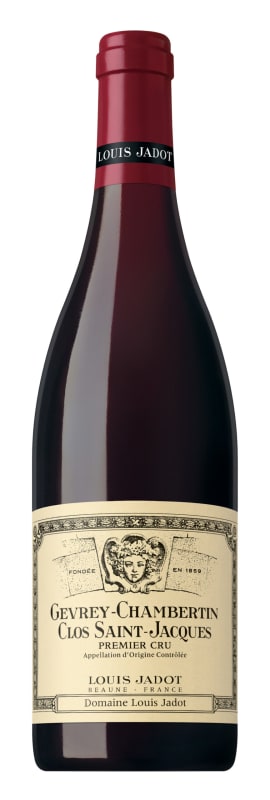


Winemaker Notes
This full-bodied dry red wine reflects the classic Gevrey "power tempered with elegance" motif. Initial aromas tend toward bing cherry, mahogany, ground espresso and mocha. There are chewy tannins soon after release, which resolve over time in the cellar, and produce a wine that matches well with a variety of protein forms.
Professional Ratings
-
Jasper Morris
The darkest colour of the three wines from the St-Jacques sector, and the most sombre in fruit. But there is a great deal of it, and it fills the mouth comprehensively. Very backward, quite firm tannins, and while I could use a bit more liveliness I expect that will come later. Drink from 2030-2040.
Barrel Sample: 93-96 -
Vinous
The 2024 Gevrey-Chambertin Clos Saint-Jacques 1er Cru is limited to a single foudre this year (equivalent to eight barrels). It demands a little more coaxing than usual from the nose but repays your patience with gorgeous scents of brambly red berries, rosehip, orange pith and crushed stone. It just exudes the essence of Clos Saint-Jacques. The palate is beautifully balanced with fine tannins and a crisp line of acidity. Very harmonious, almost silky in texture, it discreetly fans out towards the finish and has much more persistence than the Estournelles or Lavaux. Despite the poor season, Jadot manages to make a wonderful Clos Saint-Jacques.
Barrel Sample: 94-96 -
Wine Spectator
Purity and precision mark this brilliant red, beginning with cherry, raspberry, floral and mineral aromas and flavors. Almost seamless given its youth, with a refined structure and harmony. The finish is long and doubles down on the fruit and mineral elements.
-
Robert Parker's Wine Advocate
The 2023 Gevrey-Chambertin 1er Cru Clos Saint-Jacques (Domaine Louis Jadot) is also showing well, revealing notes of plums and cherries mingled with notions of licorice and toasty new oak. Medium to full-bodied, fleshy and seamless, with a sweet core of fruit and supple, powdery tannins, it will offer a broad drinking window.
Barrel Sample: 92-94


Thin-skinned, finicky and temperamental, Pinot Noir is also one of the most rewarding grapes to grow and remains a labor of love for some of the greatest vignerons in Burgundy. Fairly adaptable but highly reflective of the environment in which it is grown, Pinot Noir prefers a cool climate and requires low yields to achieve high quality. Outside of France, outstanding examples come from in Oregon, California and throughout specific locations in wine-producing world. Somm Secret—André Tchelistcheff, California’s most influential post-Prohibition winemaker decidedly stayed away from the grape, claiming “God made Cabernet. The Devil made Pinot Noir.”

This small village is home to the Grands Crus in the farthest northerly stretches of Côte de Nuits and is famous for some of the deepest and firmest Burgundian Pinot Noir.
Gevrey boasts nine Grands Crus, the best of which are arguably Le Chambertin and Chambertin-Clos de Bèze. As with all of the fragmented vineyards of Burgundy, it isn’t easy to differentiate between the two, which are situated adjacent with Clos de Bèze slightly further up the hill than Le Chambertin. Clos de Bèze has a shallower soil and if you’re really counting, may produce wines less intense but more likely to charm. Some compare Le Chambertin in both power and plentitude only to the prized Romanée-Conti Grand Cru farther south in Vosne-Romanée.
Two other Grands Crus vineyards, Mazis-Chambertin (also written Mazy-) and Latricières-Chambertin command almost as much regard as Le Chambertin and Chambertin-Clos de Bèze. The upper part of Mazy, called Les Mazis Haut is the best and Latricières-Chambertin offers an abundance of juicy fruit and a silky texture in the warmer vintages.
Other Grands Crus are Ruchottes-Chambertin, Charmes-Chambertin, Mazoyères-Chambertin, Griotte-Chambertin and Chapelle-Chambertin.
The most respected Pinot Noir wines from Gevrey-Chambertin are robust and powerful but at the same time, velvety and expressive: black fruit, black liquorice and chocolate come into play. After some time in the bottle, the wines are harmonious with bright and sometimes candied fruit, and aromas of musk, truffle and forest floor. These have staying power.