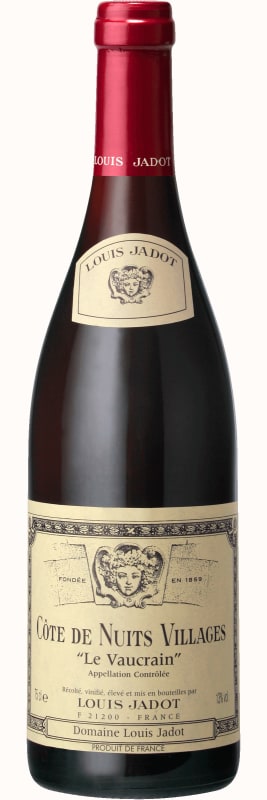


Winemaker Notes
Medium-bodied with cherry and earthy aromas and flavors, this Pinot Noir has fine tannins that will reward cellaring for up to seven years.
Enjoy with roasted meats, charcuterie and cheeses.
Professional Ratings
-
Wine Enthusiast
Whispers of smoke and camphor mingle into black cherry and violet in this spicy, fleshy Pinot Noir. Full bodied and decadent in mouthfeel, it's packed with ripe, powerful blackberry and plum flavors edged with burnt caramel and shavings of peppercorn. This robust but freshly balanced wine is ready now
-
Robert Parker's Wine Advocate
Always one of the finest value propositions in the range, the 2019 Côte de Nuits-Villages Le Vaucrain (Domaine Louis Jadot) is turning out very nicely once again, bursting with aromas of plums, warm spices and licorice. Medium to full-bodied, lively and elegant, it's charming and expressive, with a succulent core of fruit and powdery structuring tannins.
Barrel Sample: 89-91


Thin-skinned, finicky and temperamental, Pinot Noir is also one of the most rewarding grapes to grow and remains a labor of love for some of the greatest vignerons in Burgundy. Fairly adaptable but highly reflective of the environment in which it is grown, Pinot Noir prefers a cool climate and requires low yields to achieve high quality. Outside of France, outstanding examples come from in Oregon, California and throughout specific locations in wine-producing world. Somm Secret—André Tchelistcheff, California’s most influential post-Prohibition winemaker decidedly stayed away from the grape, claiming “God made Cabernet. The Devil made Pinot Noir.”

The origin of perhaps the world’s very finest Pinot Noir, Côte de Nuits is the northern half of the Côte d'Or and includes the famous wine villages of Gevrey-Chambertin, Morey-St-Denis, Chambolle-Musigny, Vougeot, Vosne-Romanée, Flagey-Echezeaux and Nuits-St-Georges.
Fine whites from Chardonnay are certainly found in the Côte de Nuits, but with much less frequency than top-performing reds made of Pinot noir. The little village of Nuits-St-Georges in its southern end gave the region its name: Côte de Nuits. The city of Dijon marks its northern border.