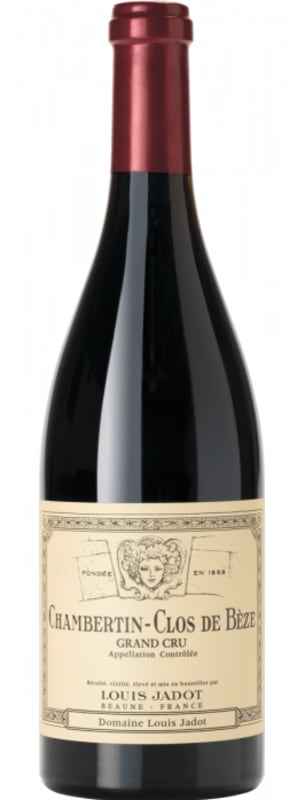


Winemaker Notes
The Clos-de-Beze occupies a rectangular 38-acre plot in the center of Gevrey's grand cru slope just north of Le Chambertin. Clos-de-Bèze may take the Le Chambertin appellation, but not vice-versa, an indication of its slightly superior quality. Indeed, though Clos-de-Beze is nearly seven acres larger than Le Chambertin, its average annual production is approximately six percent less. Domaine Louis Jadot controls 2.04 acres in Clos-de-Beze of which half were acquired in 1985 through the purchase of Domaine Clair Dau, with the balance under long-term contract. The majestic wine it yields is a quintessential Clos-de-Beze: rich, sumptuous and with an extraordinary balance of power, elegance and delicacy. The brilliant, brocaded texture finishes in long, lingering notes of berries and oak.
Professional Ratings
-
Robert Parker's Wine Advocate
Deep black cherry, charred meatiness, rose and licorice give away the identity of Jadot’s 2005 Chambertin Clos de Beze. Firm tannins and mouth-filling but bitter black cherry fruit, along with black licorice, wet stones, smoky black tea and Latakia tobacco feature on the palate, and there is a savage grip in the the finish. This lacks the refinement and elegance of many of the best 2005s from this great site, but bids fair to make up for this in sheer intensity and mysteriously complex depth. Here is a potentially ageless wine that doesn’t merely typify the dark side of 2005, but is a veritable Darth Vader of the vintage.
Range: 93-95


Thin-skinned, finicky and temperamental, Pinot Noir is also one of the most rewarding grapes to grow and remains a labor of love for some of the greatest vignerons in Burgundy. Fairly adaptable but highly reflective of the environment in which it is grown, Pinot Noir prefers a cool climate and requires low yields to achieve high quality. Outside of France, outstanding examples come from in Oregon, California and throughout specific locations in wine-producing world. Somm Secret—André Tchelistcheff, California’s most influential post-Prohibition winemaker decidedly stayed away from the grape, claiming “God made Cabernet. The Devil made Pinot Noir.”

The origin of perhaps the world’s very finest Pinot Noir, Côte de Nuits is the northern half of the Côte d'Or and includes the famous wine villages of Gevrey-Chambertin, Morey-St-Denis, Chambolle-Musigny, Vougeot, Vosne-Romanée, Flagey-Echezeaux and Nuits-St-Georges.
Fine whites from Chardonnay are certainly found in the Côte de Nuits, but with much less frequency than top-performing reds made of Pinot noir. The little village of Nuits-St-Georges in its southern end gave the region its name: Côte de Nuits. The city of Dijon marks its northern border.