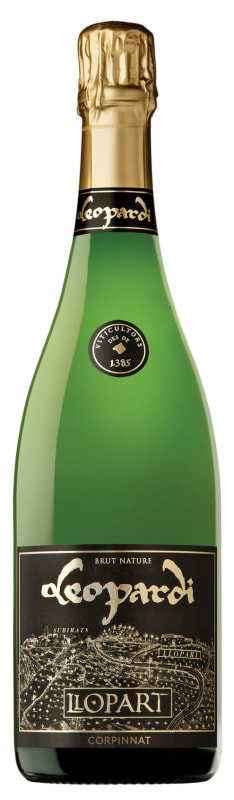


Winemaker Notes
Professional Ratings
-
Robert Parker's Wine Advocate
The 2017 Leopardi Brut Nature was produced with a blend of 45% Macabeo, 40% Xarel.lo and 15% Parellada and was disgorged after more than 60 months with the lees. The search is for elegance, subtleness and finesse. It has 11.5% alcohol, a pH of 2.95 and two grams of residual sugar.
-
Vinous
The 2017 Brut Nature Leopardi is a blend of 45% Macabeo, 40% Xarel·lo and 15% Parellada from Penedès. Aged for 66 months on the lees and disgorged in March 2024, this sparkling wine offers aromas of thyme and lime, with oxidative green apple tones set against a bakery layer. Dry and refreshing, the ethereal, crunchy palate drives through a yeasty, saline finish. This is a well-crafted, savory Corpinnat.
-
James Suckling
A tangy and very crisp brut nature that shows sour bread, elegant limes and green apples. Flavorful but almost paradoxically crisp, with a light to medium body and a nimble finish.
-
Wine Spectator
Sleek and elegant, with the refined mousse carrying a delicate range of grainy pear, dried white cherry, Marcona almond and fleur de sel notes. Fragrant, offering a waft of spring blossoms on the clean-cut finish. Xarel-lo, Macabeu and Parellada. Disgorged January 2024. Drink now. 1,500 cases made, 500 cases imported.



The Llopart family has been growing grapes since 1385, proven by a document written in Latin that is kept in the family’s archive proving a transfer of land to Bernardus Leopardi, one of the family’s ancestors, located on the winery’s present estate, known as Can Llopart de Subirats. Over the following centuries, the family dedicated themselves to the cultivation of grapevines, wheat, and olive trees, until the late 1800’s when they committed themselves wholly to grape growing. After years of tests, the family finally released their first Cava, produced in the estate’s old masia, or country house, in 1887.
In the 1950’s the family status as a premier cava producer was solidified, when Pere Llopart i Vilarós revolutionized the operation and consolidated the production of small quantity, high quality sparkling wine, produced in the methode champenoise style.
Llopart is famous for the quality of their unique, low production sparkling wines, which express the terroir of their unique location. Their estate sits on a limestone mantle with a surface soil that is a mixture of clay and siliceous components. The vineyards are cared for with the most traditional organic methods possible. Llopart is one of the most unique, traditional, and authentic sparkling wine producers in the world.

Representing the topmost expression of a Champagne house, a vintage Champagne is one made from the produce of a single, superior harvest year. Vintage Champagnes account for a mere 5% of total Champagne production and are produced about three times in a decade. Champagne is typically made as a blend of multiple years in order to preserve the house style; these will have non-vintage, or simply, NV on the label. The term, "vintage," as it applies to all wine, simply means a single harvest year.

A superior source of white grapes for the production of Spain’s prized sparkling wine, Cava, the Penedes region is part of Catalunya and sits just south of Barcelona. Medio Penedès is the most productive source of the Cava grapes, Macabeo, Xarel-lo, and Parellada. Penedes also grows Garnacha and Tempranillo (here called Ull de Llebre in Catalan), for high quality reds and rosès.