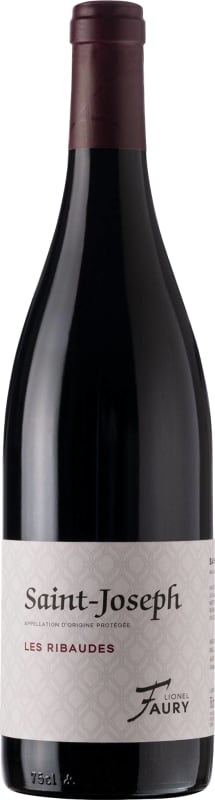


Winemaker Notes
Lionel prefers to make supple reds with soft tannin and ample freshness. A testament to his house style, the 2021 Les Ribaudes is vibrant and balanced with juicy dark fruit, a hint of peppery spice, and earthy minerality imprinted by its granite terroir. A charismatic Syrah as multifaceted as its maker.
Professional Ratings
-
Decanter
Gorgeous nose of violets and pink peppercorns. It's tannic, powerful, but enjoyably strict and straight. Good energy and intensity, not as soupy as some 2022s, though certainly ripe and long, with great verve. Fermented in concrete with some whole berries; aged in barrels of various sizes.
-
Wine & Spirits
This wine grows on a granitic plateau above La Ribaudy, just west of Chavanay. Give it some attention, and you’ll find a dark set of fruit flavors behind the initial high-tone lift—as a faint volatile acidity settles into the frame of the fruit, the wine layers a crystalline aspect of crisp strawberries over purple plum and blackberry. Then it lasts with beefy peppercorn spice. It’s quaffable stuff.
-
Wine Spectator
A dark, inky version, with a brooding core of black raspberry and cassis underscored by salt, iron and bread. Firmly structured, with sanguine notes of herbs, saucisson and smoke that show real power. The finish is held taut by muscular yet refined black tea tannins that need time to unwind. Drink now through 2032. 936 cases imported.


Marked by an unmistakable deep purple hue and savory aromatics, Syrah makes an intense, powerful and often age-worthy red. Native to the Northern Rhône, Syrah achieves its maximum potential in the steep village of Hermitage and plays an important component in the Red Rhône Blends of the south, adding color and structure to Grenache and Mourvèdre. Syrah is the most widely planted grape of Australia and is important in California and Washington. Sommelier Secret—Such a synergy these three create together, the Grenache, Syrah, Mourvedre trio often takes on the shorthand term, “GSM.”

Spanning the longest stretch of river in the northern Rhône—from Condrieu in the north, to Cornas in the south—the heart of St.-Joseph lies directly across the Rhône River from Hermitage. While its soils are basically the same as Hermitage: granite, supplemented by sand and gravel, its east facing slope receives less sunlight than Hermitage, which causes less overall berry ripening on its Syrah vines. However, some of the best of them can rival any fine expression of Hermitage, Cote-Rotie or Cornas with concentrated black fruits, dark spices, crushed rock and violets. A general advantage of the region is that its Syrahs typically don’t need as much time in the bottle compared to a Cote-Rotie or Hermitage and are much easier on the bank account!
A textbook St.-Joseph red is firm with a core of minerality that is enhanced by savory and peppery qualities. Aromas and flavors of smoke, olives, herbs, and violets are common; its wines are dense in red and black fruit.
St.-Joseph is also a source of fine northern Rhône white wine. Viognier, Marsanne and Roussanne grow well here and can be blended or made into single varietal wines. St.-Joseph whites are full and silky with citrus, pear and pineapple flavors and a rich bouquet reminiscent of honeysuckle, toasted nuts, spice and caramel.