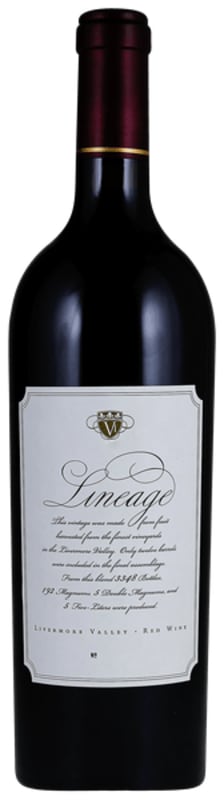


Winemaker Notes
Consistent with their thought process about what Lineage is as a wine, they look at Cabernet Sauvignon to provide the tannin and shape to the wine, the structural scaffolding. Upon the framework, Merlot contributes plush fleshiness, Cabernet Franc – the
acidity and verve, the sexiness, and Petit Verdot offers exotic organoleptic notes. The Lineage Wine Company’s 2015 offering needs several years before it begins to show all its intricacy and deliciousness. With proper storage, it will easily age 10-20 years. Drink from 2022-2035.
Blend: 80% Cabernet Sauvignon, 10% Cabernet Franc, 5% Merlot, 5% Petit Verdot
Professional Ratings
-
Wilfred Wong of Wine.com
COMMENTARY: It has been a long time coming, and now it is here. An outstanding Livermore Valley Red (made from Bordeaux grape varieties), the 2015 Lineage is nothing short of extraordinary. TASTING NOTES: This wine offers exceptional richness, style, and breed. Its aromas of black fruit and oak should pair regally with a well-marbled ribeye. (Tasted: April 23, 2019, San Francisco, CA)


One of the world’s most classic and popular styles of red wine, Bordeaux-inspired blends have spread from their homeland in France to nearly every corner of the New World. Typically based on either Cabernet Sauvignon or Merlot and supported by Cabernet Franc, Malbec and Petit Verdot, the best of these are densely hued, fragrant, full of fruit and boast a structure that begs for cellar time. Somm Secret—Blends from Bordeaux are generally earthier compared to those from the New World, which tend to be fruit-dominant.

A warm sub-appellation of the greater San Francisco Bay AVA (American Viticultural Area), Livermore Valley mainly hides behind the shielding effects of the bay’s eastern hills. However, late afternoon winds cool down summer nights as daytime heat rises from the Central Valley in the east, pulling the cold, foggy, bay air inland. This cooler evening air permeates the Livermore Valley's foothills, making this an ideal environment for the development of phenolic ripeness and concentration in its wine grapes.
The Livermore Valley is one of California's oldest wine regions and has played a crucial role in shaping California's wine industry. Spanish missionaries planted the first wine grapes in the Livermore Valley in the 1760s. Then in the mid 1800s, a man named Robert Livermore planted the area’s first commercial vineyards. Winemaker pioneer C. H. Wente arrived a few years later; today the Wente Chardonnay clone is the source of a majority of California Chardonnay. Furthermore, James Concannon and the Wetmore brothers recognized the virtues of the area’s Bordeaux-like gravel soils and dedicated themselves to making high quality wine from Bordeaux varieties. Today the area is also known for high quality Petite Sirah.