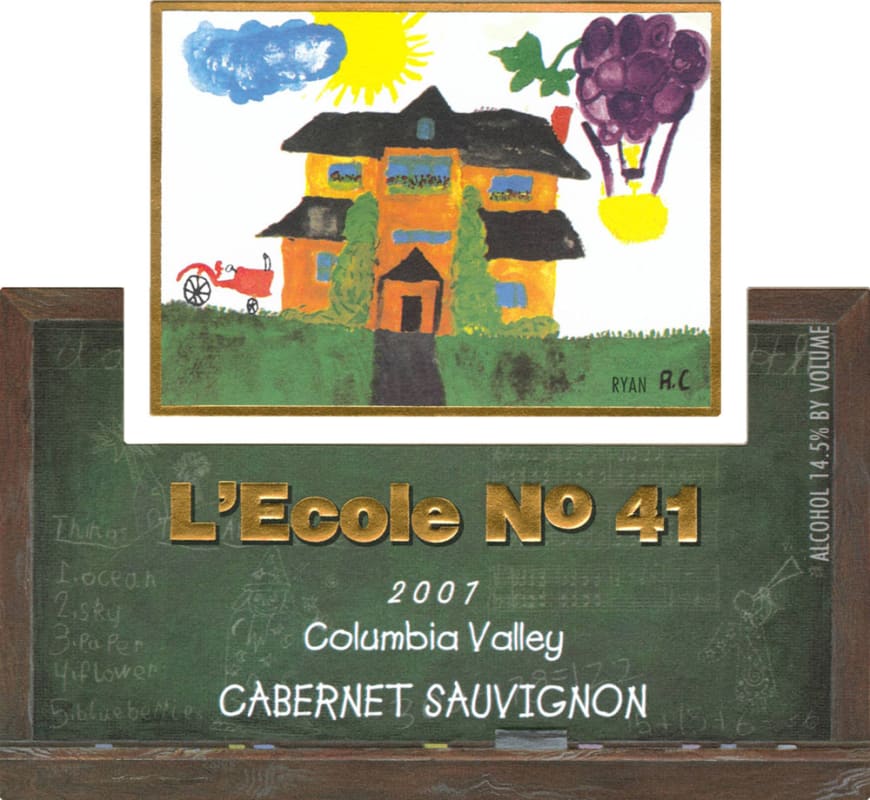

Winemaker Notes
This complex and elegant Cabernet Sauvignon reflects the diversity of terroir in the Walla Walla Valley from vineyards planted in wind-blown loess (our Estate Seven Hills Vineyard and Loess Vineyard), ice-age flood silts (Va Piano Vineyard and Pepper Bridge Vineyard) and basalt river rock (Yellow Jacket Vineyard).
Professional Ratings
-
Wine Enthusiast
This is 100% Cabernet Sauvignon from an all-star collection of Walla Walla vineyards. It shows excellent structure and depth, with plenty of herbal character. The black fruits are abundant, spicy and sharp; this is a young wine from a great vintage that needs more bottle age. The layering, though still tight and compact, suggests that with cellaring this will evolve into Bordeaux-like complexity, with a mix of herb, mineral, leaf and berry flavors. The barrel flavors (40% new) are subtle and elegant.
-
Wine Spectator
Focused, complex and compelling with the dark berry and cherry flavors picking up nutmeg, tar and tea notes along the way. The finish brings together everything harmoniously, and doesn’t let go. Drink now through 2019.
-
Robert Parker's Wine Advocate
The purple/black 2007 Cabernet Sauvignon Walla Walla Valley was aged for 22 months in 40% new French oak. It delivers an excellent nose of balsam wood, leather, violets, black cherry, and blackberry. Round, plush, and friendly on the palate with nicely concealed fine-grained tannin, it should continue to blossom for several more years and offer a drinking window extending through 2022.


A noble variety bestowed with both power and concentration, Cabernet Sauvignon enjoys success all over the globe, its best examples showing potential to age beautifully for decades. Cabernet Sauvignon flourishes in Bordeaux's Medoc where it is often blended with Merlot and smaller amounts of some combination of Cabernet Franc, Malbecand Petit Verdot. In the Napa Valley, ‘Cab’ is responsible for some of the world’s most prestigious, age-worthy and sought-after “cult” wines. Somm Secret—DNA profiling in 1997 revealed that Cabernet Sauvignon was born from a spontaneous crossing of Cabernet Franc and Sauvignon Blanc in 17th century southwest France.

Responsible for some of Washington’s most highly acclaimed wines, the Walla Walla Valley has experienced a surge in popularity in recent years and is home to both historic wineries and younger, up-and-coming producers.
The Walla Walla Valley, a Native American name meaning “many waters,” is located in southeastern Washington; part of the appellation actually extends into Oregon. Soils here are well-drained, sandy loess over Missoula Flood deposits and fractured basalt.
It is a region perfectly suited to Rhône-inspired Syrahs, distinguished by savory notes of red berry, black olive, smoke and fresh earth. Cabernet Sauvignon and Merlot create a range of styles from smooth and supple to robust and well-structured. White varieties are rare but some producers blend Sauvignon Blanc with Sémillon, resulting in a rich and round style, and plantings of Viognier, while minimal, are often quite successful.
Of note within Walla Walla, is one new and very peculiar appellation, called the Rocks District of Milton-Freewater. This is the only AVA in the U.S. whose boundaries are totally defined by the soil type. Soils here look a bit like those in the acclaimed Rhône region of Chateauneuf-du-Pape, but are large, ancient, basalt cobblestones. These stones work in the same way as they do in Chateauneuf, absorbing and then radiating the sun's heat up to enhance the ripening of grape clusters. The Rocks District is within the part of Walla Walla that spills over into Oregon and naturally excels in the production of Rhône varieties like Syrah, as well as the Bordeaux varieties.