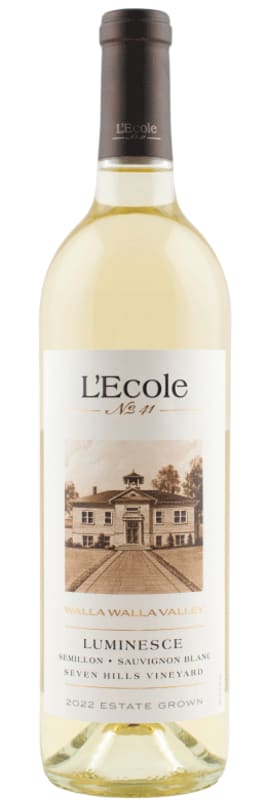


Winemaker Notes
Luminesce is our white Bordeaux blend, perfectly balanced by the rich fruit profile of Semillon and the crisp, floral, and mineral notes of the Sauvignon Blanc. This is a unique wine for L’Ecole since it’s produced exclusively with fruit from our Estate Seven Hills Vineyard.
Blend: 60% Semillon, 40% Sauvignon Blanc
Professional Ratings
-
James Suckling
Great richness comes with good balance in this concentrated, deep wine that starts with light herb and almond aromas and finishes with mouth-filling, lingering flavors of honey and golden apples. 60% semillon and 40% sauvignon blanc.
-
Jeb Dunnuck
The flagship white from this terrific estate, the 2022 Luminesce Estate Seven Hills Vineyard is based on 60% Semillon and 40% Sauvignon Blanc brought up in 15% new barrels. Classic Sauvignon citrus and sappy, minty herb notes as well as beautiful white flower and peach notes all emerge on the nose, and it hits the palate with medium-bodied richness, a balanced, elegant mouthfeel, and nicely integrated acidity.
-
Vinous
The 2022 Luminesce Estate Seven Hills Vineyard lifts from the glass with an intense blend of pungent florals, grapefruit zest, crushed green apples and gingery spice. It's round in feel, nearly creamy, with cooling acidity and masses of citrus-tinged orchard fruits. This leaves a lemon rind tension, finishing lightly structured, long and potent. While already a pleasure today, the 2022 should mature beautifully through medium-term cellaring. Rating: 92+


Sometimes light and crisp, other times rich and creamy, Bordeaux White Blends typically consist of Sauvignon Blanc and Semillon. Often, a small amount of Muscadelle or Sauvignon Gris is included for added intrigue. Popularized in Bordeaux, the blend is often mimicked throughout the New World. Somm Secret—Sauternes and Barsac are usually reserved for dessert, but they can be served before, during or after a meal. Try these sweet wines as an aperitif with jamón ibérico, oysters with a spicy mignonette or during dinner alongside hearty Alsatian sausage.

Responsible for some of Washington’s most highly acclaimed wines, the Walla Walla Valley has experienced a surge in popularity in recent years and is home to both historic wineries and younger, up-and-coming producers.
The Walla Walla Valley, a Native American name meaning “many waters,” is located in southeastern Washington; part of the appellation actually extends into Oregon. Soils here are well-drained, sandy loess over Missoula Flood deposits and fractured basalt.
It is a region perfectly suited to Rhône-inspired Syrahs, distinguished by savory notes of red berry, black olive, smoke and fresh earth. Cabernet Sauvignon and Merlot create a range of styles from smooth and supple to robust and well-structured. White varieties are rare but some producers blend Sauvignon Blanc with Sémillon, resulting in a rich and round style, and plantings of Viognier, while minimal, are often quite successful.
Of note within Walla Walla, is one new and very peculiar appellation, called the Rocks District of Milton-Freewater. This is the only AVA in the U.S. whose boundaries are totally defined by the soil type. Soils here look a bit like those in the acclaimed Rhône region of Chateauneuf-du-Pape, but are large, ancient, basalt cobblestones. These stones work in the same way as they do in Chateauneuf, absorbing and then radiating the sun's heat up to enhance the ripening of grape clusters. The Rocks District is within the part of Walla Walla that spills over into Oregon and naturally excels in the production of Rhône varieties like Syrah, as well as the Bordeaux varieties.