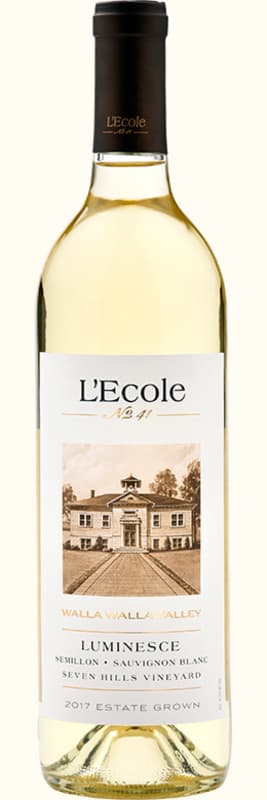


Winemaker Notes
Luminesce, our white Bordeaux blend, is anchored with Semillon at its core, providing lush tropical fruit and honeysuckle. The introduction of Sauvignon Blanc broadens the flavor and texture, elevating the crisp, floral, and mineral side of the wine.
Rich and harmonious our estate Luminesce offers aromas and flavors of citrus honey, white peach and lemon tart which builds nicely to a lingering, slightly waxy finish of citrus-mineral-spice notes.
Blend: 56% Semillon, 44% Sauvignon Blanc
Professional Ratings
-
Wilfred Wong of Wine.com
COMMENTARY: The 2017 L'Ecole No 41 Luminesce is a pleasing and sophisticated blend of Semillon and Sauvignon Blanc. TASTING NOTES: This wine shows an excellent range of aromas and flavors. Pair its green apple and dried leaf notes with clams and linguine. (Tasted: February 6, 2020, San Francisco, CA)
-
James Suckling
A very crisp and fresh style with light, grassy fruit, as well as apples, sliced lemons and stones. The palate has a fresh, crisp and juicy feel with a pleasantly salty tang through the finish. A blend of semillon and sauvignon blanc. Drink now.
-
Wine Enthusiast
The balance here is tilted slightly toward Sémillon (54%). The nose offers notes of fig, lemon balm, spun cotton and citrus. Well-balanced, richly textured flavors follow, with tropical and citrus tones on the lingering finish. It needs some time to flesh out, but the stuffing is all there.
-
Wine Spectator
Pretty jasmine flower and floral hay aromas open to elegantly layered kiwifruit and lime flavors. Sémillon and Sauvignon Blanc.


Sometimes light and crisp, other times rich and creamy, Bordeaux White Blends typically consist of Sauvignon Blanc and Semillon. Often, a small amount of Muscadelle or Sauvignon Gris is included for added intrigue. Popularized in Bordeaux, the blend is often mimicked throughout the New World. Somm Secret—Sauternes and Barsac are usually reserved for dessert, but they can be served before, during or after a meal. Try these sweet wines as an aperitif with jamón ibérico, oysters with a spicy mignonette or during dinner alongside hearty Alsatian sausage.

Responsible for some of Washington’s most highly acclaimed wines, the Walla Walla Valley has experienced a surge in popularity in recent years and is home to both historic wineries and younger, up-and-coming producers.
The Walla Walla Valley, a Native American name meaning “many waters,” is located in southeastern Washington; part of the appellation actually extends into Oregon. Soils here are well-drained, sandy loess over Missoula Flood deposits and fractured basalt.
It is a region perfectly suited to Rhône-inspired Syrahs, distinguished by savory notes of red berry, black olive, smoke and fresh earth. Cabernet Sauvignon and Merlot create a range of styles from smooth and supple to robust and well-structured. White varieties are rare but some producers blend Sauvignon Blanc with Sémillon, resulting in a rich and round style, and plantings of Viognier, while minimal, are often quite successful.
Of note within Walla Walla, is one new and very peculiar appellation, called the Rocks District of Milton-Freewater. This is the only AVA in the U.S. whose boundaries are totally defined by the soil type. Soils here look a bit like those in the acclaimed Rhône region of Chateauneuf-du-Pape, but are large, ancient, basalt cobblestones. These stones work in the same way as they do in Chateauneuf, absorbing and then radiating the sun's heat up to enhance the ripening of grape clusters. The Rocks District is within the part of Walla Walla that spills over into Oregon and naturally excels in the production of Rhône varieties like Syrah, as well as the Bordeaux varieties.