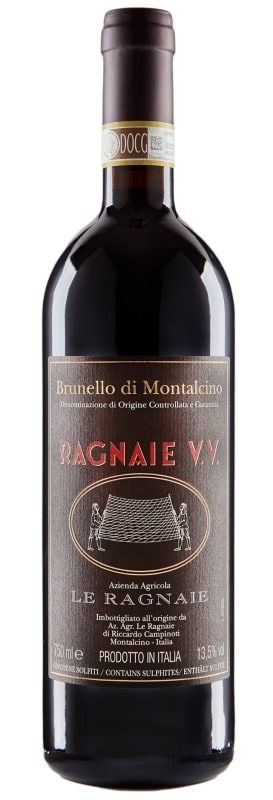


Winemaker Notes
Le Ragnaie is known for its elegant, terroir-driven wines that stand out in this Tuscan powerhouse category. Le Ragnaie Ragnaie Vigna Vecchia Brunello di Montalcino is fresh on the palate with notes of crunchy cherry, orange peel, licorice, wild herbs and crushed stone. Terrific balance and length.
Professional Ratings
-
Jeb Dunnuck
Compelling and evolving aromas emerge from the 2018 Brunello Di Montalcino Ragnaie VV, which packs in more concentration and another layer of depth, with ripe red cherry, fresh pine, and wet asphalt. Medium to full-bodied, with notes of ripe black raspberry, sage, and freshly turned soil as well as an exceptionally long finish, it has vibrant energy without being austere. This is hands down one of the top wines of the vintage. Bravo. Best After 2025.
-
Vinous
The 2018 Brunello di Montalcino VV bursts from the glass with a mentholated freshness, as dusty dried flowers and red currants are offset by a mineral thrust of crushed ashen stone. This is soft and enveloping, yet nearly juicy in feel, with depths of dark wild berry fruit and exotic spices that slowly saturate. A twang of savory herbs and sour citrus defines the finale, balancing the grippy tannins that are left to linger, as the 2018 finishes classically dry under an air of rosy inner florals. This is, yet again, another excellent example of the energetic nature of the vintage, yet the VV also possesses the potential for medium-term cellaring.
-
Decanter
Le Ragnaie’s high altitude old-vine plot is always the last to be harvested - on 4 October in 2018 - but maceration time was 40 days rather than the full 60 that perfectly ripe vintages see. Wild strawberry aromas mingle with cedar and undergrowth, while the palate brings in mint nuances. Its signature youthful austerity has extra crispness of slender yet pretty fruit, and just a tiny bit of greenness to the tannins pokes through. Ultimately stony and savoury.
-
Wine Spectator
A dry, lightly astringent red highlighted by iron, sanguine, loam, eucalyptus, plum and cherry aromas and flavors. Aromatic, with requisite fruit, this ends on the crisp side today. Presents plenty of energy and length. Best from 2025 through 2042. 300 cases made, 50 cases imported.


Among Italy's elite red grape varieties, Sangiovese has the perfect intersection of bright red fruit and savory earthiness and is responsible for the best red wines of Tuscany. While it is best known as the chief component of Chianti, it is also the main grape in Vino Nobile di Montepulciano and reaches the height of its power and intensity in the complex, long-lived Brunello di Montalcino. Somm Secret—Sangiovese doubles under the alias, Nielluccio, on the French island of Corsica where it produces distinctly floral and refreshing reds and rosés.

Famous for its bold, layered and long-lived red, Brunello di Montalcino, the town of Montalcino is about 70 miles south of Florence, and has a warmer and drier climate than that of its neighbor, Chianti. The Sangiovese grape is king here, as it is in Chianti, but Montalcino has its own clone called Brunello.
The Brunello vineyards of Montalcino blanket the rolling hills surrounding the village and fan out at various elevations, creating the potential for Brunello wines expressing different styles. From the valleys, where deeper deposits of clay are found, come wines typically bolder, more concentrated and rich in opulent black fruit. The hillside vineyards produce wines more concentrated in red fruits and floral aromas; these sites reach up to over 1,600 feet and have shallow soils of rocks and shale.
Brunello di Montalcino by law must be aged a minimum of four years, including two years in barrel before realease and once released, typically needs more time in bottle for its drinking potential to be fully reached. The good news is that Montalcino makes a “baby brother” version. The wines called Rosso di Montalcino are often made from younger vines, aged for about a year before release, offer extraordinary values and are ready to drink young.