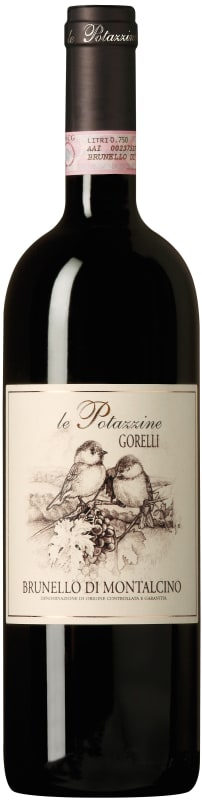


Winemaker Notes
Professional Ratings
-
Robert Parker's Wine Advocate
The 2013 Brunello di Montalcino walks a very fine line between elegance and finesse. Those may seem like two analogous terms, but this wine teaches you that they are not. The bouquet offers tonic and buoyant tones of wild berry, blueberry, dried herb and licorice. Each is elegant in its own right, but together they form a nuanced and finessed whole. Le Potazzine does very nicely in the hot vintages, but it delivers unexpected surprises (like this wine) in the cooler ones.
-
James Suckling
Aromas of smoky meat, dark berry and dried flowers. Full body, chewy tannins and a tight finish. Reserved. Needs two or three years to soften.
-
Wine Enthusiast
Underbrush, tilled soil, new leather, dried herb and pressed rose aromas slowly unfold in the glass. On the vibrant, linear palate, white pepper and chopped mint notes accent a core of sour cherry and pomegranate. Racy acidity and taut refined tannins give it an elegant structure while a saline note closes the lingering finish. It's still youthfully austere and needs time to fully develop. Drink from 2023 through 2033.
-
Wine Spectator
Heady flavors of plum, macerated cherry, sweet spices, leather and earth mark this powerful red. The dense tannins are well-matched to the fruit, texture and breadth. Exuberance wins over subtlety here. Best from 2022 through 2036.
-
Decanter
Le Potazzine is a small property totalling 5ha of vineyards. Owned by the Gorelli family since 1993, the winemaking has always been traditional, with long macerations and lengthy ageing in large Slavonian oak casks. The hallmark here is elegance, with the 2013 exhibiting appealing baking spice, raspberry, sage and dusty earth notes. On the palate the fruit is sweet but buoyant, while ripe, fine-grained tannins give sufficient structure for midterm ageing. Drinking Window 2018 - 2028


Among Italy's elite red grape varieties, Sangiovese has the perfect intersection of bright red fruit and savory earthiness and is responsible for the best red wines of Tuscany. While it is best known as the chief component of Chianti, it is also the main grape in Vino Nobile di Montepulciano and reaches the height of its power and intensity in the complex, long-lived Brunello di Montalcino. Somm Secret—Sangiovese doubles under the alias, Nielluccio, on the French island of Corsica where it produces distinctly floral and refreshing reds and rosés.

Famous for its bold, layered and long-lived red, Brunello di Montalcino, the town of Montalcino is about 70 miles south of Florence, and has a warmer and drier climate than that of its neighbor, Chianti. The Sangiovese grape is king here, as it is in Chianti, but Montalcino has its own clone called Brunello.
The Brunello vineyards of Montalcino blanket the rolling hills surrounding the village and fan out at various elevations, creating the potential for Brunello wines expressing different styles. From the valleys, where deeper deposits of clay are found, come wines typically bolder, more concentrated and rich in opulent black fruit. The hillside vineyards produce wines more concentrated in red fruits and floral aromas; these sites reach up to over 1,600 feet and have shallow soils of rocks and shale.
Brunello di Montalcino by law must be aged a minimum of four years, including two years in barrel before realease and once released, typically needs more time in bottle for its drinking potential to be fully reached. The good news is that Montalcino makes a “baby brother” version. The wines called Rosso di Montalcino are often made from younger vines, aged for about a year before release, offer extraordinary values and are ready to drink young.