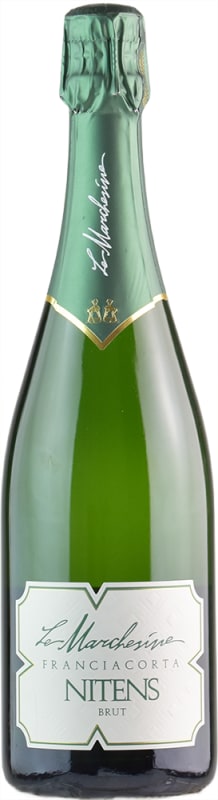


Winemaker Notes
Straw-yellow color of excellent intensity. At the first nose, marzipan, flowers and honeysuckle are exalted. Hazelnut, spices and candied ginger blend with cedar. The taste is savory, soft, enveloping and creamy, ending as a tasty, rather full-bodied wine with notes of acacia and macadamia nuts.
Professional Ratings
-
Wine Enthusiast
Crisp apple tart with wild herbs and yellow flowers flow from the glass followed by aromas of fresh bread and seashells. The well-balanced palate expresses itself with a mixture of orchard fruit and mixed citrus that pop on the palate with fresh acidity ending with a saline mineral note.
-
Robert Parker's Wine Advocate
Opening to vibrant and tonic beading, the Le Marchesine NV Franciacorta Brut Nitens is a luminous and sharp sparkling wine with a tight, lean-bodied approach. The personality of the wine is quite lively and full of energy. This is 85% Chardonnay, 10% Pinot Nero and 5% Pinot Bianco aged on the lees for 24 months. The effect is refreshing, and the bouquet is mostly focused on citrus, underripe melon and Golden Delicious apple. Any toasted notes are downplayed, but ultimately you get great value with this bottle.


A term typically reserved for Champagne and Sparkling Wines, non-vintage or simply “NV” on a label indicates a blend of finished wines from different vintages (years of harvest). To make non-vintage Champagne, typically the current year’s harvest (in other words, the current vintage) forms the base of the blend. Finished wines from previous years, called “vins de reserve” are blended in at approximately 10-50% of the total volume in order to achieve the flavor, complexity, body and acidity for the desired house style. A tiny proportion of Champagnes are made from a single vintage.
There are also some very large production still wines that may not claim one particular vintage. This would be at the discretion of the winemaker’s goals for character of the final wine.

Containing an exciting mix of wine producing subregions, Lombardy is Italy’s largest in size and population. Good quality Pinot noir, Bonarda and Barbera have elevated the reputation of the plains of Oltrepò Pavese. To its northeast in the Alps, Valtellina is the source of Italy’s best Nebbiolo wines outside of Piedmont. Often missed in the shadow of Prosecco, Franciacorta produces collectively Italy’s best Champagne style wines, and for the fun and less serious bubbly, find Lambrusco Mantovano around the city of Mantua. Lugana, a dry white with a devoted following, is produced to the southwest of Lake Garda.