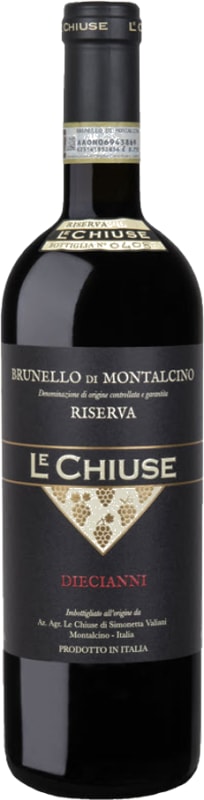


Winemaker Notes
Very intense, brilliant, and deep ruby red with garnet and cherry hues. The bouquet is wide, and intense with scents of ripe cherry, tobacco, leather, and licorice. Officinal herbs and spicy and mineral notes increase the complexity of this wine. Clean, full, warm, sapid, harmonic, and austere made of very good body, an aromatic sensation of jam and spices lasts long in the mouth.
Recommended with red meat, roasts every kind of hunting, stew, mature cheeses and all those dishes which have great sapidity.
Professional Ratings
-
Robert Parker's Wine Advocate
The Le Chiuse 2016 Brunello di Montalcino Riserva Diecianni is a beauty, holding together with impeccable balance and a silky, persistent finish. The tannins remain firm yet refined, with menthol-like notes that add lift and vibrancy, recalling a timeless winemaking style. On a second tasting, the wine shows additional definition and clear signs of bottle age, with polymerized textures and a touch of sweetness that adds weight and slightly softens the overall profile. Drawn from one of the last truly classical vintages before climate change reshaped the region’s style, this Riserva is a timeless and memorable expression released in just 2,600 bottles. The 2016 takes Le Chiuse's celebrated late-release program to the next level. Congratulations.
-
Jeb Dunnuck
Pouring a garnet hue, the 2016 Brunello Di Montalcino Riserva Diecianni is layered and complex on the nose, with sandalwood, dried cherries, potpourri, incense, and baked earth. The palate is medium to full-bodied and beautifully textured, with ripe tannins, balanced acidity, and a long finish that stays seamless and resonant. It’s showing brilliantly today and should continue to drink beautifully for decades. Drink 2026-2050.
-
Vinous
The 2016 Brunello di Montalcino Riserva Diecianni is impossible to ignore, with a wonderfully earthy and old-school blend of crushed cherries, fall leaves, underbrush, sweet pipe tobacco and autumnal spice. It presents a harmonious combination of silken, nearly fleshy textures and vividly ripe red and black fruits underscored by minerals and a hint of citrus. The structure clamps down through the finish, reminding me of this beauty's youthful state as a tinge of wild blueberry fades. This is a glorious riserva with a very bright future.
-
Wine Spectator
Inviting aromas and flavors of licorice, sautéed porcini, woodsy underbrush, and fading cherry and berry fruit are the hallmarks of this maturing red. There’s a mineral vein interwoven, and this is still fresh and vigorous, with an intense aftertaste, all on an elegant, linear profile.
-
James Suckling
Complex wine, full of evolved notes of blackberries and strawberry jam, tobacco, earthy notes and restrained chocolate. Full-bodied, it shines for crisp acidity with firm, velvety tannins that are still grippy yet condensed and long. Meaty, umami finish.


Among Italy's elite red grape varieties, Sangiovese has the perfect intersection of bright red fruit and savory earthiness and is responsible for the best red wines of Tuscany. While it is best known as the chief component of Chianti, it is also the main grape in Vino Nobile di Montepulciano and reaches the height of its power and intensity in the complex, long-lived Brunello di Montalcino. Somm Secret—Sangiovese doubles under the alias, Nielluccio, on the French island of Corsica where it produces distinctly floral and refreshing reds and rosés.

Famous for its bold, layered and long-lived red, Brunello di Montalcino, the town of Montalcino is about 70 miles south of Florence, and has a warmer and drier climate than that of its neighbor, Chianti. The Sangiovese grape is king here, as it is in Chianti, but Montalcino has its own clone called Brunello.
The Brunello vineyards of Montalcino blanket the rolling hills surrounding the village and fan out at various elevations, creating the potential for Brunello wines expressing different styles. From the valleys, where deeper deposits of clay are found, come wines typically bolder, more concentrated and rich in opulent black fruit. The hillside vineyards produce wines more concentrated in red fruits and floral aromas; these sites reach up to over 1,600 feet and have shallow soils of rocks and shale.
Brunello di Montalcino by law must be aged a minimum of four years, including two years in barrel before realease and once released, typically needs more time in bottle for its drinking potential to be fully reached. The good news is that Montalcino makes a “baby brother” version. The wines called Rosso di Montalcino are often made from younger vines, aged for about a year before release, offer extraordinary values and are ready to drink young.