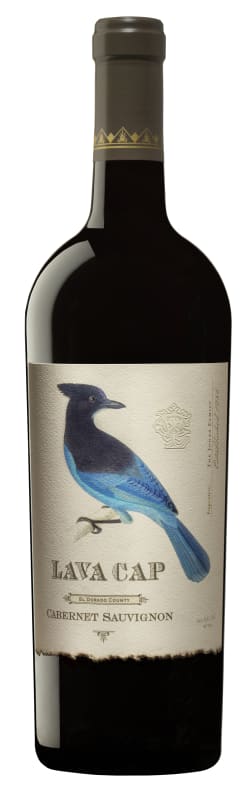


Winemaker Notes
Lava Cap’s Cabernet Sauvignon has long been recognized for producing age-worthy wines that showcase vibrant fruit and rich texture. The 2023 Cabernet Sauvignon holds true to this, with a dark purple color, and dark black fruit on the nose. On the palate, vibrant fruit mingles with allspice and clove, framed by vibrant acidity and well integrated tannins.
Professional Ratings
-
Tasting Panel
This is highly exciting Cabernet offered at a price that won’t boost your blood pressure. Made from fruit grown in volcanic soils on hillside sites ranging in elevation from 2,700 to 3,100 feet (reportedly the highest elevation Cabernet Sauvignon plantings in Northern California), this is packed with pure blackberry fruit accented with a lip-smacking streak of saline minerality. Already quite complex in its youth, this will only improve for another five years.
-
Decanter
The Jones Family is a third-generation, family-owned winery in the Sierra Nevada Foothills, produces this wine from grapes grown at 823 metres in volcanic-rich soils. Sourced from five distinct sites planted between 792 and 945 metres, the 2023 vintage offers a classic expression of Cabernet Sauvignon, with the brightness and lift characteristic of high-elevation fruit from the El Dorado AVA. Dark cherry, blackberry, and cassis intermingle with notes of leather and fresh cedarwood. Superfine, polished tannins pave the way for juicy red and black-toned fruit to linger on the palate, nuanced by graphite, herbes de Provence, and wet slate on the finish.
-
Wine Enthusiast
Concentrated, with aromas of Huckleberry and blueberry, prominent Black licorice, and notes of toasty vanilla and coriander on the nose; the mid-palate is dry with flavors of black currant confiture, clove, citrus cream, and dry lip-smacking tannins creating a dry finish. Decant and pair with grilled duck breast, scallop potatoes.
-
James Suckling
Plush, generous, fruit-driven aromas of black currants, red currants, dark plums, spices and cedar. The palate is full-bodied with a rounded mouthfeel, firmly framed tannins and a balanced finish.


A noble variety bestowed with both power and concentration, Cabernet Sauvignon enjoys success all over the globe, its best examples showing potential to age beautifully for decades. Cabernet Sauvignon flourishes in Bordeaux's Medoc where it is often blended with Merlot and smaller amounts of some combination of Cabernet Franc, Malbecand Petit Verdot. In the Napa Valley, ‘Cab’ is responsible for some of the world’s most prestigious, age-worthy and sought-after “cult” wines. Somm Secret—DNA profiling in 1997 revealed that Cabernet Sauvignon was born from a spontaneous crossing of Cabernet Franc and Sauvignon Blanc in 17th century southwest France.

As home to California’s highest altitude vineyards, El Dorado is also one of its oldest wine growing regions. When gold miners settled here in the late 1800s, many also planted vineyards and made wine to quench its local demand.
By 1870, El Dorado County, as part of the greater Sierra Foothills growing area, was among the largest wine producers in the state, behind only Los Angeles and Sonoma counties. The local wine industry enjoyed great success until just after the turn of the century when fortune-seekers moved elsewhere and its population diminished. With Prohibition, winemaking and grape growing was totally abandoned. But some of these vines still exist today and are the treasure chest of the Sierra Foothills as we know them.
El Dorado has a diverse terrain with elevations ranging from 1,200 to 3,500 feet, creating countless mesoclimates for its vineyards. This diversity allows success with a wide range of grapes including whites like Gewurztraminer and Sauvignon Blanc, as well as for reds, Grenache, Syrah, Tempranillo, Barbera and especially, Zinfandel.
Soils tend to be fine-grained volcanic rock, shale and decomposed granite. Summer days are hot but nights are cool and the area typically gets ample precipitation in the form or rain or snow in the winter.