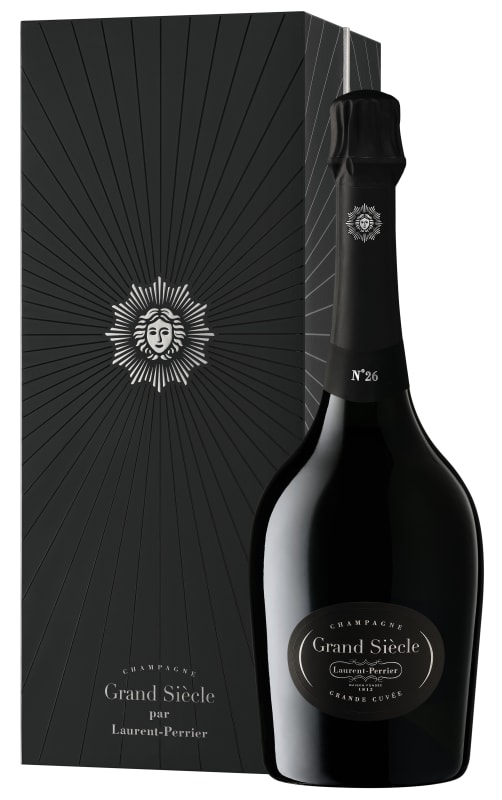


Winemaker Notes
Grand Siècle was born from the vision of Bernard de Nonancourt: to recreate the perfect year, one that nature alone could never deliver. Iteration N°26 embodies this idea, crafted from a masterful blend of three outstanding years – 2012, 2008, and 2007 – with a predominance of Chardonnay complemented by Pinot Noir, sourced from eight Grand Cru vineyards.
After at least 10 years of aging on the lees, the result is a wine of rare aromatic complexity, combining freshness, energy, and timeless elegance. Grand Siècle is never tied to a single vintage but represents a higher concept: the pursuit of absolute balance between intensity, finesse and harmony. Since 1959, it has been revealed only 26 times in bottle and 24 times in magnum, affirming its place among the most exclusive and refined champagnes.
Blend: 58% Chardonnay, 42% Pinot Noir
Professional Ratings
-
James Suckling
This is really something. Electric on the palate. The aromas are so complex with sliced fresh and dried ginger, subtle pie crust, tarte tatin and hints of nutmeg with some salted caramel. Toasted bread, too. Always subtle. The palate is full- to medium-bodied yet hemmed-in with a freshness and balance that draws you back. Savory and vibrant. It's full of energy. Spectacular. Fascinating. Symphonic blend of 2012, 2008 and 2007. 65% of the 2012, 25% of the 2008 and 10% of the 2007. Eight grand cru. Chardonnay 58% and 42% pinot noir. Disgorged February 2023. 10 years on the lees. 7g/L dosage.
-
Jeb Dunnuck
Eight different Grand Crus contributed to the blend of the bright straw-colored NV Champagne Grand Siècle Grande Cuvée 26 Brut (65% from 2012, 25% from 2008, and the rest from 2007). The nose offers notes of fresh bread dough, orange blossoms, fresh apples, and a hint of peach. Medium-bodied, the palate comes to life, filling with wonderful, pure notes of fleshy ripe fruit, a supple texture, and lots of length on the finish. It needs time initially to open in the glass, but as it opens it really starts to show its pedigree. It’s a very impressive wine to drink over the coming 2-3 decades. Released in January 2024. 7 grams per liter of dosage.
-
Wine Enthusiast
Tautly textured, the Champagne is delicious with a poise between white and citrus fruits along with touches of maturity coming through. Drink this magnificent wine now for its great balance and intensity.
-
Decanter
This iteration of Grand Siècle is almost entirely composed of two of Champagne's greatest recent vintages, so expectations are high. The wine more than meets them, tempering the generosity of 2012's fruit – ripe apricots, white peach, clementines and sunny, zesty citrus – with a pitch-perfect streak of 2008 tautness and structure. There are some fleshy, creamy notes of papaya and toasted white sourdough, but everything is as delicately rendered as expected and impeccably shaped, with a sleek, silky mousse. A little more approachable than Itération No. 25, it will welcome extended bottle age rather than demand it. The blend is 58% Chardonnay and 42% Pinot Noir from eight grand cru vineyards. 65% is from the 2012 vintage, 35% from 2008 and 10% from 2007.
-
Robert Parker's Wine Advocate
...Unfurling in the glass with scents of crisp nectarine, pear and honeyed citrus fruit that mingle with notions of fresh mint, blanched almonds and iodine, the wine is full-bodied, concentrated and tightly wound, with broad structural shoulders, tangy acids and a long, intense finish. It's a great Grand Siècle in the making.
-
Wine Spectator
A graceful Champagne, with flavors of boysenberry and black cherry fruit, toast, blanched almond and grapefruit pith, graphite and fleur de sel gliding across the satiny mousse. Reveals racy acidity that sculpts fine definition, allowing the detailed profile to expand on the palate, while minerally hints of chalk and oyster shell linger on the finish. Chardonnay and Pinot Noir. Drink now through 2030.
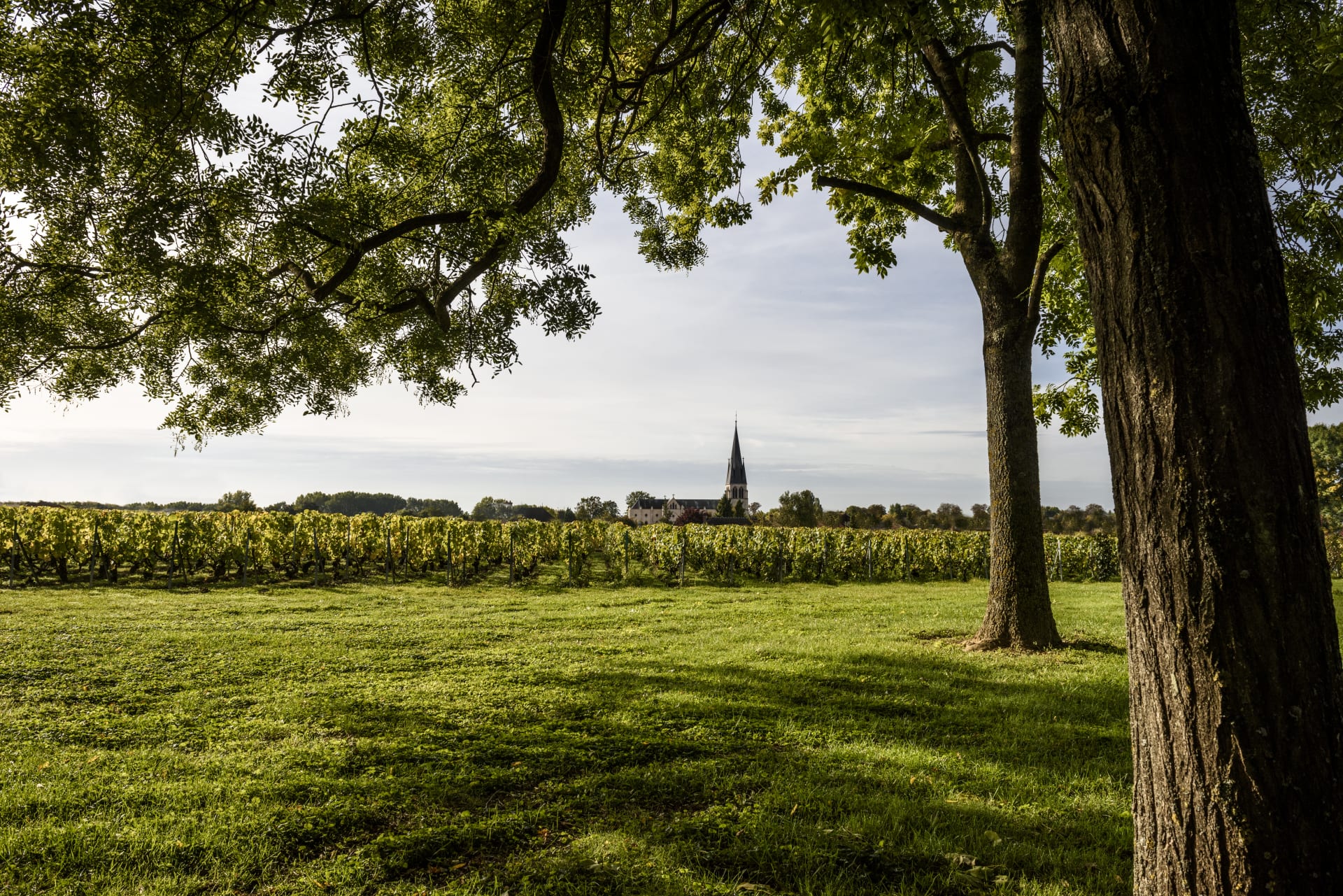




Established in 1812, Champagne Laurent-Perrier has a long tradition of innovation in Champagne and can be credited with many of the ideas that have defined Champagne production since the mid 20th century. Laurent-Perrier was among the first to introduce stainless steel fermentation tanks to the region in the 1950s, resurrected the non-dosage Champagne category with the introduction of Ultra Brut in 1981, and sparked the revival of non-vintage rosé Champagne in 1968 despite the opinion of other producers that non-vintage rosés were not to be taken seriously. Today, Laurent Perrier's iconic Cuvée Rosé remains the benchmark for non-vintage rosé champagne.
Laurent-Perrier has become one of the international leaders in Champagne based entirely on the quality of the wines and core values as a company. Laurent-Perrier is still a family-controlled business and makes nothing other than champagne. The house prides itself on quality and consistency, attributable to having only 3 chefs de caves since 1949.
Laurent-Perrier's house style emphasizes freshness, elegance, and finesse across its entire range of champagnes. None of the wines are aged in oak, and Laurent-Perrier makes fewer single-vintage wines than many other houses. The art of blending - not just of grapes but of years, as well - is fundamental to champagne. At Laurent-Perrier, even our prestige cuvée Grand Siècle is never a single vintage wine, but always a blend of three complementary vintage years, essentially "creating" the perfect year.

A term typically reserved for Champagne and Sparkling Wines, non-vintage or simply “NV” on a label indicates a blend of finished wines from different vintages (years of harvest). To make non-vintage Champagne, typically the current year’s harvest (in other words, the current vintage) forms the base of the blend. Finished wines from previous years, called “vins de reserve” are blended in at approximately 10-50% of the total volume in order to achieve the flavor, complexity, body and acidity for the desired house style. A tiny proportion of Champagnes are made from a single vintage.
There are also some very large production still wines that may not claim one particular vintage. This would be at the discretion of the winemaker’s goals for character of the final wine.

Associated with luxury, celebration, and romance, the region, Champagne, is home to the world’s most prized sparkling wine. In order to bear the label, ‘Champagne’, a sparkling wine must originate from this northeastern region of France—called Champagne—and adhere to strict quality standards. Made up of the three towns Reims, Épernay, and Aÿ, it was here that the traditional method of sparkling wine production was both invented and perfected, birthing a winemaking technique as well as a flavor profile that is now emulated worldwide.
Well-drained, limestone and chalky soil defines much of the region, which lend a mineral component to its wines. Champagne’s cold, continental climate promotes ample acidity in its grapes but weather differences from year to year can create significant variation between vintages. While vintage Champagnes are produced in exceptional years, non-vintage cuvées are produced annually from a blend of several years in order to produce Champagnes that maintain a consistent house style.
With nearly negligible exceptions, . These can be blended together or bottled as individual varietal Champagnes, depending on the final style of wine desired. Chardonnay, the only white variety, contributes freshness, elegance, lively acidity and notes of citrus, orchard fruit and white flowers. Pinot Noir and its relative Pinot Meunier, provide the backbone to many blends, adding structure, body and supple red fruit flavors. Wines with a large proportion of Pinot Meunier will be ready to drink earlier, while Pinot Noir contributes to longevity. Whether it is white or rosé, most Champagne is made from a blend of red and white grapes—and uniquely, rosé is often produce by blending together red and white wine. A Champagne made exclusively from Chardonnay will be labeled as ‘blanc de blancs,’ while ones comprised of only red grapes are called ‘blanc de noirs.’