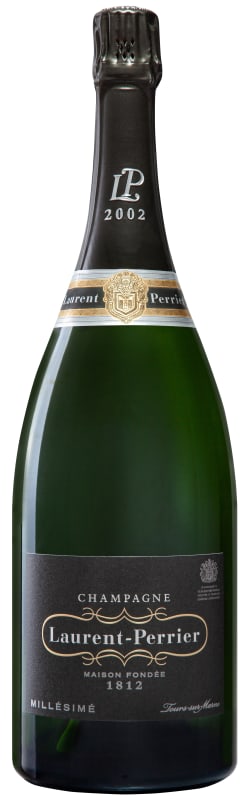


Winemaker Notes
Laurent-Perrier is selective when declaring vintages from only the very best years to create a rare and exceptional wine, characteristic of the House's style.
Golden yellow color, with green highlights with a steady stream of fine and persistent bubbles. The initial aroma is marked by an attractive fruity character which then evolves displaying notes of ripe fruits and honey (acacia honey). Initial impressions are of vivacity and a fine mousse. As its character is gradually revealed, there is a sense of complexity, depth of flavor and a still youthful freshness. The long finish is marked by persistent notes of yellow stone fruits (mirabelle plum).
Professional Ratings
-
Wine Enthusiast
This very structured wine is dry, in the Laurent-Perrier house style. Crunchy green apples are supported by richness and a complex texture. With nine years in the cellar, it has already gained some maturity, but needs aging.
-
Decanter
From the superb 2002 vintage, this equal blend of Chardonnay and Pinot Noir is beautifully refined and structured. Delicate bubbles reveal crisp lemon and yeast aromas, backed by clean lines through the mid-palate and a delicious, spicy finish. Drinking well but worth keeping for a few more years.
-
Robert Parker's Wine Advocate
The 2002 Brut Millésimé is drinking brilliantly, bursting with aromas of pear, yellow orchard fruit, citrus oil, peach, smoke and toasted bread. Medium to full-bodied, layered and complete, it's elegantly textural and broad-shouldered, with lovely depth and a sapid finish. Along with the 2008, this is my favorite vintage of the decade chez Laurent-Perrier, and it's drinking very well today.
-
Wine Spectator
A bright, mineral-driven Champagne that offers a creamy mousse and flavors of green pear, anise, spiced nut and candied lemon zest. A note of sweet smoke lingers on the moderate finish. Drink now through 2016.
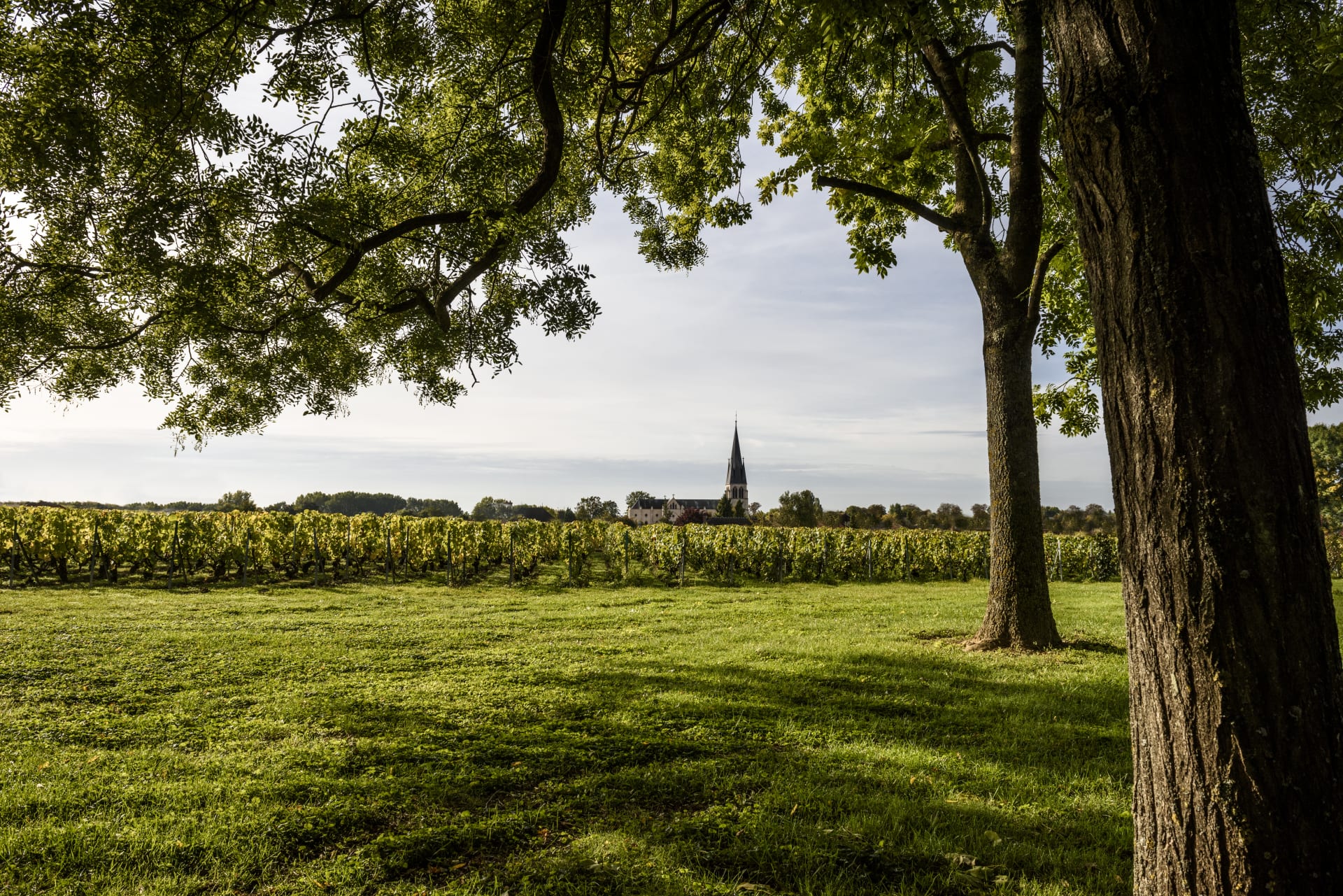




Established in 1812, Champagne Laurent-Perrier has a long tradition of innovation in Champagne and can be credited with many of the ideas that have defined Champagne production since the mid 20th century. Laurent-Perrier was among the first to introduce stainless steel fermentation tanks to the region in the 1950s, resurrected the non-dosage Champagne category with the introduction of Ultra Brut in 1981, and sparked the revival of non-vintage rosé Champagne in 1968 despite the opinion of other producers that non-vintage rosés were not to be taken seriously. Today, Laurent Perrier's iconic Cuvée Rosé remains the benchmark for non-vintage rosé champagne.
Laurent-Perrier has become one of the international leaders in Champagne based entirely on the quality of the wines and core values as a company. Laurent-Perrier is still a family-controlled business and makes nothing other than champagne. The house prides itself on quality and consistency, attributable to having only 3 chefs de caves since 1949.
Laurent-Perrier's house style emphasizes freshness, elegance, and finesse across its entire range of champagnes. None of the wines are aged in oak, and Laurent-Perrier makes fewer single-vintage wines than many other houses. The art of blending - not just of grapes but of years, as well - is fundamental to champagne. At Laurent-Perrier, even our prestige cuvée Grand Siècle is never a single vintage wine, but always a blend of three complementary vintage years, essentially "creating" the perfect year.

Representing the topmost expression of a Champagne house, a vintage Champagne is one made from the produce of a single, superior harvest year. Vintage Champagnes account for a mere 5% of total Champagne production and are produced about three times in a decade. Champagne is typically made as a blend of multiple years in order to preserve the house style; these will have non-vintage, or simply, NV on the label. The term, "vintage," as it applies to all wine, simply means a single harvest year.

Associated with luxury, celebration, and romance, the region, Champagne, is home to the world’s most prized sparkling wine. In order to bear the label, ‘Champagne’, a sparkling wine must originate from this northeastern region of France—called Champagne—and adhere to strict quality standards. Made up of the three towns Reims, Épernay, and Aÿ, it was here that the traditional method of sparkling wine production was both invented and perfected, birthing a winemaking technique as well as a flavor profile that is now emulated worldwide.
Well-drained, limestone and chalky soil defines much of the region, which lend a mineral component to its wines. Champagne’s cold, continental climate promotes ample acidity in its grapes but weather differences from year to year can create significant variation between vintages. While vintage Champagnes are produced in exceptional years, non-vintage cuvées are produced annually from a blend of several years in order to produce Champagnes that maintain a consistent house style.
With nearly negligible exceptions, . These can be blended together or bottled as individual varietal Champagnes, depending on the final style of wine desired. Chardonnay, the only white variety, contributes freshness, elegance, lively acidity and notes of citrus, orchard fruit and white flowers. Pinot Noir and its relative Pinot Meunier, provide the backbone to many blends, adding structure, body and supple red fruit flavors. Wines with a large proportion of Pinot Meunier will be ready to drink earlier, while Pinot Noir contributes to longevity. Whether it is white or rosé, most Champagne is made from a blend of red and white grapes—and uniquely, rosé is often produce by blending together red and white wine. A Champagne made exclusively from Chardonnay will be labeled as ‘blanc de blancs,’ while ones comprised of only red grapes are called ‘blanc de noirs.’