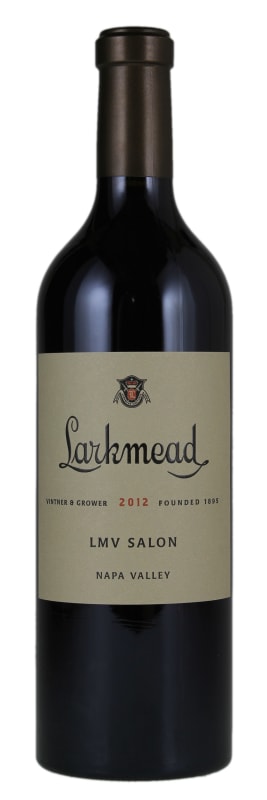


Winemaker Notes
LMV Salon has a balance and a texture that is unique to the Larkmead wines. The micro-climate at Larkmead’s northern Napa Valley location lends itself to more powerful wines, but the broad, viscous palate is almost weightless as the fine tannins carry the wine through the finish. The grapes grown for this wine are planted in a combination of Bale loam and gravel soil deposited by the alluvial fans of the Napa River and Selby Creek which add to the finesse of this wine.
Blend: 67% Cabernet Sauvignon, 33% Cabernet Franc
Professional Ratings
-
James Suckling
What a finish on this with great fruit intensity. Full-bodied, firm and velvety. Lots of fruit and tannin tension. It has a fabulous finish. Wonderful elegance.
-
Robert Parker's Wine Advocate
The fabulous 2012 Proprietary Red LMV Salon is a 1,090-case blend of 67% Cabernet Sauvignon and 33% Cabernet Franc. It reveals a refined nose of mulberries, blueberries, raspberries, spring flowers and forest floor. A dense, ripe, opulent, medium to full-bodied 2012, I rated it slightly lower than last year from barrel because it seems somewhat closed. Give it another 3-4 years of cellaring and drink it over the following 15+ years.
-
Wine Spectator
This offers a core of dense, dusty, loamy earth—laced Cabernet, with shades of black licorice, mocha and espresso. All in all, this is a powerful, well-focused effort that merits short-term cellaring. Cabernet Sauvignon and Cabernet Franc. Best from 2018 through 2030.


Undoubtedly proving its merit over and over, Napa Valley is a now a leading force in the world of prestigious red wine regions. Though Cabernet Sauvignon dominates Napa Valley, other red varieties certainly thrive here. Important but often overlooked include Merlot and other Bordeaux varieties well-regarded on their own as well as for their blending capacities. Very old vine Zinfandel represents an important historical stronghold for the region and Pinot noir is produced in the cooler southern parts, close to the San Pablo Bay.
Perfectly situated running north to south, the valley acts as a corridor, pulling cool, moist air up from the San Pablo Bay in the evenings during the hot days of the growing season, which leads to even and slow grape ripening. Furthermore the valley claims over 100 soil variations including layers of volcanic, gravel, sand and silt—a combination excellent for world-class red wine production.