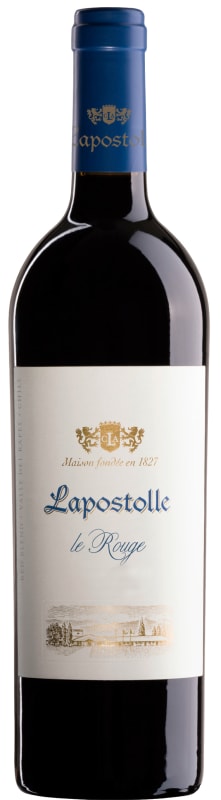


Winemaker Notes




Lapostolle was founded in 1994 by Alexandra Marnier Lapostolle and her husband Cyril de Bournet upon their discovery of a unique clos in the Apalta Valley sheltering 100-year-old pre-phylloxera vines. They quickly realized its potential for producing world-class wines and embarked on their family’s next chapter in the New World. Alexandra brought generations of French winemaking tradition and expertise to the rugged landscape of the Colchagua Valley.
Today, Charles de Bournet, the seventh generation, leads the winery in its newest chapter of innovation, punctuated by the official recognition of the Apalta DO in 2018. Together with Andrea León, Technical Director & Winemaker, Lapostolle continue to craft wines that honor the winery’s credo: French in essence, Chilean by birth.

With hundreds of red grape varieties to choose from, winemakers have the freedom to create a virtually endless assortment of blended red wines. In many European regions, strict laws are in place determining the set of varieties that may be used, but in the New World, experimentation is permitted and encouraged resulting in a wide variety of red wine styles. Blending can be utilized to enhance balance or create complexity, lending different layers of flavors and aromas. For example, a red wine blend variety that creates a fruity and full-bodied wine would do well combined with one that is naturally high in acidity and tannins. Sometimes small amounts of a particular variety are added to boost color or aromatics. Blending can take place before or after fermentation, with the latter, more popular option giving more control to the winemaker over the final qualities of the wine.
How to Serve Red Wine
A common piece of advice is to serve red wine at “room temperature,” but this suggestion is imprecise. After all, room temperature in January is likely to be quite different than in August, even considering the possible effect of central heating and air conditioning systems. The proper temperature to aim for is 55° F to 60° F for lighter-bodied reds and 60° F to 65° F for fuller-bodied wines.
How Long Does Red Wine Last?
Once opened and re-corked, a bottle stored in a cool, dark environment (like your fridge) will stay fresh and nicely drinkable for a day or two. There are products available that can extend that period by a couple of days. As for unopened bottles, optimal storage means keeping them on their sides in a moderately humid environment at about 57° F. Red wines stored in this manner will stay good – and possibly improve – for anywhere from one year to multiple decades. Assessing how long to hold on to a bottle is a complicated science. If you are planning long-term storage of your reds, seek the advice of a wine professional.

Touching the Pacific in the west and stretching up into the Andes on its eastern side, the Rapel Valley is one of the more substantial fine red wine producing regions of Chile and contains both the Colchagua Valley in its south and west and the Cachapoal in its north and east. While it is recognized for its exceptional warm-climate reds, the region does produce some fine Pinot noir and Sauvignon blanc on its coastal side.
Some of the country’s finest Cabernet Sauvignon comes from the Rapel’s Andean foothills—with significant individualized smaller zones already identified. Soils here are mixtures of loam, clay, and sand; Cabernet Sauvignon, Carmenère, and Merlot are the most prolific varieties throughout the region.