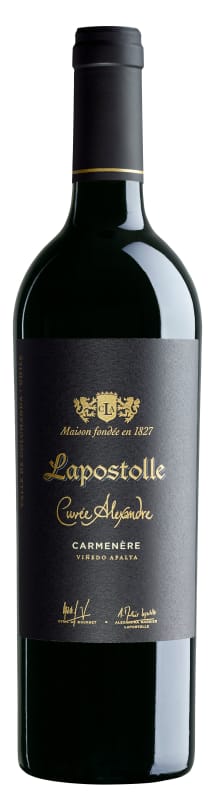


Winemaker Notes
Lapostolle Cuvée Alexandre Carmenére boasts a complex nose with red and black fruit, spice, herbal, and vanilla aromas. Bright and vivid, it is harvested late in the season, producing a medium structure with juicy, round tannins.
Pair Cuvée Alexandre Carmenére with dishes such as rabbit or four-cheese pasta with grated truffles. This wine can be cellared for several years.
Professional Ratings
-
James Suckling
Spicy, yet exuberant, with black and red plums, cumin, fennel and some fine mineral accents. Pure and bright with a densely packed, full-bodied palate. Powerful yet tense and polished tannins. 85% carmenere, 12% syrah and 3% petit verdot.
-
Vinous
The 2020 Carménère Cuvée Alexandre also contains 12% Syrah and 3% Petit Verdot from Apalta, Colchagua, and spent 10 months in used barrels. Purple in the glass, with hints of blackberry, plum and twists of mint and pyrazine, it has a lovely structure, delivering firm, juicy tannins and sustained flavor while the terroir brings intensity.
-
Wine Enthusiast
Tart cherry and chalk appear on the nose of this full-bodied red. Intense fruit flavors are balanced by refreshing acidity. It has smooth tannins, a mineral character and a pleasant oaky finish.”




Lapostolle was founded in 1994 by Alexandra Marnier Lapostolle and her husband Cyril de Bournet upon their discovery of a unique clos in the Apalta Valley sheltering 100-year-old pre-phylloxera vines. They quickly realized its potential for producing world-class wines and embarked on their family’s next chapter in the New World. Alexandra brought generations of French winemaking tradition and expertise to the rugged landscape of the Colchagua Valley.
Today, Charles de Bournet, the seventh generation, leads the winery in its newest chapter of innovation, punctuated by the official recognition of the Apalta DO in 2018. Together with Andrea León, Technical Director & Winemaker, Lapostolle continue to craft wines that honor the winery’s credo: French in essence, Chilean by birth.

Dark, full-bodied and herbaceous with a spicy kick, Carménère found great success with its move to Chile in the mid-19th century. However, the variety went a bit undercover until 1994 when many plantings previously thought to be Merlot, were profiled as Carménère. Somm Secret— Carménère is both a progeny and a great-grandchild of the similarly flavored Cabernet Franc.

Well-regarded for intense and exceptionally high quality red wines, the Colchagua Valley is situated in the southern part of Chile’s Rapel Valley, with many of the best vineyards lying in the foothills of the Coastal Range.
Heavy French investment and cutting-edge technology in both the vineyard and the winery has been a boon to the local viticultural industry, which already laid claim to ancient vines and a textbook Mediterranean climate.
The warm, dry growing season in the Colchagua Valley favors robust reds made from Cabernet Sauvignon, Carmenère, Malbec and Syrah—in fact, some of Chile’s very best are made here. A small amount of good white wine is produced from Chardonnay and Sauvignon Blanc.