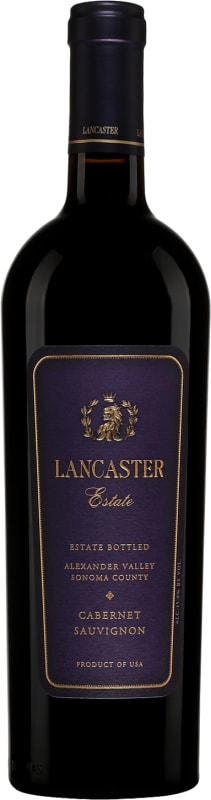


Winemaker Notes
The 2019 Estate Cabernet Sauvignon captures the pure expression of their unique terroir at Lancaster Estate. It is a blend of four of the five of the red Bordeaux varietals they have planted on their volcanic hillside vineyards. The nose is rich with aromas of dark plum, tobacco and black pepper. The palate is deep and concentrated with flavors of black cherry, dark stone fruit, dried sage and a subtle earthiness.
Blend: 80% Cabernet Sauvignon, 9% Cabernet Franc, 9% Merlot, 2% Malbec
Professional Ratings
-
Jeb Dunnuck
Ripe and layered, the 2019 Cabernet Sauvignon Estate is packed with notes of redcurrant, leather, cedar, and forest floor. Full-bodied, with more purity on the palate, it offers notes of ripe kirsch, blackberry, pressed violets, and turned soil, and while the tannins are more rounded, the fruit catches up. Drink 2025-2034.


A noble variety bestowed with both power and concentration, Cabernet Sauvignon enjoys success all over the globe, its best examples showing potential to age beautifully for decades. Cabernet Sauvignon flourishes in Bordeaux's Medoc where it is often blended with Merlot and smaller amounts of some combination of Cabernet Franc, Malbecand Petit Verdot. In the Napa Valley, ‘Cab’ is responsible for some of the world’s most prestigious, age-worthy and sought-after “cult” wines. Somm Secret—DNA profiling in 1997 revealed that Cabernet Sauvignon was born from a spontaneous crossing of Cabernet Franc and Sauvignon Blanc in 17th century southwest France.

Nearly a northern extension of Napa Valley, Alexander Valley starts just north of the small, Knights Valley, and is just a few minutes drive from the Napa town of Calistoga. It is Sonoma County’s hottest AVA. But the Russian River, which runs through the valley, creates cooler pockets and its soft, alluvial soil is ideal for grape growing, especially Cabernet Sauvignon. In fact, some believe that Alexander Valley Cabernets truly rival the best from Napa Valley and many of the heavy-hitter producers have largely invested here.
In addition to Cabernet Sauvignon, which makes up over 50% of plantings, Merlot and old vine Zinfandel thrive here. Ample, fleshy Chardonnay and Sauvignon Blanc dominate white wine production. Some old-vine plantings of Grenache have also been discovered and more recent experiments with Sangiovese and Barbera show great promise.