


Winemaker Notes
Its color is a deep ruby red. On the palate, the oak, held at bay by the wine’s ample fruit, leaves room for nuances of preserves and of spices, which are in perfect harmony with the bouquet.
Excellent with grilled meats and wild game. Pairs nicely with truffles and mature cheeses.
Professional Ratings
-
Robert Parker's Wine Advocate
You get great value here. The organic Lamole di Lamole 2020 Chianti Classico Maggiolo opens to a very healthy looking garnet color and an almost edgy personality that prizes fruit integrity, freshness and soft tannins. This warm-vintage blend of 90% Sangiovese with smaller parts of Cabernet Sauvignon and Merlot is more generous than normal, but the wine maintains its cool-climate Lamole precision throughout. It ages in a combination of large oak cask and barrique, and 90,000 bottles are made. The name "Maggiolo" is a combination of the word Giaggiolo (the local word for "iris") and Maggio ("May"), which is the month that sees that flower bloom.
-
Wine Enthusiast
An elegant nose features aromas of cherry, cranberry, sweet tomato and orange peel, along with a balancing undertone of earth. The palate is full of bright red fruit, elevated by that sunny orange citrus note, while tannins and acid provide structure without intruding.
-
Wine Spectator
This red leans to the earthy side, with loam and wild herb notes framing cherry, plum and leather flavors. The tannins tip to the burly side, but they're nothing a good Bolognese or ragù sauce can't take care of.

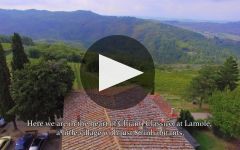


Lamole di Lamole draws its name and its character from the enchanting valley first discovered and cultivated by the Romans, and where these fine Chianti Classico wines were born. Selected from exclusive lines of grapes, shaped by the valley’s unique microclimate, and crafted in the cellars of an ancient castle, the wines of Lamole di Lamole offer exceptional flavors that complement the finest traditional meals and which only get better with age.
Since the 1800s, the Lamole valley has been renowned as one of the “cradles” of fine Chianti. Our winery is named after this valley and its history is just as revered. The historical Lamole di Lamole stone walls were rebuilt into the hillsides in the 1990s. These terraces, made from the local Macigno del Chianti rock, absorb and reflect the sun’s rays during the day and release heat during the night, so to provide the warmth that the vines need through the growing season.
The Lamole di Lamole vineyards in the hills of Chianti Classico are planted at some of the highest elevations of the region (1600 feet above sea level). The warm Tuscan sun and ventilation at these altitudes ensures even ripening and prevents dehydration in the grapes.
The estate grows the native Chianti grape varieties (sangiovese, canaiolo, malvasia nera and trebbiano toscano, the latter reserved for its Vinsanto) and several international ones, such as cabernet sauvignon, merlot, petit verdot and alicante.

Among Italy's elite red grape varieties, Sangiovese has the perfect intersection of bright red fruit and savory earthiness and is responsible for the best red wines of Tuscany. While it is best known as the chief component of Chianti, it is also the main grape in Vino Nobile di Montepulciano and reaches the height of its power and intensity in the complex, long-lived Brunello di Montalcino. Somm Secret—Sangiovese doubles under the alias, Nielluccio, on the French island of Corsica where it produces distinctly floral and refreshing reds and rosés.

One of the first wine regions anywhere to be officially recognized and delimited, Chianti Classico is today what was originally defined simply as Chianti. Already identified by the early 18th century as a superior zone, the official name of Chianti was proclaimed upon the area surrounding the townships of Castellina, Radda and Gaiole, just north of Siena, by Cosimo III, Grand Duke of Tuscany in an official decree in 1716.
However, by the 1930s the Italian government had appended this historic zone with additonal land in order to capitalize on the Chianti name. It wasn’t until 1996 that Chianti Classico became autonomous once again when the government granted a separate DOCG (Denominazione di Origine Controllata e Garantita) to its borders. Ever since, Chianti Classico considers itself no longer a subzone of Chianti.
Many Classicos are today made of 100% Sangiovese but can include up to 20% of other approved varieties grown within the Classico borders. The best Classicos will have a bright acidity, supple tannins and be full-bodied with plenty of ripe fruit (plums, black cherry, blackberry). Also common among the best Classicos are expressive notes of cedar, dried herbs, fennel, balsamic or tobacco.