

Winemaker Notes
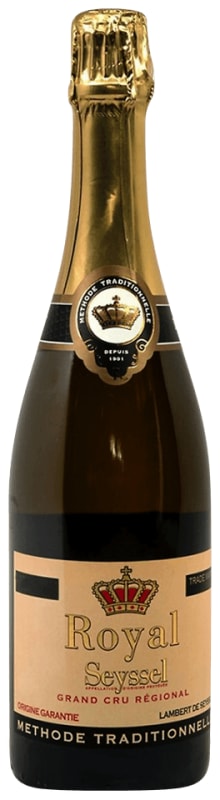
The sparkling wines of Seyssel indulge in the same méthode traditionnelle production techniques used for Champagne, and Lambert de Seyssel takes it one step further by aging the Royal Seyssel for at least three years before disgorging it, giving the wine more complex, distinguished aromas and a fine perlage than the competition, which ages only the legal minimum of nine months. The house style is also quite dry (low dosage) in order to preserve the character of the grape varieties.


Representing the topmost expression of a Champagne house, a vintage Champagne is one made from the produce of a single, superior harvest year. Vintage Champagnes account for a mere 5% of total Champagne production and are produced about three times in a decade. Champagne is typically made as a blend of multiple years in order to preserve the house style; these will have non-vintage, or simply, NV on the label. The term, "vintage," as it applies to all wine, simply means a single harvest year.

Tucked up into the sheltered foothills of the Alps where conditions vary considerably from one spot to the next, the vineyards of Savoie are widely dispersed within three main growing districts. These are Seyssel, Bugey and general Savoie. Within these are 16 different cru vineyard areas.
The region boasts a large number of unique indigenous grapes, incidentally unrelated to any nearby regions’ varieties. The styles here tend toward organic and traditional. In the past, the dynamic summer and winter tourist population consumed most Savoie wine before it could leave the area but the recent interest in esoteric varieties and natural, artisan wine has brought a renewed interest to Savoie.
In Savoie's most northern vineyards near Lake Geneva, the Chasselas grape dominates. Moving south, the white grape known as Altesse (also sometimes called Roussette) is responsible for Roussette de Savoie as well as Roussette de Seyssel.
Just north of Chambéry the white, Jacquère grows in the cru of Jongieux, along with Altesse, and Chardonnay. In the cru of Chautagne, the red grapes Gamay, Pinot Noir, and, especially, the local Mondeuse do well.
Chambéry, once famous for its vermouth, contains the crus of Abymes, Apremont, Arbin, Chignin and Cruet.