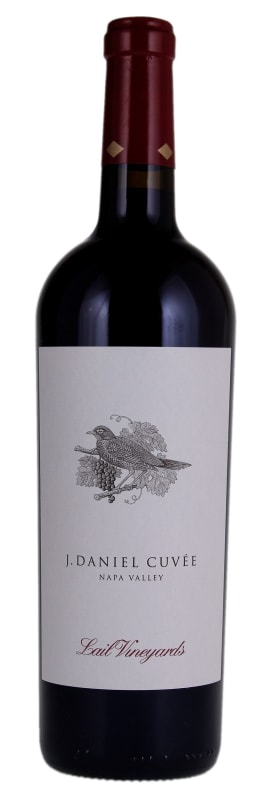


Winemaker Notes
J. Daniel Cuvée 2017 has wonderful aromas of briary fruits such as black raspberry and boysenberry, together with black cherry and ripe red plums. The flavors add nuances of fine tobacco and forest floor notes, along with blueberry and strawberry preserve. Full bodied, rich, powerful, and long, with fine-grained tannins, this is another great vintage for J. Daniel Cuvée.
Professional Ratings
-
Jeb Dunnuck
The flagship cuvée, the 2017 Cabernet Sauvignon J. Daniel Cuvee is 100% Cabernet Sauvignon brought up in 75% new French oak. Rocking levels of cassis, graphite, vanilla, scorched earth, and tobacco all flow to a full-bodied Cabernet that has building tannins, a terrific, deep, layered mid-palate, and a great finish. It's still tight and backward on the palate, and in need of 4-5 years of bottle age, but it's a beautiful wine in the making.
Rating: 96+ -
James Suckling
Wonderful blackberry and blueberry aromas with tar and ink. Pipe tobacco. Full body and chewy tannins that are lightly dry and toned. Creamy and textured. A beautiful finish. Complete and fine-textured.
-
Connoisseurs' Guide
This obviously extracted youngster may seem a bit brooding at first and a little reticent to fully open on the nose, but open it does and reveals a wealth of wonderfully pure blackcurrant fruit and an impressive sense of layering that dramatically contrasts its early reluctance. On the palate, the wine is ripe and full-sized with definitive Cabernet character that speaks volumes about the kind of richness that has made Napa Valley so renowned, yet, even if not brutally tannic, it absolutely demands age if it is to find refinement to match that richness and is not a wine to think about drinking until a half-dozen, and preferably more, years have come and gone.
-
Robert Parker's Wine Advocate
The 2017 J. Daniel Cuvée Cabernet Sauvignon is made of 100% Cabernet Sauvignon from Calistoga, Oakville and Stags Leap. It was aged 20 months in 75% new French oak. Mole Hill fruit was declassified this vintage because of smoke taint. Very deep purple-black in color, it starts out slightly muted and broody, with coaxing revealing notions of baked black currants, blackberry compote and plums preserves followed by notions of tar, chargrill, sautéed herbs and pencil lead plus a hint of Marmite toast. Full-bodied, the palate has nice ripe, fine-grained tannins and a refreshing backbone cutting through the savory flavors, finishing long and just a little firm.


One of the most prestigious wines of the world capable of great power and grace, Napa Valley Cabernet is a leading force in the world of fine, famous, collectible red wine. Today the Napa Valley and Cabernet Sauvignon are so intrinsically linked that it is difficult to discuss one without the other. But it wasn’t until the 1970s that this marriage came to light; sudden international recognition rained upon Napa with the victory of the Stag’s Leap Wine Cellars 1973 Cabernet Sauvignon in the 1976 Judgement of Paris.
Cabernet Sauvignon undoubtedly dominates Napa Valley today, covering half of the land under vine, commanding the highest prices per ton and earning the most critical acclaim. Cabernet Sauvignon’s structure, acidity, capacity to thrive in multiple environs and ability to express nuances of vintage make it perfect for Napa Valley where incredible soil and geographical diversity are found and the climate is perfect for grape growing. Within the Napa Valley lie many smaller sub-AVAs that express specific characteristics based on situation, slope and soil—as a perfect example, Rutherford’s famous dust or Stags Leap District's tart cherry flavors.