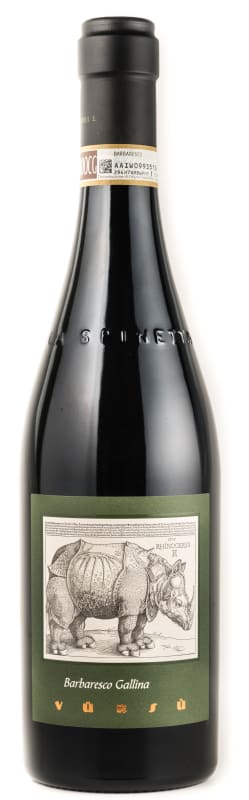


Winemaker Notes
Professional Ratings
-
James Suckling
Aromas of orange peel, fresh tobacco leaf and dark berry follow through to a full body, round and velvety tannins and a nutty finish. Lots of cedar too. Gorgeous.
-
Robert Parker's Wine Advocate
The 2013 Barbaresco Gallina Vürsù offers a tight brickwork of aromas with toned muscle and solid build at the back. The bouquet shows profound tones of dark fruit, spice, leather, tobacco, crushed stone and tar. La Spinetta's signature style, with more pronounced aromas, is very much on display in this wine.
Rating: 93+ -
Wine Spectator
Aromatic, with rose, cherry and black currant notes matched to an elegant frame. Though firm and linear, the finish is long and detailed. Decant now for several hours or age for two to three years. Best from 2018 through 2030.


Responsible for some of the most elegant and age-worthy wines in the world, Nebbiolo, named for the ubiquitous autumnal fog (called nebbia in Italian), is the star variety of northern Italy’s Piedmont region. Grown throughout the area, as well as in the neighboring Valle d’Aosta and Valtellina, it reaches its highest potential in the Piedmontese villages of Barolo, Barbaresco and Roero. Outside of Italy, growers are still very much in the experimentation stage but some success has been achieved in parts of California. Somm Secret—If you’re new to Nebbiolo, start with a charming, wallet-friendly, early-drinking Langhe Nebbiolo or Nebbiolo d'Alba.

A wine that most perfectly conveys the spirit and essence of its place, Barbaresco is true reflection of terroir. Its star grape, like that in the neighboring Barolo region, is Nebbiolo. Four townships within the Barbaresco zone can produce Barbaresco: the actual village of Barbaresco, as well as Neive, Treiso and San Rocco Seno d'Elvio.
Broadly speaking there are more similarities in the soils of Barbaresco and Barolo than there are differences. Barbaresco’s soils are approximately of the same two major soil types as Barolo: blue-grey marl of the Tortonion epoch, producing more fragile and aromatic characteristics, and Helvetian white yellow marl, which produces wines with more structure and tannins.
Nebbiolo ripens earlier in Barbaresco than in Barolo, primarily due to the vineyards’ proximity to the Tanaro River and lower elevations. While the wines here are still powerful, Barbaresco expresses a more feminine side of Nebbiolo, often with softer tannins, delicate fruit and an elegant perfume. Typical in a well-made Barbaresco are expressions of rose petal, cherry, strawberry, violets, smoke and spice. These wines need a few years before they reach their peak, the best of which need over a decade or longer. Bottle aging adds more savory characteristics, such as earth, iron and dried fruit.