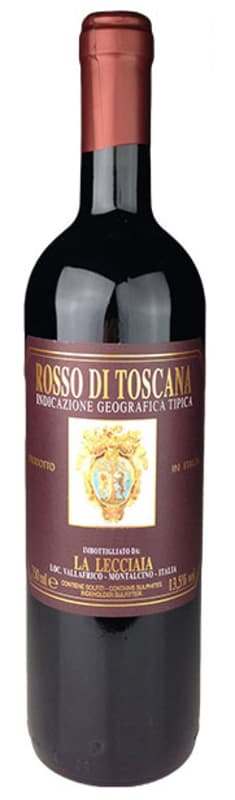


Winemaker Notes
La Lecciaia’s Rosso di Toscana serves up a bouquet of intense violet and cherries with a spicy ending. The deep ruby red color displays a thinning at the rim. The grapes are harvested in the last week of September and first week of October and put in oak casks from Slavonia for a minimum of 18 months. This gives the wine its firm tannins, sweetness and supple and fruit balanced flavor, created by Sangiovese’s lively acidity.
This Sangiovese wine pairs beautifully with traditional Italian foods such as pasta and pizza as well as grilled meats.
Professional Ratings
-
James Suckling
Bay leaves, undergrowth, dried cherries, chocolate and walnuts on the nose. It’s medium-bodied with firm tannins and a chewy, savory palate. Drink or hold.



Purchased by Mr. Mauro Pacini in 1983 and upgraded with the most advanced winemaking installations, Fattoria la Lecciaia is a wine estate that combines a young, dynamic approach to the wine business, while strictly adhering to the antique traditions of Brunello di Montalcino. Located in "località Vallafrico" and surrounded by the vineyards of some of the most iconic estates of the area, the estate is in the center of the original micro-terroir where the world-famous Brunello di Montalcino was first produced. Fattoria La Lecciaia is a beautiful property of 60 hectares surrounded by the vineyards of some of the oldest and most renowned estates of Montalcino. The estate has 15 hectares of vineyards, of which 12 are registered for the production of Brunello di Montalcino. The rest of the property is under olives groves and woodlands. The unique terroir of this small but world-famous micro-area in the appellation of Montalcino, naturally enhances the scents and the elegance of Sangiovese grapes, allowing Fattoria la Lecciaia to produce the most quintessential "Brunello di Montalcino" wines: classic and intense, suited for long ageing.

Legendary in Italy for its Renaissance art and striking landscape, Tuscany is also home to many of the country’s best red wines. Sangiovese reigns supreme here, as either the single varietal, or a dominant player, in almost all of Tuscany’s best.
A remarkable Chianti, named for its region of origin, will have a bright acidity, supple tannins and plenty of cherry fruit character. From the hills and valleys surrounding the medieval village of Montalcino, come the distinguished and age-worthy wines based on Brunello (Sangiovese). Earning global acclaim since the 1970s, the Tuscan Blends are composed solely of international grape varieties or a mix of international and Sangiovese. The wine called Vine Nobile di Montepulciano, composed of Prognolo Gentile (Sangiovese) and is recognized both for finesse and power.