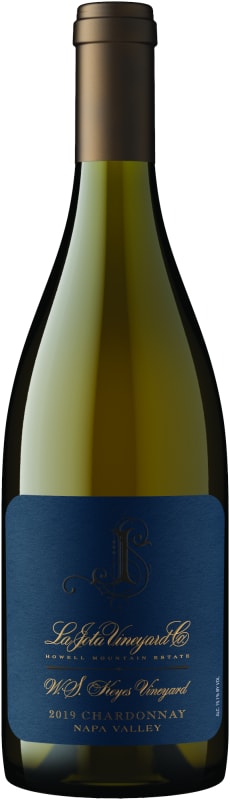


Winemaker Notes
The intent of this Chardonnay, grown on Howell Mountain, is to reflect a sense of place. Every effort is used to minimize the effects of winemaking and highlight the W.S. Keyes Vineyard, low oak and no malolactic contribute to that. It is picked at relatively low sugar to preserve acidity and capture more stone fruit, apple/pear, and minerality characters.
Professional Ratings
-
Jeb Dunnuck
The third vintage for this cuvée and brought up in 10% new puncheons (24 months with no malolactic fermentation), the 2019 W.S. Keyes Vineyard Chardonnay offers a vibrant, cooler style in its pear, stone fruits, caramelized citrus, and floral aromas and flavors. With plenty of background minerality, medium body, bright acidity, and a great finish, it will evolve for a decade.


One of the most popular and versatile white wine grapes, Chardonnay offers a wide range of flavors and styles depending on where it is grown and how it is made. While it tends to flourish in most environments, Chardonnay from its Burgundian homeland produces some of the most remarkable and longest lived examples. California produces both oaky, buttery styles and leaner, European-inspired wines. Somm Secret—The Burgundian subregion of Chablis, while typically using older oak barrels, produces a bright style similar to the unoaked style. Anyone who doesn't like oaky Chardonnay would likely enjoy Chablis.

Today Cabernet Sauvignon is the star of this part of Napa’s rugged, eastern hills, but Zinfandel was responsible for giving the Howell Mountain growing area its original fame in the late 1800s.
Winemaking in Howell Mountain was abandoned during Prohibition, and wasn’t reawakened until the arrival of Randy Dunn, a talented winemaker famous for the success of Caymus in the 1970s and 1980s. In the early eighties, he set his sights on the Napa hills and subsequently astonished the wine world with a Howell Mountain Cabernet Sauvignon. Shortly thereafter Howell Mountain became officially recognized as the first sub-region of Napa Valley (1983).
With vineyards at 1,400 to 2,000 feet in elevation, they predominantly sit above the fog line but the days in Howell Mountain remain cooler than those in the heart of the valley, giving the grapes a bit more time on the vine.
The Howell Mountain AVA includes 1,000 acres of vineyards interspersed by forestlands in the Vaca Mountains. The soils, shallow and infertile with good drainage, are volcanic ash and red clay and produce highly concentrated berries with thick skins. The resulting wines are full of structure and potential to age.
Today Cabernet Sauvignon, Merlot and Petite Sirah thrive in this sub-appellation, as well as its founding variety, Zinfandel.