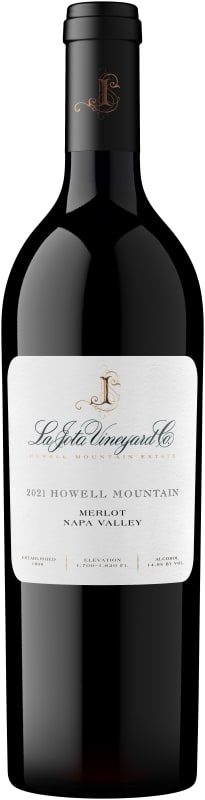


Winemaker Notes
The 2021 season began with very little rain, and spring and summer were mild. Interestingly, because the heavy wildfire smoke during 2020 decreased the vineyards’ exposure to sunlight, the vines were set up to give them lower yields in the new season. So for 2021 there is less wine but just phenomenal character. This vintage is a strong example of why Merlot belongs in the mountains. Notes of huckleberry, blueberry, walnut, dried flowers, and sage weave a vibrant, supple tapestry that goes on and on.
Blend: 93.5% Merlot, 5% Petit Verdot, 1.5% Tannat
Professional Ratings
-
James Suckling
Lots of blackberries, blueberries and hints of crushed stones with some almonds and nuts. Full and velvety tannins with a juicy texture and a long and flavorful finish. Shows length and polish. A blend of 93% merlot, 5% petit verdot and 2% tannat. 674 cases produced. Needs time to soften and come together. Best after 2026.
-
Jeb Dunnuck
The 2021 Merlot Howell Mountain checks in as 93% Merlot, 5% Petit Verdot, and 2% Tannat, with the levage spanning 22 months in 70% new French oak. This beauty has bright red and blue fruits as well as complex, spicy nuances of dried flowers, savory herbs, and graphite. It's rich, medium to full-bodied, has ripe tannins, and a great finish. It's concentrated, has a smoking good mid-palate, and will benefit from 4-5 years of bottle age.
Rating: 95+ -
Wine Spectator
A fruit-laden red, with glistening mulberry, cassis and plum puree notes that drive through gleefully, flanked by violet and iris hints, plus a light sheen of anise and apple wood on the finish. Offers latent grip for the cellar. Drink now through 2040.
-
Robert Parker's Wine Advocate
La Jota's 2021 Merlot Howell Mountain includes small proportions of Petit Verdot (5%) and Tannat (2%). Scents of mint, pine, black cherries, cedar and crushed stone mark the nose, while the medium to full-bodied palate is reasonably supple up front, then turns softly dusty on the long, elegant finish.


With generous fruit and supple tannins, Merlot is made in a range of styles from everyday-drinking to world-renowned and age-worthy. Merlot is the dominant variety in the wines from Bordeaux’s Right Bank regions of St. Emilion and Pomerol, where it is often blended with Cabernet Franc to spectacular result. Merlot also frequently shines on its own, particularly in California’s Napa Valley. Somm Secret—As much as Miles derided the variety in the 2004 film, Sideways, his prized 1961 Château Cheval Blanc is actually a blend of Merlot and Cabernet Franc.

Today Cabernet Sauvignon is the star of this part of Napa’s rugged, eastern hills, but Zinfandel was responsible for giving the Howell Mountain growing area its original fame in the late 1800s.
Winemaking in Howell Mountain was abandoned during Prohibition, and wasn’t reawakened until the arrival of Randy Dunn, a talented winemaker famous for the success of Caymus in the 1970s and 1980s. In the early eighties, he set his sights on the Napa hills and subsequently astonished the wine world with a Howell Mountain Cabernet Sauvignon. Shortly thereafter Howell Mountain became officially recognized as the first sub-region of Napa Valley (1983).
With vineyards at 1,400 to 2,000 feet in elevation, they predominantly sit above the fog line but the days in Howell Mountain remain cooler than those in the heart of the valley, giving the grapes a bit more time on the vine.
The Howell Mountain AVA includes 1,000 acres of vineyards interspersed by forestlands in the Vaca Mountains. The soils, shallow and infertile with good drainage, are volcanic ash and red clay and produce highly concentrated berries with thick skins. The resulting wines are full of structure and potential to age.
Today Cabernet Sauvignon, Merlot and Petite Sirah thrive in this sub-appellation, as well as its founding variety, Zinfandel.