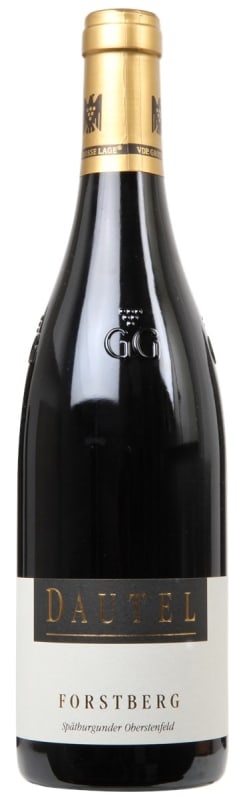


Winemaker Notes
A wonderfully polished, rich and sophisticated wine with serious dark energy and density, as well as notes of spice-box, griotte and red pepper roasted over an open flame.
Professional Ratings
-
Decanter
Altitude affords this aromatic Pinot Noir a sinuous, curvy but slender elegance. Grown at up to 360m on coloured marl from the Triassic era, just underneath the wooded crown of this south-facing slope, this shows what isolated, unsung sites in Württemberg can deliver. Yes, this is fresh, but the acidity is cushioned with fine, unforced concentration, comes alongside touching purity and shows the light hand of talented Christian Dautel.
-
James Suckling
Complex nose of summer flowers, blood oranges and dried red cherries with delicate earthy nuances. Sleek, crisp and barely medium-bodied, this has fine tannins and pronounced wet stone minerality. Full of character right through the long, energetic finish. In spite of some bottle age showing, this has a long future ahead of it.
-
Robert Parker's Wine Advocate
The 2017 Spätburgunder Forstberg GG is precise and fresh on the pure and fabulously delicate and spicy nose, with its wild and herbal-tinged Pinot aromas with red berry and delicate toasty notes. Concentrated, tight and with exciting grip on the palate, this is a lush and fruity but refined and silky-textured, stunningly refreshing and spicy Pinot with a long and intensely arctic finish. A great wine.


Germany is famous for spellbinding white wines, but a quiet revolution in red has been developing in recent decades. Pinot Noir leads the charge as the most widely planted red variety. Of the 13 German wine regions, five have notable plantings of Pinot Noir, which is locally called Spatburgunder.
Pinot Noir is the primary grape in the Ahr, a tiny region that is one of Germany’s northernmost. The rocky slopes store summer heat, which, together with light reflected off the Ahr Rive, aid in ripening. These German Pinot Noirs can be surprisingly rich and juicy. Baden is another warmer German region where Pinot Noir is number one in plantings. Many fine red examples come from here, as well as rosé versions, locally called Weissherbst. The Pfalz, protected by the Haardt Mountains, is sunny and dry enough to produce ripe Pinot Noir as well. The final two, Rheingau and Rheinhessen, benefit from Burgundian techniques like careful vineyard management and ageing in barrique.
While differences do exist from region to region, German Pinot Noirs typically show off a personality that is light, spicy and vivid. Flavors of cranberry, cherry, baking spice, along with a persistent stony minerality are common. These wines present a greater similarity to Alsatian and Burgundian Pinot Noir than to California examples.