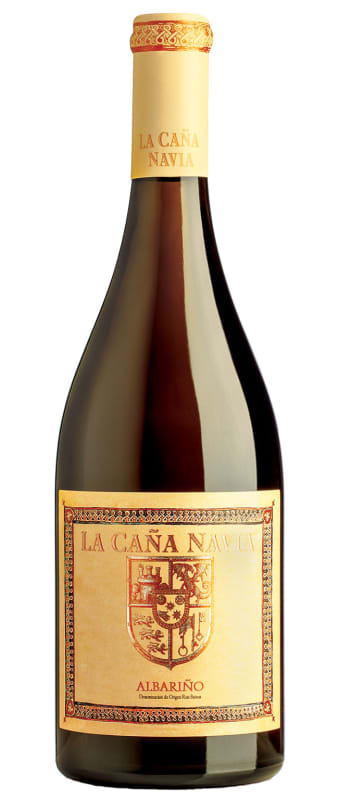


Winemaker Notes
The Albariño comes from the following three locations within the Rias Baixas DO: Finca Iglesario, Meaño Finca Playa and Cambados. The vines are dry-farmed and grow upon beds of acidic sandy alluvial soils. Upon harvest the grapes are hand-harvested and stored in small baskets and are then sorted at the winery and pressed after a 12-hour cold soak. The fruit is destemmed and whole-cluster pressed before fermenting in neutral wood. The wine is then aged on lees for twelves months.
Professional Ratings
-
Jeb Dunnuck
The 2024 La Cana Navia is from two vineyard sites in granite soils planted in the 1970s. It shines in refined texture and mouthfeel, with citrusy acidity throughout and pronounced salinity that adds length. Medium-bodied in intensity and volume, it’s essentially a barrel selection of the La Cana and should age even longer
-
James Suckling
This has an austere nose of green olives and a hint of salinity. The palate is medium- to full-bodied, sharp and direct, with savory, saline flavors and a taut finish. Linear and focused, with restrained intensity and a subtle texture.
-
Wine Enthusiast
A full, robust nose accented by oceanic nuances carries onto a palate that remains somewhat tightly wound. The wine is certainly pleasurable now, though it feels destined to show at its best a few years down the road. Remember folks: don’t be afraid to age your Albariño!




Jorge Ordóñez was the first person to introduce Albariño to the United States in 1991. Told he would never sell more than 100 cases of Albariño in New York City, he persevered, and now owns a winery in the Valle of Salnés, the best appellation of D.O. Rias Baixas.
When Jorge first traveled to Rías Baixas, the D.O. did not officially exist. What he found was a rich culture of family viticulture and winemaking. Most families had small plots of Albariño planted on pergolas built with posts taken from the mother rock – granite. Most of this Albariño was fermented and aged on the lees in large chestnut foudres.
Named for the straw-like cañas (reeds or canes) that line the shores of the Atlantic inlets that carve into the granite coast of Galicia, the winery’s philosophy is to produce a traditional, authentic, and serious Albariño, in the style of the artisan wines that Ordóñez discovered when he first arrived in the appellation in 1991.

Bright and aromatic with distinctive floral and fruity characteristics, Albariño has enjoyed a surge in popularity and an increase in plantings over the last couple of decades. Thick skins allow it to withstand the humid conditions of its homeland, Rías Baixas, Spain, free of malady, and produce a weighty but fresh white. Somm Secret—Albariño claims dual citizenship in Spain and Portugal. Under the name Alvarinho, it thrives in Portugal’s northwestern Vinho Verde region, which predictably, borders part of Spain’s Rías Baixas.

Named after the rías, or estuarine inlets, that flow as far as 20 miles inland, Rías Baixas is an Atlantic coastal region with a cool and wet maritime climate. The entire region claims soil based on granite bedrock, but the inlets create five subregions of slightly different growing environments for its prized white grape, Albariño.
Val do Salnés on the west coast is said to be the birthplace of Albariño; it is the coolest and wettest of all of the regions. Having been named as the original subregion, today it has the most area under vine and largest number of wineries.
Ribeira do Ulla in the north and inland along the Ulla River is the newest to be included. It is actually the birthplace of the Padrón pepper!
Soutomaior is the smallest region and is tucked up in the hills at the end of the inlet called Ria de Vigo. Its soils are light and sandy over granite.
O Rosal and Condado do Tea are the farthest south in Rías Baixas and their vineyards actually cover the northern slopes of the Miño River, facing the Vinho Verde region in Portugal on its southern bank.
Albariño gives this region its fame and covers 90% of the area under vine. Caiño blanco, Treixadura and Loureira as well as occasionally Torrontés and Godello are permitted in small amounts in blends with Albariño. Red grapes are not very popular but Mencía, Espadeiro and Caiño Tinto are permitted and grown.