


Winemaker Notes
Krug Grande Cuvée is born from the dream of Joseph Krug to craft the very best champagne he could offer, every year, regardless of annual variations in climate.
At first sight, intense yellow gold. Expressive, fragrant and powerful on the nose with aromas of toast and brioche, stone fruit, verbena, vanilla pastry cream, French toast and baba au rhum. On the palate, this champagne is unctuous, creamy and generous, expressing flavors aligned with the nose. Nuances of juicy fruits, peach in syrup and ripe citrus give way to encaustic, toasted notes and pine nut. A generous and precise mouthfeel with a crisp, mouthwatering lemon finish calls for another sip.
It pairs beautifully with simple pleasures like aged parmesan, ham and mature comté, but also oysters, or asparagus roasted with garlic butter.
Blend: 44% Pinot Noir, 34% Chardonnay, 22% Meunier
Professional Ratings
-
James Suckling
Extremely complex, showing dried apples, light caramel, brioche and flint with cedar, nuts and hints of gunmetal. Integrated, caressing bubbles. Medium-bodied with a laser-guided, compacted and extremely long palate that focuses the character and the flavors. So deep and polished. Tangy at the end. Drink or hold.
-
Wine Spectator
Vibrant and rich, statuesque yet graceful, this lovely Champagne offers an expansive range of patisserie apple and pear fruit, grilled macadamia nut, lime and tangerine peel notes, with fragrant saffron, clove, espresso and mineral accents. A lithe, focused spine of lemony acidity and an underlying streak of salinity are enmeshed in the flavor profile, and the fine, satinlike mousse carries everything on the long, mouthwatering finish. Pinot Noir, Chardonnay and Meunier. Disgorged winter 2023–2024. Drink now through 2040.
-
Jeb Dunnuck
The NV Champagne Grande Cuvee 173eme Edition is bright and mineral-driven, crafted around the 2017 vintage with 150 wines from 13 vintages back to 2001. It offers notes of wet stones, custard, lemon rind, honeycomb, white peach, and citrus blossom. Full-bodied, it has power and finesse, with mineral texture and a long-lasting finish. It has fantastic spice as well in this edition, and it has excellent underlying acidity and tension with a great savory finish. Olivier Krug commented on the warm weather of 2017, noting that they were keen to pick on the early side in this vintage and were finished with their harvest when many others had just begun. Disgorged in early 2024.
-
Vinous
Based on 2017, Krug's NV Grande Cuvée 173ème Édition is superb. It is an especially rich, almost opulent Grande Cuvée that very much reflects the personality of the base year in its tropical flavor profile. Lemon confit, baked apple tart, passion fruit, tangerine oil and spice are all beautifully amplified. The Krug team, led at the time by Chef de Caves Eric Lebel and current Chef de Caves Julie Cavil, did an exceptional job here.
-
Decanter
Krug's Grande Cuvée 173ème Édition is crafted around one of Champagne's most traumatic harvests of the past 20 years in 2017, where rampant rot and lack of maturity forced extreme sorting at harvest time. It's exactly the sort of year that plays to the house's strengths in its reserve wine library and pixelated, parcel-by-parcel vinification, though. Together with 31% reserve wines dating back to the 2001 harvest, it's a relatively forward Grande Cuvée, but not overly marked by the challenges of the year. There's a juicy apricot fruitiness evident up front, enlivened by some brightness of ground pepper and charred grapefruit peel, with aromatic details of green coffee and a food-friendly dried mushroom savour following in the glass. The softened, cushioned mousse is already feeling nicely settled, complementing the sense of roundness and ease. There's plenty of cooked lime Chardonnay focus pulling the palate into some length and intensity, even if the quantity of Chardonnay in the blend is not perhaps as high as might have been expected considering its relatively strong performance in the year; the reserves, too, bring a delicious length and intensity to the otherwise up-front palate. This edition may be pitched for earlier drinking than some, but will provide fine gastronomic possibilities in the meantime.
-
Robert Parker's Wine Advocate
Krug’s recently unveiled NV Grande Cuvée 173ème Édition—accounting for approximately 80% of the house’s total production—performs well, particularly considering the challenges of the base vintage, 2017. That year saw considerable rot pressure in red varieties, making meticulous sorting essential; some lots deemed unfit for Krug’s standards were even diverted to distillation. The conceptual cornerstone of the Grande Cuvée is the use of the house’s vast library—drawing from some 500 options—to complement the base vintage and moderate the extremes of any given growing season. The 173ème Édition comprises 150 wines across 13 vintages, with the 2017 base making up 69% of the final assemblage. Disgorged in January 2024 with a dosage of 4.5 grams per liter, it opens with aromas of pear, golden apple, lemon curd and early white blossoms interlaced with a distant hint of nutmeg. On the palate, it is medium- to full-bodied, textural and charming, laden with tangy acidity and animated by a pillowy mousse, and it concludes with a long, saline finish. Compared with its immediate predecessor, the 173ème Édition is broader and more giving, while the 172ème Édition tauter and more incisive. As experienced Krug aficionados will recognize, the inclusion of reserve wines—which may have undergone malolactic fermentation—renders the Grande Cuvée more immediately approachable than the house’s vintage-dated Champagnes, offering a more generous drinking experience on release.
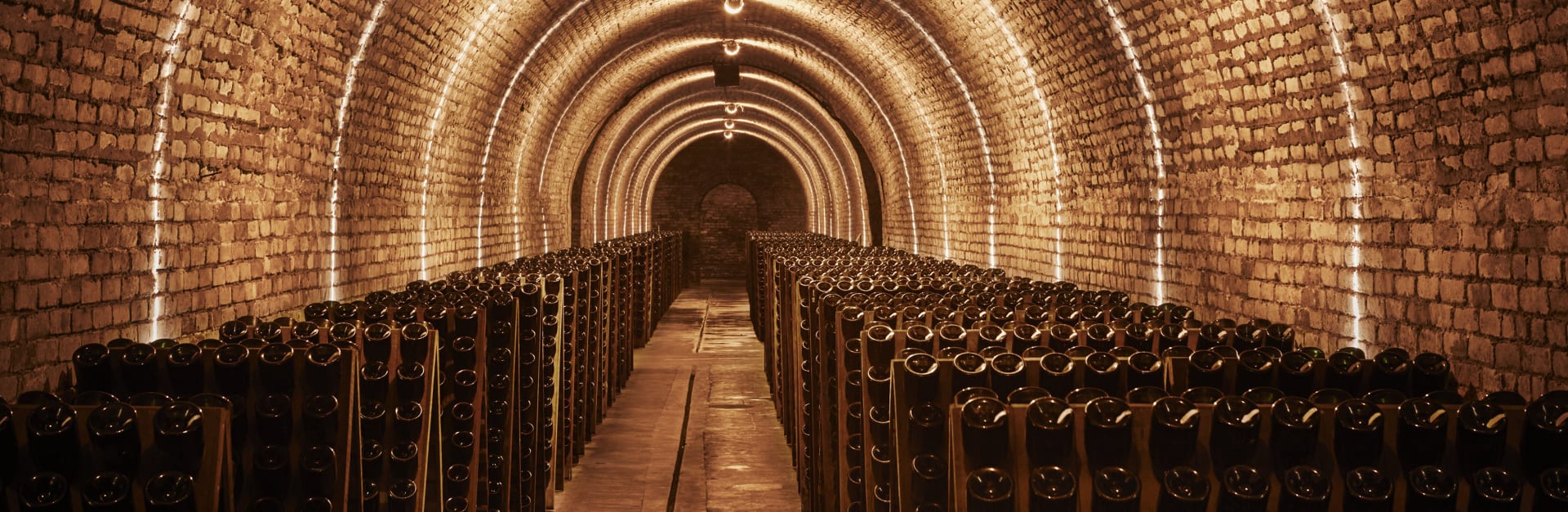




Krug has always lived up to its reputation as the first and only Champagne House to create exclusively prestige Champagnes every year since its foundation.
The House was established in Reims in 1843, by Joseph Krug, a visionary non-conformist with an uncompromising philosophy. Having understood that the true essence of Champagne is pleasure itself, his dream was to craft the very best Champagne he could offer, every single year, regardless of annual variations in climate. Paying close attention to the vineyard’s character, respecting the individuality of each plot and its wine, as well as building an extensive library of reserve wines from many different years allowed Joseph Krug to fulfil his dream.
With a very original approach to Champagne making, he decided to go beyond the notion of vintage to create the most generous expression of Champagne, every year. Thus, he founded a House in which all Champagnes are of the same level of distinction.
Six generations of the Krug family have perpetuated this dream, enriching the founder’s vision and savoir faire.
Further elaborating on the notion of individuality, for Krug’s Cellar Master Julie Cavil, each plot of grapes, through its wine, is like a single ingredient to a chef: carefully selected, and critical to the final composition. Each year, Krug honors this philosophy by inviting chefs from around the world to interpret a single ingredient, crafting unexpected recipes to pair with a glass of Krug Grande Cuvée or Krug Rosé. This year’s ingredient is the Onion.
The unspoken onion is a key component of almost every fundamental recipe from stocks, sauces and stews to baked goods and roasts. Its multifaceted expressions beautifully marry both the fullness of flavors and aromas of Krug Grande Cuvée the elegance and boldness of Krug Rose.

A term typically reserved for Champagne and Sparkling Wines, non-vintage or simply “NV” on a label indicates a blend of finished wines from different vintages (years of harvest). To make non-vintage Champagne, typically the current year’s harvest (in other words, the current vintage) forms the base of the blend. Finished wines from previous years, called “vins de reserve” are blended in at approximately 10-50% of the total volume in order to achieve the flavor, complexity, body and acidity for the desired house style. A tiny proportion of Champagnes are made from a single vintage.
There are also some very large production still wines that may not claim one particular vintage. This would be at the discretion of the winemaker’s goals for character of the final wine.

Associated with luxury, celebration, and romance, the region, Champagne, is home to the world’s most prized sparkling wine. In order to bear the label, ‘Champagne’, a sparkling wine must originate from this northeastern region of France—called Champagne—and adhere to strict quality standards. Made up of the three towns Reims, Épernay, and Aÿ, it was here that the traditional method of sparkling wine production was both invented and perfected, birthing a winemaking technique as well as a flavor profile that is now emulated worldwide.
Well-drained, limestone and chalky soil defines much of the region, which lend a mineral component to its wines. Champagne’s cold, continental climate promotes ample acidity in its grapes but weather differences from year to year can create significant variation between vintages. While vintage Champagnes are produced in exceptional years, non-vintage cuvées are produced annually from a blend of several years in order to produce Champagnes that maintain a consistent house style.
With nearly negligible exceptions, . These can be blended together or bottled as individual varietal Champagnes, depending on the final style of wine desired. Chardonnay, the only white variety, contributes freshness, elegance, lively acidity and notes of citrus, orchard fruit and white flowers. Pinot Noir and its relative Pinot Meunier, provide the backbone to many blends, adding structure, body and supple red fruit flavors. Wines with a large proportion of Pinot Meunier will be ready to drink earlier, while Pinot Noir contributes to longevity. Whether it is white or rosé, most Champagne is made from a blend of red and white grapes—and uniquely, rosé is often produce by blending together red and white wine. A Champagne made exclusively from Chardonnay will be labeled as ‘blanc de blancs,’ while ones comprised of only red grapes are called ‘blanc de noirs.’